About
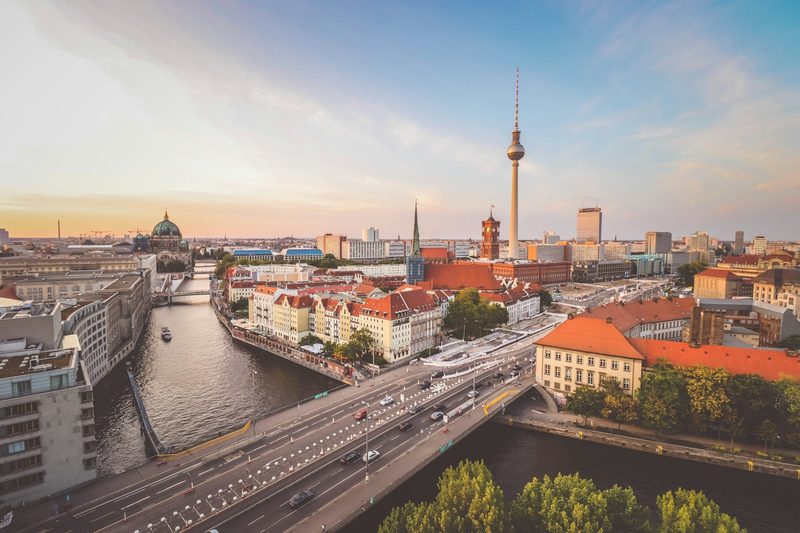
Berlin is a city built on its own ruins. Traces of the rubble that followed in 1945, the hundred and fifty kilometers of concrete built in 1961, and the same concrete that was torn apart by hand in 1989 can still be seen in aerial photographs. The rift between East and West runs through the entire groin of the city: pre-republican tenements on one street, Plattenbau blocks on the next; a Stasi building behind a coffee shop; graffiti on the facade, a baroque church in the back courtyard.
The population of three and a half million produces, on the surface, one of the quietest among the metropolises of continental Europe. No excessively tall buildings; The sky is Berlin's most protected resource. Instead, there are wide boulevards, abandoned warehouses, and thermal power plants turned into nightclubs on the river banks. The way the city describes itself is similar: not monumental, messy and honest.
When to Go
The climate is continental. In winter, the gray light day decreases to seven to eight hours, in summer the day gets longer and the temperature hovers around the twenties with rare humidity. The choice of season turns the city into a completely different place.
- May–June: 18-25°C. Tiergarten and Mauerpark fill up on weekends; Sand bars on the edge of the Spree (such as Strandbar Mitte) are opened. Open until 22:00 during the day, it is the golden age of open-air brews (in front of Spätis).
- September: The temperature drops to around 14-20°C, the crowd thins out; The light comes long and low, photographers come to Berlin for this month. Berlin Marathon third weekend.
- July–August: Average 24°C, occasional waves of 32°C. Air conditioning is scarce in the city — old buildings are uninsulated. Open-air cinemas (Freiluftkino Friedrichshain) and festivals are concentrated in these two months.
- November–February: -2 to 5°C, frequent drizzle with rain instead of snow. At the beginning of December, the Weihnachtsmärkte (Christmas markets) at Gendarmenmarkt, Charlottenburg Palace and Alexanderplatz establish a six-week economy; Glühwein glass 4-5 EUR, deposit refundable.
How to get there
Airline: Berlin Brandenburg Airport (BER) opened in 2020 and took over the function of the former Tegel and Schönefeld. 25 km from the city center. Turkish Airlines operates daily direct flights from Istanbul Airport, Pegasus and AJet from Sabiha Gökçen; flight 3 hours 10 minutes. Early purchased economy hovers around 150-250 EUR, rising to 350 EUR at the summer peak.
Airport–City center transportation:
| Option | Duration | Cost | Note |
|---|---|---|---|
| Airport Express Train (FEX) | 30 min | ~4.40 EUR | It goes in the direction of Hauptbahnhof (Central Station). It is the fastest and most economical way. |
| Commuter Train (S-Bahn S9) | 40 min | ~4.40 EUR | It goes in the direction of Alexanderplatz and Ostkreuz. |
| Taxi / Uber | 40-50 min | 50-70 EUR | The time may be longer depending on traffic conditions. |
Urban Transportation
Berlin's public transport network (BVG) is one of the busiest in Europe: S-Bahn (suburban), U-Bahn (underground), Straßenbahn (tram) and bus lines are connected to the same ticket system. The network is divided into zones A, B and C; The city center is in zone A-B, and BER airport is in zone C.
- Ticket: One way A-B 3.50 EUR, ABC 4.40 EUR. Four-way card (4-Fahrten-Karte as an alternative to Kurzstrecke) 11.50 EUR; unlimited 9.90 EUR per day; 41.50 EUR for 7 days.
- Verification: The ticket is not valid until it is stamped on the yellow machine on the platform. The civil controller issues a fine of EUR 60; "We are tourists, we didn't know" is not a reason for a discount.
- Bicycle: The city is flat; The cycle path network exceeds 1500 km. Applications such as Nextbike (1 EUR/30 min) and Lime are common. Parking on the pavement is traditionally tolerated, with an additional EUR 6 U-Bahn ticket.
Accommodation Regions
Which neighborhood you stay in directly determines your perception of Berlin. Five options give five different cities.
- Mitte: Historical centre. Brandenburg Gate, Museum Island, Hackescher Markt are here. Hotel prices are 180-300 EUR in the 4-star range; walking distance to everything.
- Prenzlauer Berg: The district that evolved from the old bohemian of East Berlin into a middle-class family neighborhood. Boutique cafes around Kollwitzplatz, organic market (Saturday). Sakin, pahalı, çocuklu yolcuların tercih ettiği bir mahalle.
- Kreuzberg: The densest urban trace of Turkish immigration in Germany. Anatolian markets, baklava shops, and bars run by third-generation Kreuzberg residents around Kottbusser Tor. Visually tired but culturally richest square metre.
- Friedrichshain: Cafe-bar density around Boxhagener Platz, Berghain, Tresor (walking distance), East Side Gallery on Warschauer Straße axis. Make a beeline for nightlife.
- Charlottenburg: The former bourgeois backbone of West Berlin. Kurfürstendamm, Savignyplatz, Schloss Charlottenburg. More classical, quieter; Those looking for a classic German city feel come here.
Budget Plan (3 days, per person, EUR)
| Category | Backpacker | Medium | Luxury |
|---|---|---|---|
| Accommodation (2 nights) | 60-90 (Hostel) | 160-280 (3-4★) | 600+ (5★ Hotels) |
| Public Transportation | 20 (Daily Tickets) | 25 | 70 (Uber / Taxi) |
| Food | 40-60 (Doner & Currywurst) | 100-160 | 350+ (Michelin Star) |
| Entrance Tickets (Museums etc.) | 19 (Museum Card) | 40 | 120 (Guided Palace Tours) |
| Nightlife / Entertainment | 25 | 60 | 150+ |
| Total (3 days) | 164-214 | 385-565 | **1290++ |
Practical Tips
- Trade stops on Sundays. The law called Ladenschlussgesetz closes supermarkets, pharmacies and shops on Sundays. Exceptions are branches at railway stations (Hauptbahnhof, Ostbahnhof) and petrol stations; cafes, restaurants and museums are open.
- Cash is still king. Berlin could be a software hub; But Kreuzberg buffets, coffee shops and Spätis do not accept cards. ATMs are common, but the Euronet brand charges a commission — Sparkasse or Deutsche Bank ATMs are preferred.
- Pfand system. A deposit of 0.15-0.25 EUR is required for plastic and glass bottles. Bottles are returned to the market and deducted with a receipt. People who collect empty bottles left on the street follow this logic — it's common courtesy to leave the bottle upright next to the trash can.
- Techno club doors. Black, simple, unpretentious. Groups larger than two people rarely enter. Phone in queue, loud noise, laughter collect bad points. German "Heute nicht" is the polite form of refusal, insisting closes the door to the whole group.
Travel Guide with Children
0/5. Her parkta oyun alanı, çoğu müzede ayrı bir çocuk bölümü, restoranlarda çocuk sandalyesi bulunuyor; şehir düz olduğu için bebek arabasıyla dolaşmak sorun çıkarmıyor.
Recommendations by Age Group
0-3 years: Playgrounds in Tiergarten are large and safe. Kaldırımlar bebek arabasına uygun genişlikte. S/U-Bahn istasyonlarının çoğunda asansör var. Bebek bakım odaları AVM'lerde ve müzelerde standart.
4-7 yaş: Zoo Berlin ve bitişiğindeki Aquarium bu yaş grubunu saatlerce oyalıyor. Mall of Berlin'deki Legoland Discovery Centre küçükler arasında popüler. Mauerpark'ta Pazar günleri çocuk tiyatrosu oynanıyor.
8-12 yaş: Museum für Naturkunde'deki (Doğa Tarihi Müzesi) monte edilmiş dinozor iskeleti bu yaş grubunun ilgisini çekiyor. Deutsches Technikmuseum'daki uçak ve tren koleksiyonları da saatlerce geziliyor. Berlin Duvarı Anıtı tarih merakını tetikliyor.
13+ yaş: East Side Gallery'nin sokak sanatı, Mauerpark'taki karaoke ve vintage pazarı, Kreuzberg'in sokakları bu yaş grubuna hitap ediyor.
Top 5 Kid-Friendly Activities
Doğa Tarihi Müzesi — Monte edilmiş dinozor iskeletinin yanı sıra interaktif bölümler, biyoçeşitlilik duvarı ve mineraloji koleksiyonu var.
000'den fazla hayvan barındırıyor. Aquarium aynı bilete dahil edilebiliyor.
Deutsches Technikmuseum — Uçaklar, trenler, gemiler, bilgisayarlar sergileniyor. Çocuklar pilotluk simülasyonu deneyebiliyor, eski trenlere tırmanabiliyor.
Tempelhofer Feld — Eski havaalanı pistinde bisiklet, paten, uçurtma uçuruluyor. Açık alan geniş, giriş ücretsiz.
FEZ Wuhlheide — Yüzme havuzu, tırmanma duvarı, atölye çalışmaları ve açık hava oyun alanları bir arada.
Practical Information
Baby stroller: Berlin is flat, sidewalks are wide, public transport is accessible. S/U-Bahn'da asansörler yaygın ama bazı eski istasyonlarda yok — BVG uygulamasından kontrol edin.
Çocuk menüsü: Alman restoranlarında Kinderteller (çocuk tabağı) standart — genellikle Schnitzel ve patates kızartması ya da makarna. Currywurst çocuklar arasında tercih ediliyor.
Child ticket discounts: Children under the age of 6 are free on public transportation. Müzelerin çoğunda 18 yaş altına ücretsiz veya indirimli giriş uygulanıyor. Berlin WelcomeCard'ın aile versiyonu mevcut.
Toilet: Free in museums. Automatic toilets on the streets (0.50 EUR). There are paid toilets at major stations.
Warnings
- Bisiklet yolları ve kaldırımlar ayrı çizilir ama çocuklar bu ayrımın farkında olmayabilir; bisiklet yolunda durmamaları için uyarın.
- Kasım-Şubat arası soğuk ve karanlık geçiyor; bu aylarda iç mekan aktivitelerine ağırlık verin.
- Some museums and monuments (Holocaust Memorial, Topographie des Terrors) may not be suitable for young children.
Local Label and Culture Notes
“Berliner Schnauze” — literally “Berlin mouth” — is the name given to a style of speaking that appears measured, even harsh, on the outside but at its core rewards directness. Smiles are not expected at the checkout; But if the question is asked, the answer is clear, the practical knowledge is clear, there are no unnecessary layers of politeness. It is a quick misunderstanding to read this tone as arrogance.
Environmental discipline permeates almost every front. Bottles are returnable (Pfand); They are not thrown away. Going out with a glass — including beer in front of a Späti — is common, but it is not polluting; Glass bottles are either given back or left upright next to the trash can because people in need collect them. Even at a red pedestrian light, at an empty intersection at 3 a.m., there are few adults crossing—Germans do this not for themselves, but for the child standing at the intersection.
FAQ
How many days to visit Berlin? Tarihi merkez, duvar kalıntıları ve Müze Adası'nı gezmek 3 gün yetiyor. Gece hayatına dalıp Potsdam saraylarını da görecekseniz 4-5 gün ayırın.
Is it really that hard to get into Berghain? Yes. Turist olmak, Almanca bilmemek veya tarzınızın kapı seçimine uymaması saatlerce bekleyip geri çevrilmenize yol açabiliyor; ihtimal yaklaşık %70. Tresor, Watergate, KitKat ve Sisyphos gibi girişi daha kolay onlarca kulüp de var.
Is it easy to get a Germany visa? Son dönemde Türkiye'den yapılan Schengen başvurularında randevu bulmak ve onay almak zorlaşıyor. Seyahatinizden en az 2-3 ay önce iData üzerinden randevu kovalamaya başlayın.