About
Hamburg is Germany's second largest city, but its atmosphere is completely different from Berlin — more sophisticated, more reserved, more maritime. The 800-year-old Hanseatic League tradition is ingrained in the city's DNA; Merchant mentality, restrained ostentation, red brick architecture and fidelity to contract still define this place. In Berlin there is a feeling of "no matter what", while in Hamburg there is "order and civility".
The port is the third largest in the world (after Shanghai and Singapore) and the second largest in Europe. Even though the city is 120 kilometers inland on the Elbe River, it welcomes ocean liners — Hamburg is effectively a maritime city, and that maritime culture has permeated everything, from the cuisine to the language, from the neighborhoods to the music scene. Hamburgers call themselves "Hanseaten", this is not only a geographical but also an identity definition.
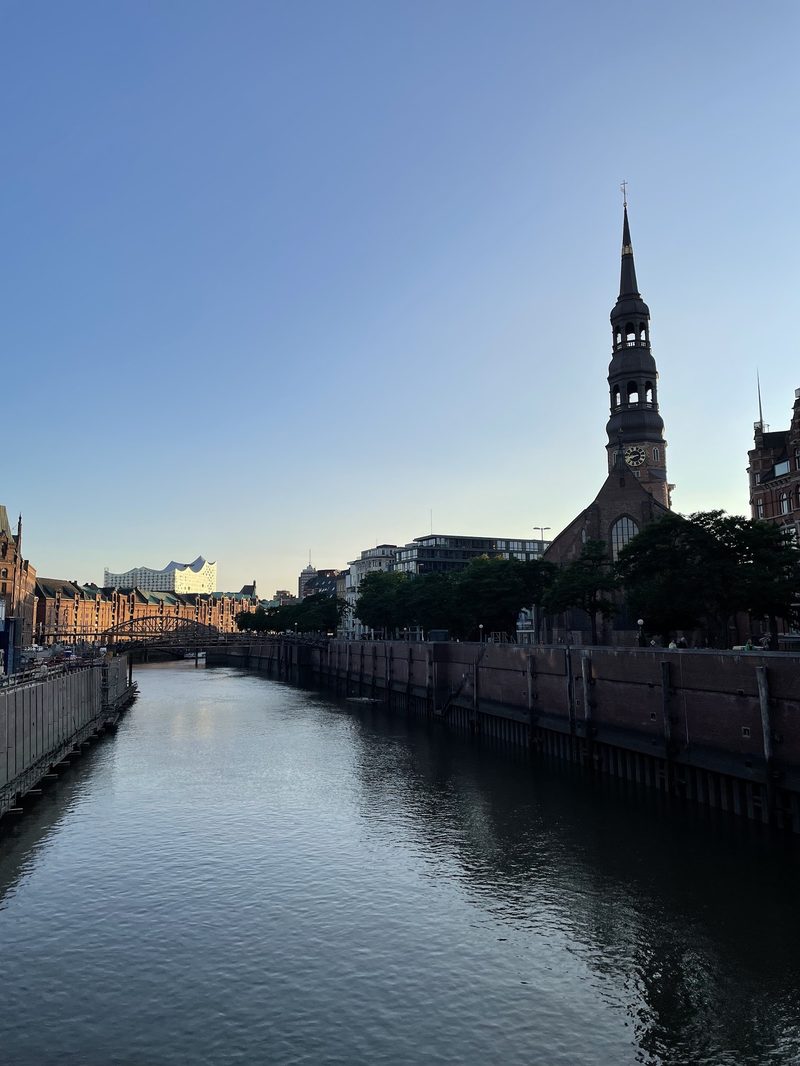
Together, Speicherstadt and HafenCity form the world's largest UNESCO warehouse district and the most comprehensive urban renewal project next to it. The red brick warehouses of the end of the 19th century (built for the coffee, spice and carpet trade) have today been turned into museums, restaurants and attractions such as Miniatur Wunderland. Erected next to it, the modern HafenCity represents Europe's vision of the future city — the Elbphilharmonie is the symbol of this vision.
Reeperbahn is one of the most famous amusement routes in the world. St. It is a street in the heart of the St. Pauli neighborhood, where the red light district, music clubs and bars intertwine. The Beatles played 8 hours a night at Indra and Kaiserkeller between 1960 and 1962, forming a school — where they cooked, returned to Liverpool and conquered the world. Today, the pulse of music history still beats at Reeperbahn, the festival organizes 600 concerts in September.
Approximately 100,000 people of Turkish origin live in Hamburg — Turkish is the street language in the Sternschanze, Wilhelmsburg and Altona neighbourhoods. Turkish restaurants, grocery stores, hairdressers and mosques are part of the natural city fabric. One of the most established communities of the Turkish diaspora in Germany is here. The Sunday picnic in the park rule in Sternschanze is local: bring your own tea, bread is shared.
When to Go
Hamburg is a rainy city—it's not for nothing that it's called Germany's "Schmuddelwetter" (bad weather) capital. There is an average of 130 days of rain per year. But this rain was absorbed into the aesthetics of the city; The wet red brick shines differently.
| Period | Weather (daytime) | Density | Otel Fiyatı | Notes |
|---|---|---|---|---|
| January-February | 2 / 4° | Low | Low | Cold, windy, no Hamburger Dom but calm after Christmas |
| March | 4 / 8° | Low-Medium | Low | Frühlingsdom begins, spring is not yet |
| April | 6 / 13° | Medium | Medium | Spring is starting, parks are coming to life |
| May | 10 / 18° | High | High | Hafengeburtstag, ideal starting period |
| June | 13 / 21° | High | High | Longest days, Außenalster in full swing |
| July | 15 / 23° | High | High | Sommerdom, Schlagermove, summer holiday tourists |
| August | 14 / 22° | High | High | Sommerdom continues, beach bars are in full swing |
| September | 12 / 19° | High | Medium-High | Reeperbahn Festival, ideal autumn |
| October | 8 / 14° | Medium | Medium | Autumn colors, calmer |
| November | 4 / 8° | Low-Medium | Low-Medium | Winterdom + Christmas markets open |
| December | 2 / 5° | Medium-High | Medium | Christmas market atmosphere, Glühwein |
Our general recommendation is May-September period. It will rain again, but the days are long, the weather is warm and the festival program is full. 22-23°C in summer is considered a good Hamburg summer — don't expect Mediterranean-like temperatures. A different atmosphere for the December Christmas market, Glühwein is a must to warm up.
How to get there
Hamburg's main airport, Hamburg Airport (HAM), is 10 km north of the city center — one of Europe's closest major airports to the centre.
Flights from Türkiye:
| Exit | Duration | Airline |
|---|---|---|
| Istanbul (IST) - HAM | 3 hours 30 min | THY (2-3 flights a day, direct) |
| Istanbul (SAW) - HAM | 3 hours 40 min | Pegasus (once a day, seasonal) |
| Ankara (ESB) - RAW | transfer | THY (transfer from Frankfurt or Munich) |
| Izmir (ADB) - HAM | transfer | THY (summer season direct) |
THY direct flights are the most practical. If you buy early it's around 200-280 EUR, last minute it's around 400-500 EUR. Wizz Air and Eurowings also land in Hamburg via side routes — options with connections via Cologne or Berlin can cost around 150-200 EUR.
From airport to city:
- S-Bahn S1: 25 min, direct to Hauptbahnhof, 3.6 EUR. The most practical and fastest option.
- Taxi/Uber: 20-30 min, 25-35 EUR.
- Hotel shuttle: Some hotels offer airport transfers, ask when booking.
Our recommendation is S1 — leave the airport, 5 minutes on the platform, 25 minutes in the city center. Hamburg's public transport system (HVV) is very clean, punctual and guided in English.
Train option: Berlin 1 hour 50 min (ICE), Munich 6 hours (ICE), Copenhagen 4.5 hours, Amsterdam 5 hours. Hamburg HBF is one of the busiest railways in Europe.
Urban Transportation
Hamburg's public transport system, HVV (Hamburger Verkehrsverbund), is very developed.
S-Bahn (commuter train) and U-Bahn (underground): 4 U-Bahn and 6 S-Bahn lines connect the city and its suburbs. It operates between 04:30 - 01:00, 24 hours a day, Friday-Saturday. The same ticket is valid for line-to-line transfers.
Bus and tram: The bus network is dense, connecting to metro/suburban trains. The Hamburg tram was abolished in 1978 — replaced by MetroBus lines.
Ship (Hafenfähre): There are ferries (number 62 and 72) included in the HVV network on the Elbe river. The journey through the harbor is not at the tourist boat price, but at the normal ticket price. Line 62 replaces the port cruise.
Ticket system: Single ticket (Einzelkarte) 3.6 EUR, day ticket (9-Uhr-Tageskarte) 7.4 EUR, week ticket 27 EUR, group day ticket 13 EUR (up to 5 people). If you are staying for 3 days or more, group or week tickets are affordable.
Hamburg Card: There are 1/2/3/5 day versions; public transportation + museum and attraction discounts. Adult 36 EUR for 3 days. If you plan to visit the museum intensively, it is affordable.
StadtRAD (bike): Hamburg's bike sharing system. The first 30 minutes are free, thereafter 0.10 EUR per minute. The city's cycling infrastructure is very developed, ideal for canal banks and Alster tours.
Taxi/Uber: Free Now and Uber are working. 10-25 EUR in the city. Hamburg taxis are expensive, public transportation is sufficient unless you have to.
Accommodation Regions
Since Hamburg is compact and public transportation is very good, the choice of region should be considered as adding atmosphere to the trip.
- Neustadt / Altstadt (city centre): Rathausmarkt, Jungfernstieg, Alster surroundings. Luxury hotels and boutique addresses. Walking distance to everywhere but prices are high.
- HafenCity / Speicherstadt: Modern boutique hotels with water views. Same area as Elbphilharmonie. Quiet, contemporary — for nightlife you'll need to take the tram.
- Sternschanze / Schanzenviertel: Hipster neighborhood, dense with boutique hotels and Airbnb. Close to nightlife, close to Turkish food. Ideal for young travelers.
- St. Pauli / Reeperbahn: In the heart of nightlife. Hotel prices are reasonable but the noise is serious. For those who want the fast side of life.
- St. Georg (around Hauptbahnhof): Near the train station, cheap hotels. Practical location but some streets are haunted at night — especially Steindamm. Option for budget accommodation but research the neighborhood.
- Eppendorf / Winterhude: Local middle-class neighbourhood, quiet, full of restaurants and cafes. 15 minutes to the center by U-Bahn. Pleasant for longer stays.
What we do not recommend: The inner streets of Steindamm (east exit of Hauptbahnhof) can be restless at night; Isolated streets of Veddel and Wilhelmsburg are not touristy, stay away unless there is a reason to stay.
Budget Plan
Hamburg is one of the most expensive cities in Germany — competing with Munich and above Berlin. Accommodation is the main item.
| Budget Style | Accommodation | Food | Activity/Transportation | Total (2 people/3 days) |
|---|---|---|---|---|
| Economic (hostel/2* hotel, fischbrötchen + rotary) | 250 EUR | 150 EUR | 80 EUR | ~480 EUR |
| Moderate (3-4* hotel Neustadt, mixed restaurant) | 500 EUR | 250 EUR | 140 EUR | ~890 EUR |
| Comfort (4-5* boutique hotel, gastronomy) | 900 EUR | 400 EUR | 200 EUR | ~1,500 EUR |
| Luxury (Vier Jahreszeiten, Park Hyatt, fine dining) | 2,000 EUR+ | 700 EUR+ | 300 EUR | ~3,000 EUR+ |
Practical items: Espresso 2.50-3.50 EUR, fischbrötchen 4-6 EUR, currywurst 4-5 EUR, schnitzel 18-25 EUR, Elbphilharmonie concert 30-200 EUR, Miniatur Wunderland 25 EUR, S-Bahn single ticket 3.6 EUR, beer (half liter) 4-5 EUR, Alsterwasser (beer+lemonade) 4-5 EUR, doner 6-9 EUR (5-7 EUR in the Turkish quarter).
Practical Tips
Rain and weather: Hamburg is rainy all year round. It happens when it rains that an umbrella is useless, take a waterproof jacket and shoes. Native "Hanseat" chic — beige trench coat, dark trousers, leather shoes — is not without reason.
Money and card: Germany is the country where Europe lags behind in terms of card payments. Restaurants, cafes, even some hotels are still "nur Bargeld" (cash only). Keep 50-100 EUR cash in your pocket. There are plenty of ATMs, "Sparkasse" or "Volksbank" are the cheapest withdrawals.
Water: Hamburg tap water is drinkable and of high quality. No need for bottled water, drink from the fountain.
Turkish and Turkish points: Turkish is very common in Sternschanze, Wilhelmsburg and Altona. Turkish grocery stores, bakeries and restaurants are part of the neighborhood. It's rare to see Turkish in the city centre, but "doner kebab" is the pillar of Hamburg's fast food culture — there's a Turkish doner shop on every corner in the station squares.
Cycling: Hamburg is the city of cyclists. Bicycle paths are wide and widespread. If you walk on the bike path as a pedestrian, locals will give a stern warning, be careful — red lanes for cyclists.
Sailing and water sports: Sailing course (Pieper) in Außenalster costs 50-80 EUR per day. The ideal place to try sailing for the first time. Boat rental is also possible.
Sundays: Sunday is the general closing day in Germany. Markets and shops are closed. Fischmarkt and museums are open, restaurants are generally open. If you're going shopping, Saturday is your last chance.
Reeperbahn label: The main street is safe, but only men enter Herbertstrasse and photography is prohibited inside. Taking photographs of working women attracts reactions. Going into the inner bars (Animier-Bars) on the side streets and buying a drink in return can bring astronomical bills — do not enter if you are cornered on the street.
Travel Guide with Children
Hamburg is one of the most child-friendly cities in Europe. Miniatur Wunderland is a reason for a holiday in itself.
Recommendations by Age Group
0-3 years: The area around Außenalster is flat and wide, a stroller is ideal. Planten un Blomen park is large, has playgrounds and water fountains. Hagenbeck Zoo's baby section is safe and simple.
4-7 years: Miniatur Wunderland is this age's favorite — miniature planes take off and land, trains pass through tunnels. Hagenbeck Zoo (135 years old, one of the oldest private zoos in Europe). The tasting tour at the Chocoversum chocolate museum fascinates children.
8-12 years: Miniatur Wunderland is indispensable again. International Maritime Museum ships and port history. Watching the harbor cranes from the Elbphilharmonie Plaza — kids love the machinery. St. Climbing the Michaelis tower is 452 steps, little adventure.
Ages 13+: Reeperbahn daytime exploration is heavy on history (Beatles), Miniatur Wunderland is fascinating again with an adult perception. Hamburger Dom (amusement park) shooting with new generation rollercoasters. Stadium tour (Volksparkstadion or Millerntor) is ideal for the football-loving youngster.
Top 5 Kid-Friendly Activities
Miniatur Wunderland — The world's largest model railway. Give it 4-5 hours, it fascinates everyone. Online ticket is required.
Hagenbeck Zoo — A pavilion-free, natural habitat-style arrangement was invented here in 1907. The tropical house, elephant paddocks and aquarium section are comprehensive.
Harbour boat tour (Hafenrundfahrt) — 1 hour classic tour, modern harbour, Speicherstadt, ships. Kids love the helm, rope and sailor atmosphere.
Hamburger Dom (amusement park) — Open 3 periods a year (March, July-August, November-December). Free entry, 250 attractions, Friday fireworks.
Planten un Blomen Park — Large park in the city center, playgrounds, water fountains, free open-air music and "Wasserlichtkonzerte" (water+light+music show) in summer.
Practical Information
Baby stroller: Most S-Bahn and U-Bahn stations have lifts. Hamburg's barrier-free access is well above Türkiye's standards.
Children's menu: "Kinderkarte" is common in German restaurants. Options such as schnitzel, pasta, sausage-potatoes. In Turkish restaurants, rice-chicken and lahmacun are children's favorites.
Child ticket: At HVV, under 6 is free, 6-14 is half price. In museums, children under the age of 6 are generally free, 6-18 are discounted.
Toilet: Common in museums, cafes and shopping malls. Public toilets with "WC" on the street cost 0.50-1 EUR.
Warnings
- Reeperbahn main street is passable with children during the day, but side streets are not suitable. In the evening with the child in St. Don't go to Pauli.
- There are sections on the banks of the Außenalster and the Elbe without railings, be careful with small children.
- Hamburger Dom has a rollercoaster age and height limit, check it.
- Markets are closed on Sundays, stock up on snacks for the kids on Saturday.
Local Label and Culture Notes
Hamburgers call themselves "Hanseaten" — it's an identity, not just a geographical one. The basis of Hanseatic culture: moderation, avoiding ostentation, keeping one's word, being humble but respectful. This is not a "no matter what" city like Berlin; In Hamburg, everyone adheres to some kind of implicit protocol.
Greeting: Handshake is standard. "Moin" is a unique greeting in Hamburg — morning, noon, evening, "moin" is valid all day long. "Moin moin" is more sincere. Say it when you enter the hotel or even when entering the shop.
Restaurant rules: Wait at the door and the waiter will direct you to the table. Speak clearly when ordering — respectful form "Ich hätte gern..." (...may I have it). The bill does not come without asking, call the waiter and say "die Rechnung, bitte".
Tip: 10% of the bill is standard in restaurants. Give by rounding up ("dreißig", meaning 30 EUR, if the bill is 27). Don't leave money on the table, tell the waiter when you pick it up. Rounding up 1 EUR is enough in cafes and bars.
German: English is very common among the young and educated generation. It may be limited in the older generation. "Danke", "Bitte", "Entschuldigung" (sorry), "Moin" are enough. If the Hamburg native answers you in French, ask in slow English and they will respond politely.
Turkish diaspora: There are 100,000+ people of Turkish origin in the city, three or four generations have been from Hamburg. Turkish street language in Sternschanze and Wilhelmsburg. Turkish doner shops are still the center of Germany's "doner" exports (doner was invented in Berlin but institutionalized in Hamburg). Saying "hello" is still welcomed warmly in a Turkish grocery store.
Sernschanze park rule: The park fills up for picnics on Sunday afternoon. Local ritual: bring your own tea or beer, bread is shared, approach a neighboring table playing music. Hipster Hamburg is here.
Football: There are two big teams in Hamburg — Hamburger SV and FC St. Pauli. HSV traditional, FC St. Pauli punk and antifascist identity. The match day fan base infrastructure and the atmosphere of Millerntor-Stadion are legendary.
There is no hot spring, there is a sauna: There is no Budapest-style thermal spa in Hamburg, but like every hotel sauna, it is a way for many city dwellers to relax. Sauna naked — sit on towel. The mixed sauna tradition may seem strange to Turks at first, but it is the norm in Germany.
FAQ
Is Turkish spoken in Hamburg? Not in the city center, but in the Sternschanze, Wilhelmsburg and Altona neighborhoods, yes, Turkish is the street language. 100,000+ people of Turkish origin live. Turkish grocery stores, bakeries and restaurants are everywhere. Turkish menu and Turkish waiter are normal in Turkish restaurants like "Hatari".
How many hours from Istanbul to Hamburg? THY direct flights are 3 hours 30 minutes. There are 2-3 trips a day. 3 hours 40 minutes from Pegasus Sabiha Gökçen.
How many days should you stay in Hamburg? 3 days is enough to see the main attractions — Speicherstadt, Miniatur Wunderland, Elbphilharmonie, Reeperbahn and Sternschanze fit in. 5 days ideal: Lübeck day tour and museums are added. 7 days also adds exploration of the island of Sylt and deeper harbor.
Is it really always rainy in Hamburg? It rains about 130 days a year, but this is mostly light drizzle. There are also sunny days with 22-25°C in mid-summer. Clothing strategy: dress in layers, keep waterproof jacket in pocket. "Hamburger Schmuddelwetter" is an identity motto for the local.
How to get from Berlin to Hamburg? 1 hour 50 minutes by ICE high-speed train, direct Berlin Hauptbahnhof - Hamburg Hauptbahnhof. Buy early 30-50 EUR, last minute 80-130 EUR. By bus FlixBus 3.5 hours, 15-25 EUR. Airplane is useless (airport transfer inflates the time).
Which month is the best season? May to September is generally the best period. There is Hafengeburtstag (harbor festival) in May, Sommerdom (amusement park) in July-August, and Reeperbahn Festival in September. December is a different atmosphere for the Christmas market — cold but magical.
Does Hamburg require a visa? A Schengen visa is mandatory for a Turkish ordinary passport. Applications are made on behalf of the German consulate via iDATA or VFS Global Germany Turkey. Appointment density is high, start 4-8 weeks in advance. Special, service, diplomatic passport visa-free, 90 days.
Is Miniatur Wunderland really worth that much? Yes. It would be a grave mistake to come to Hamburg and skip it. One of the highest-rated attractions in the world with a score of 9.4/10. Even for adults, it takes 3-4 hours. Online ticketing is mandatory, make your appointment early on the weekend.