About
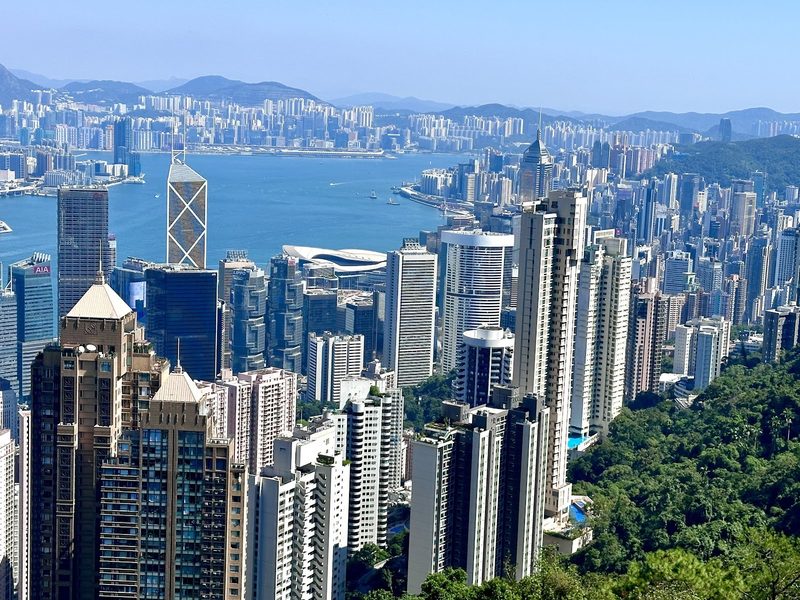
There is a place in the world called Hong Kong, which has managed to fit seven and a half million people, 9,000 skyscrapers, thousand-year-old temples and the world's busiest dim sum traffic into an area of 1,100 square kilometers. Although its name, meaning "Fragrant Port", remains nostalgic, the scent of today's Hong Kong is a mixture of incense smoke, wok steam and sea wind. Think of Istanbul — a city split between two continents, connected by ferries, and built up into hills. Now move that city up 50 times on the vertical axis, triple the population density, and add Cantonese shouting to the streets. This is Hong Kong.
Two different worlds lie on both sides of Victoria Harbour. To the south, Hong Kong Island — financial districts, colonial buildings, the top of Victoria Peak and the bars in the narrow streets of SoHo. Kowloon peninsula in the north — Temple Street's night market, Mongkok's throngs of people, Wong Tai Sin's incense smoke and Nathan Road's neon riot. Star Ferry, which connects these two coasts, has been operating since 1888 and offers one of the most beautiful ferry journeys in the world for 5 dollars.
Hong Kong, which became a British colony in 1842, has been the meeting point of East and West for 155 years. It was handed over to China in 1997 with the status of a "Special Administrative Region" — it has its own currency, its own passport, its own legal system. This dual identity permeates every corner of the city: you can listen to Cantonese opera and drink English afternoon tea on the same street, you can leave the Buddhist temple and enter the craft cocktail bar.
Hong Kong's cuisine is simply extraordinary. Dim sum is a breakfast ritual here — baskets of har gow, siu mai and char siu bao are passed around the tables in the yum cha parlors, which open at 6 a.m. while elderly uncles read the newspaper. Wonton noodles look simple, but it takes years to understand the depth of that clear water. The crispy skin of roast goose, the hot bubbles of egg waffles, the flames shooting out of the wok of dai pai dongs... It's harder to find bad food than good food in this city.
Hong Kong is a vertical city. Escalators (the world's longest is in Central, 800 meters), funiculars, double-decker trams and the MTR metro connect the city in three dimensions. It seems congested but transportation is fluid, clean and punctual. Get your Octopus card once and use it on the subway, bus, ferry, supermarket, even in a taxi — your life becomes easier.
But Hong Kong isn't just concrete and steel. 40 percent of its territory is a protected nature area. You can look out at the South China Sea from the Dragon's Back hiking trail, walk through the bamboo forests of Lantau Island, and swim in the turquoise bays of Sai Kung. The number of other cities where you can reach the forest from skyscrapers in 20 minutes can be counted on one hand.
When to Go
Hong Kong has a subtropical climate, meaning there are distinct seasons but even winter is mild. Choosing the right time seriously affects the difference in comfort.
- October - December: Hong Kong's golden period. The weather is cool and dry (18-25 degrees), the sky is clear, the humidity is low. Photos come out best during this period. The view from the Peak looks brilliant.
- January - March: Cool but sometimes cold (10-18 degrees). If February coincides with Chinese New Year, the city is very crowded, but the atmosphere is great. Towards the end of March, humidity begins to rise.
- April - May: Humidity is increasing, temperature is 25-30 degrees. There may be occasional showers, but they are generally short-lived. Prices are more affordable.
- June - September: Typhoon season. Hot and muggy (30-33 degrees, humidity 85%+). If the typhoon signal goes up to 8, the city shuts down — flights are canceled, shops are shuttered. But even if there is no typhoon, you will be drenched in sweat.
No matter when you come, be prepared for the temperature difference between air-conditioned spaces and the outside. It's cold enough to need a coat in shopping malls, but it's hot enough to sweat in a t-shirt outside. Keep a thin cardigan in your bag.
How to get there
Turkish Airlines has direct flights from Istanbul Airport to Hong Kong International Airport (Chek Lap Kok). Flight duration is approximately 10 hours. THY usually flies Boeing 777 or 787 Dreamliner to this line.
Round-trip ticket prices vary between 420-650 EUR depending on the season. Cathay Pacific also flies direct, sometimes it can be more convenient than THY. Emirates (via Dubai), Qatar Airways (via Doha) and Singapore Airlines (via Singapore) are alternative options.
Hong Kong International Airport is on Lantau Island, 35 km away from the city center. Transportation options to the city:
- Airport Express: The fastest and most comfortable. 24 minutes from airport to Hong Kong station. 115 HKD one way, 205 HKD round trip. Free shuttle bus service drops off to hotels at Hong Kong and Kowloon stations.
- Bus: A series buses (A11, A21, A29) go to various points of the city. 33-48 HKD, 45-75 minutes.
- Taxi/Grab: 250-350 HKD, 30-45 minutes (depending on traffic).
Get a SIM card at the airport (cheaper if you pre-order from Klook) or activate eSIM. Also pick up the Octopus card at the airport — 150 HKD (50 HKD deposit + 100 HKD balance).
Urban Transportation
Hong Kong is a small place but its transportation system is world-class.
- MTR (Mass Transit Railway): 11 lines, 98 stations. The backbone of the city. Clean, cold (air conditioning strong), punctual, safe. The first time is around 05:30, the last time is around 01:00. Single trip costs 5-25 HKD.
- Bus: It reaches places where MTR does not go. In double-decker buses, the front seat of the upper floor is the view seat. 3-20 HKD.
- Tram (Ding Ding): Double-decker tram that operates only on the north coast of Hong Kong Island. Same route since 1904. 3 HKD wherever you go. Slow but great for seeing the city.
- Star Ferry: 5.6 HKD between Central and TST. The cheapest sea view in the world.
- Minibus: Green and red. Greens have fixed routes, reds are a little more flexible. The locals' means of transportation, it's not tourist-friendly, but it's fun for the adventurous.
- Octopus card: Contactless card used all over the city. Metro, bus, ferry, tram, market, restaurant, vending machine. It can also be added to Apple Pay and Google Pay.
- Taxi: Red (urban), green (New Territories), blue (Lantau). It works with a taximeter, it's cheap. 50-100 HKD to most places in the city. But English may be limited, show the address written in Chinese.
Accommodation Regions
- Tsim Sha Tsui (TST): The heart of the Kowloon side. Star Ferry, Avenue of Stars, Harbor City are all within walking distance. There are hotels for every budget. 500-2000 HKD per night.
- Central / Sheung Wan: The business and entertainment center of Hong Kong Island. Lan Kwai Fong, SoHo bars nearby. It's on the expensive side but the location is perfect. 800-3000 HKD per night.
- Mongkok / Yau Ma Tei: Kowloon's local life area. Close to markets, budget friendly. 300-800 HKD per night.
- Causeway Bay / Wan Chai: Ideal location for shopping and dining. Middle-upper segment. 600-1500 HKD per night.
- Lantau (Tung Chung): Close to the airport, outlet shopping, easy access to Ngong Ping. But it's far from the city center. 500-1200 HKD per night.
Budget Plan
Hong Kong isn't as expensive as you think — if you know where to eat. Michelin star dim sum is 25 HKD, cocktail at Ozone Bar is 200 HKD. Same city, 10 times price difference.
| Category | Economical | Medium | Luxury |
|---|---|---|---|
| Accommodation / night | 300 HKD (hostel/guesthouse) | 800 HKD (3-4*) | 2500 HKD+ (5* harbor view) |
| Meal/day | 100 HKD (dai pai dong + cha chaan teng) | 300 HKD (dim sum + restaurant) | 1000 HKD+ (fine dining) |
| Transportation / day | 30 HKD (MTR + tram) | 80 HKD (MTR + ferry + taxi) | 250 HKD (taxi-based) |
| Activity / day | 20 HKD (free parking) | 150 HKD (Peak + museum) | 500 HKD (cable car + rooftop) |
| 3 days total | ~1350 HKD (~155 EUR) | ~3990 HKD (~460 EUR) | ~12750 HKD+ (~1470 EUR+) |
Approximately with May 2026 exchange rate: economical 5,400 TL, medium 16,000 TL, luxury 51,000 TL+ (per person, excluding flights).
Currency note: 1 HKD is approximately 0.115 EUR or around 4 TL (May 2026). HKD is pegged to the US dollar, the exchange rate is very stable. Cards are passed everywhere; Octopus card or contactless payment is common. Carry some cash though, especially for street markets and small food stalls.
Practical Tips
Hong Kong isn't as rule-crazy as Singapore, but there are still things you need to know.
- Octopus card means everything. It is used on MTR, buses, ferries, trams, markets, 7-Eleven and even some taxis. Pick up first thing from the airport (150 HKD, 50 HKD deposit). You can get back the balance on old cards.
- Escalator strategy: The Central-Mid-Levels escalator operates downwards from 06:00 to 10:00 in the morning, and upwards from 10:30 to midnight. The stairs carry you when you go up to SoHo bars, and you walk when you go down.
- Typhoon signal tracking: Typhoon season from June to September. Be careful when the signal goes up to 3, when it gets to 8 everything shuts down — flights, shops, public transport. Download the Hong Kong Observatory app.
- Socket type G: UK style three-prong socket (same as Singapore). Bring an adapter.
- Water: Tap water is drinkable, but most people prefer bottled water or demijohn. Serving boiled water is common in restaurants.
- Tip: Most restaurants add a 10% service charge. An extra tip is not required, but leaving HKD 10-20 is appreciated. It is enough to stop keeping your change in the taxi.
- Air conditioning terror: Shopping malls, subways and restaurants are freezing cold. 33 degrees outside, 18 degrees inside. Keep a thin cardigan or shawl in your bag.
- Take the tram. It's slow, but for 3 HKD you can cross Hong Kong Island from start to finish. Sit in the front seat of the upper deck and watch the city. Much more authentic than the tourist bus.
- Caution when taking photos: It is generally allowed in temples, but photography may be prohibited in some areas. Check the signs. Get permission before taking photos of people.
- Show address in Chinese: Taxi drivers and elderly shopkeepers may not speak English. Save the Chinese address of the place you want to go to your phone and show it.
Travel Guide with Children
Hong Kong is more suitable for traveling with children than you think. Thanks to the compact city structure, distances are short, transportation is practical and there are plenty of activities to entertain children.
Recommendations by Age Group
0-3 years: Star Ferry fascinates children (10 minutes, slight boat shaking). The playgrounds at Hong Kong Park are shady and clean. Children's areas in shopping malls are air-conditioned, perfect for escaping from the heat. Baby strollers can be carried by elevator on the MTR, but it can be difficult during crowded hours.
4-7 years old: Ocean Park is both a zoo and an amusement park, great for this age group. Ngong Ping 360 cable car is exciting, Big Buddha is impressive. The upper floor of the ding ding tram is a mini adventure for them.
8-12 years old: Hong Kong Disneyland is sized exactly for this age group (in Lantau, close to the airport). The steep ascent of the Peak Tram is exciting. An easy version of the Dragon's Back walk can be done.
Ages 13+: Shopping in Mongkok markets, daytime of Lan Kwai Fong, Shek O beach, street food tour. Sky100 observation deck (ICC 100th floor) impresses young people.
Top 5 Kid-Friendly Activities
Ocean Park — Amusement park + aquarium + zoo all in one. The panda house and jellyfish aquarium are children's favorites. There is direct transportation by MTR.
Hong Kong Disneyland — Compact but fun. The Frozen-themed area and Mystic Manor stand out. It is less crowded than other Disney parks.
Ngong Ping 360 + Big Buddha — Crystal Cabin cable car, 268 steps (may be challenging for young children), shopping in the village. Full day activity.
Star Ferry + Tram tour — Both means of transportation are mini adventures for kids. Ferry 5.6 HKD, tram 3 HKD. Cheap, fun, authentic.
Hong Kong Space Museum + Science Museum — Two museums side by side in TST. Interactive exhibits, planetarium show. Savior of rainy days.
Practical Information
Baby stroller: There are elevators at MTR stations, but some are small and crowded. Choose a lightweight, foldable car. In busy areas such as Mongkok, a carrier is more practical.
Children's menu: Children's menus are not very common in restaurants, but dim sum portion sizes are small anyway and are suitable for sharing. Wonton noodles and egg waffles are flavors that children love.
Children's ticket: Children's ticket (half price) for ages 3-11 on MTR, free for those under 3. Most museums and parks offer children's discounts.
Toilet: There are clean toilets in shopping malls and MTR stations. Baby care rooms are standard in large shopping malls.
Warnings
- Summer months (June-September) are hot and humid. Children need plenty of water, air-conditioned breaks and sunscreen.
- Hold the little boy's hand tightly in the crowded MTR carriages and on the streets of Mongkok.
- Be careful with the escalators — they are fast and some are very steep.
- Child safety is high in Hong Kong, but traffic flows on the left, so be careful at pedestrian crossings.
Local Label and Culture Notes
Hong Kong is a complex place that speaks Cantonese, carries a British colonial legacy, and lives a Southern version of Chinese culture. A few cultural notes would make your life easier.
- Yum cha etiquette: When the tea is finished in dim sum halls, remove the lid of the teapot and leave it, the waiters will fill it. If someone pours you tea, tap the table with two fingers — the traditional gesture meaning "thank you."
- Eating with chopsticks: It is forbidden to stick chopsticks vertically into the rice bowl — it is considered very rude as it is associated with the funeral ritual. Place it on a chopstick rest or on the edge of the plate.
- Business card culture: Exchanging business cards is still important. Take the card with both hands and give it, do not immediately put it in your pocket.
- Queuing culture: Hong Kongers know how to queue. They expect you to keep your turn and be patient.
- Number superstitions: The number 4 is synonymous with death (same pronunciation in Cantonese), many buildings do not have a 4th, 14th or 24th floor. 8 is the number of luck (same as the sound of wealth).
- Tip expectation is low: Most restaurants already add a 10% service fee. Leaving extra is polite but not mandatory.
- A few words in Cantonese: "M goi" (thank you/please), "nei hou" (hello), "gei do chin" (how much?). These three expressions will take you places and make the locals smile.
- Eating and drinking on MTR: Like Singapore, food and drink are prohibited in the metro and stations. There is a penalty of up to HKD 2,000.
FAQ
How many days does it take to visit Hong Kong? 3 days is enough for the main spots (Peak, Star Ferry, dim sum, a night market). 5-7 days are ideal — you can spare time for Lantau Island, outer islands, hiking trails and food tours. You can go from Hong Kong to Macau by ferry in 1 hour, or you can take a day trip.
Is English sufficient? Yes, English is common in tourist areas and in the business world. Signs and metro announcements are in English. But you may struggle with English in street markets, local restaurants and with older generations. Google Translate's Cantonese support works.
Is Hong Kong expensive? Accommodation is expensive (rooms are small, prices are high). But food can be surprisingly cheap — Michelin-starred dim sum is HKD25, lunch at cha chaan teng is HKD40. Transportation is cheap. Alcohol is also more affordable than Singapore. Generally, you determine your budget.
How to get to Macau? It takes 55-70 minutes by TurboJET or CotaiJet ferries from Hong Kong-Macau Ferry Terminal in Sheung Wan. HKD 175-200 one way. There are also buses to Hong Kong-Zhuhai-Macau Bridge, 45 minutes. There is also visa-free entry to Macau with a Turkish passport.
Are Hong Kong and mainland China the same visa? No! You can enter Hong Kong visa-free with a Turkish passport, but a separate Chinese visa is required for mainland China (Shenzhen, Beijing, Shanghai). This is a very important distinction, don't mix.
What should I do if there is a typhoon? When the typhoon signal goes up to 8, don't go out — public transport stops, shops close, flights are cancelled. Stay at your hotel, turn on the minibar and Netflix. When the signal drops, everything quickly returns to normal. The Hong Kong Observatory app provides real-time information.
Octopus card or credit card? The Octopus card is still the most practical method — it works everywhere. But Visa/Mastercard, which has now been added to Apple Pay and Google Pay, also works in MTR and many places. Cash or Octopus may be the only option for small shopkeepers and food stalls.
Where to eat the best dim sum? Tim Ho Wan (Michelin star, cheap), Lin Heung Tea House (traditional yum cha, chaotic but authentic), Maxim's Palace (City Hall branch, classic experience with cartmen), Dim Dim Sum (open until late night). Each has its own style, try at least two.