About
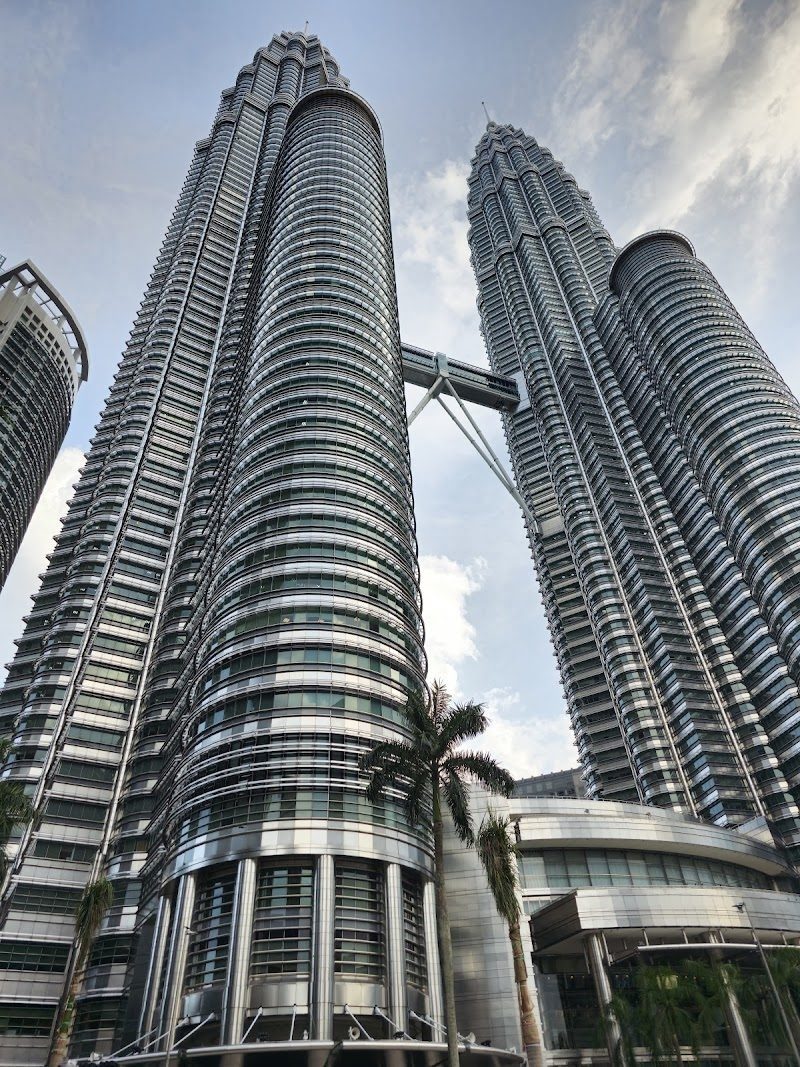
Kuala Lumpur — or KL as everyone calls it — surprises you at first glance. While the sunset reflects on the glass façade of the Petronas Twin Towers, roti canai is being made for 3 Ringgit at a mamak stall two streets back. Five minutes away, a bell rings in a Hindu temple, the call to prayer rings from a mosque across the street, and the smell of incense wafts from a Chinese temple on the corner. This city took the cuisine, religion and culture of three continents, put them in a blender, mixed them and created something completely different.
The capital city, with a population of 1.8 million, is considered small, but it competes with Istanbul in terms of energy. The secret of KL is in this mix: Malay, Chinese and Indian communities have lived side by side for centuries, and each has preserved its own neighbourhood, cuisine and festivals. While satay is smoked in traditional Malay wooden houses in Kampung Baru, dim sum is eaten under Chinese lanterns on Petaling Street, and thali plates are served accompanied by Indian music in Brickfields. And everyone celebrates each other's festivals — on Hari Raya, Chinese neighbors come to visit, on Deepavali, Malay friends bring sweets.
The geography of the city is simple: KLCC (Petronas district) is the modern heart, Bukit Bintang entertainment and shopping center, Chinatown and Merdeka Square are the historical core. KL Sentral transportation node. There is a metro, monorail and LRT system connecting them — the rail system is a lifesaver during traffic hours, because KL traffic is as good as Istanbul.
Prices? This is one of the most affordable capitals of Southeast Asia. A plate of nasi lemak costs 5-10 MYR (35-70 TL), one-way metro costs 1-5 MYR, a night in a nice hotel costs 200-400 MYR. It's as cheap as Bangkok, a third the price of Singapore. Moreover, you can enter visa-free for 90 days with a Turkish passport. How many cities are there where you can experience three cultures together without burning your pocket or having to worry about a visa?
You would be doing yourself an injustice if you come to KL and don't change your plans every day just to "try this". This city is a gift box that opens as you explore it — each layer reveals a new surprise.
When to Go
KL is just above the equator, so it's hot and humid all year round. There are no four seasons, only two: rainy and less rainy.
May - September (Less Rain): Best window. It's 27-33 degrees, humidity is around 70-80% (yes, that counts as "low"). The rain is less, the sky is clearer. National Day celebrations in August add extra color. Hotel prices are reasonable.
October - March (Rainy Season): There is no need to panic right away. Tropical rain usually falls in the form of a shower for 1-2 hours in the afternoon, then the sun shines. It is very rare that it rains all day long. November-January is the rainiest period. But festivals like Chinese New Year (January-February) and Thaipusam fall during this period — don't mind the rain if you want the festival experience.
Period to avoid: Hari Raya Aidilfitri (Eid al-Fitr) week. All of Malaysia is going on holiday, hotels are full, prices are doubling, some restaurants are closed. If you want the festival experience, go but make a reservation in advance.
Short answer: May-August is most comfortable. If you want Thaipusam (end of January), plan it for winter. If you're budget-minded, March-April is quiet and affordable.
How to get there
There are no direct flights from Istanbul to KL — you'll have a connection. The most popular routes:
Malaysia Airlines / Turkish Airlines (codeshare): THY to a Southeast Asia hub, then MAS to KL. There are combinations with connections in Singapore or Kuala Lumpur.
Emirates (Dubai transfer): The most common choice. Istanbul-Dubai 4 hours, Dubai-KL 7 hours. Total 13-15 hours with connection. Usually the most competitive prices are here.
Qatar Airways (transit in Doha): Similar duration, transit lounge in Doha is good.
Singapore Airlines (transfer from Singapore): You can land in Singapore and continue with a 1-hour flight to KL or take a bus (5 hours).
The average round-trip ticket price is 350-550 EUR in economy class. The most affordable prices are in March-May and September-November. New Year's Eve and Chinese New Year period are the most expensive.
Kuala Lumpur International Airport (KLIA) 55 km from the city center.
- KLIA Express: 28 minutes to city center (KL Sentral), 55 MYR. The fastest and most reliable way.
- KLIA Transit: Same line but with intermediate stops, 35 minutes, 55 MYR.
- Grab: 60-100 MYR, 45-90 minutes depending on traffic.
- Bus: The cheapest option, 12-15 MYR but 1-1.5 hours and uncomfortable.
Advice: Buy KLIA Ekspres, don't ask questions. If it coincides with traffic hours, it takes 2 hours with Grab.
Urban Transportation
KL's public transport network looks complex but is practical once you get the hang of it. There are several different lines and they are all operated by different operators — confusing but it works.
LRT (Kelana Jaya Line + Ampang/Sri Petaling Line): The main arteries of the city. Central stops such as KLCC, KL Sentral, Masjid Jamek, Dang Wangi are on these lines. 1-5 MYR one way.
Monorail: Bukit Bintang, Chow Kit, KL Sentral line. Ideal for shopping and entertainment areas. MYR 1.20-4.50 one way.
MRT (Kajang Line + Putrajaya Line): The newest line, the most modern wagons. It passes through Bukit Bintang, has a connection to KLCC.
KTM Commander: Commuter train. Use to go to Batu Caves — 30 minutes from KL Sentral, MYR 2.60.
Grab: In KL, everyone uses Grab instead of taxis. The price is determined in advance, the route is on GPS, there is no language problem. Short distance 8-15 MYR, urban 15-30 MYR.
Taxi: Avoid if possible. Taxis with meters do not want to turn on the meters when they see tourists. If you have to use a taxi, say "meter, please". If it doesn't accept it, open Grab.
GoKL Free Bus: Yes, it's free. Four routes in the city center: green, red, blue, purple line. Traveling between Bukit Bintang, Chinatown, KLCC. Air conditioned but slow.
Touch 'n Go card: Valid on all rail systems, Grab and some shops. Buy from stations, load balance, make your life easier.
Golden rule: Get a hotel close to the rail system. KL traffic is hell between 7-9am and 5-8pm. Don't call Grab at these hours, take the metro.
Accommodation Regions
Hotel prices in KL are one third of Europe. With the same budget, you can get 5 stars here while getting 3 stars in Istanbul.
KLCC / Petronas Area: Luxury hotels (Grand Hyatt, Mandarin Oriental, Traders Hotel) within walking distance of Petronas. Ideal for business travel and romantic getaways. 250-800 MYR (5 stars), 120-250 MYR (4 stars) per night.
Bukit Bintang: The heart of KL. Food, shopping and nightlife are all here. Accommodation for every budget. Hostel 40-80 MYR per night, boutique hotel 150-350 MYR, luxury 400+ MYR.
Chinatown / Petaling Street: Budget-friendly, historical texture, close to street food paradise. Hostels and boutique hotels predominate. MYR 30-150 per night.
KL Sentral: Transportation hub, practical for airport transfer. Business hotels predominate (Hilton, Le Méridien). MYR 200-500 per night.
Bangsar: Expats' favorite neighborhood. Cafes, independent restaurants, nightlife. A little far from the center but there is an LRT connection. 100-300 MYR per night.
Recommendation: If it's your first time, go to Bukit Bintang (close to everything, suitable for every budget). If you want luxury, KLCC. Chinatown if you're on a budget.
Budget Plan
The value for money in KL will make you happy. You can travel and eat like a king by spending less than 100 MYR (700 TL) a day. Here is the approximate budget for 3 days (per person, excluding flights):
| Category | Economical | Medium | Luxury |
|---|---|---|---|
| Accommodation / night | 60 MYR (hostel) | 200 MYR (4*) | 600 MYR+ (5*) |
| Meal/day | 30 MYR (street) | 80 MYR | 250 MYR+ |
| Transportation / day | 10 MYR (metro) | 30 MYR (metro + Grab) | 100 MYR (Grab) |
| Activity / day | 15 MYR | 100 MYR | 300 MYR |
| 3 days total | ~345 MYR (~70 EUR) | ~1,230 MYR (~250 EUR) | ~3,750 MYR (~760 EUR) |
You see correctly: in the economic plan you can spend less than 25 EUR per day. Roti canai 2-3 MYR (15-20 TL), nasi lemak 8-12 MYR, a bottle of water 1.50 MYR. It's really hard to say "I can't afford it" in KL.
1 EUR is approximately MYR 4.93 (May 2026 exchange rate). 100 MYR is about 20 EUR.
Practical Tips
- Download the Grab app while you are in Turkey. Taxi, food ordering, courier work — everything is on Grab. There is no Uber in KL.
- Get a Touch 'n Go card or TnG eWallet (digital wallet) on the first day. It works for metro, monorail, some shops and Grab payments.
- Carry cash, but don't overdo it. Street stalls and mamaks require cash. Keep 100-200 MYR in your pocket. Shopping malls accept cards.
- Drink water, drink lots of water. Don't underestimate equatorial humidity — you'll be losing water without even realizing it. Always carry a bottle of water. Drinking tap water, bottled water costs 1-2 MYR.
- Sunscreen and umbrella both. The sun is burning, the rain is suddenly falling. A small umbrella saves lives.
- Dress code: Mosques and some Hindu temples require knees and shoulders to be covered. A free cover is usually given at the door, but bring your own shawl.
- Food guide: "Mamak" means Indo-Muslim stall, "kopitiam" means traditional Chinese coffee, "hawker center" means open-air dining area. Know these three words, you won't go hungry.
- Language: English is very common. A few words in Malay (terima kasih = thank you, sedap = delicious) make people happy.
- eSIM or local SIM: Get a tourist SIM from Celcom, Digi or Maxis at the airport. 7 days unlimited data 20-35 MYR.
- Air conditioning in shopping malls is exaggeratedly cold. It feels like 33 degrees outside and 18 degrees inside. Carry a thin cardigan.
- Alcohol is expensive in Malaysia. Being an Islamic country, high taxes are imposed on alcoholic beverages. A beer costs 15-25 MYR, a cocktail costs 30-70 MYR. Look for happy hour deals.
Travel Guide with Children
KL is a surprising destination for families with children. Malaysians are very welcoming to children — people ready to help everywhere, in restaurants, subways, shopping malls. Playgrounds, air-conditioned spaces and affordable prices in giant shopping malls are friendly to family budgets.
Recommendations by Age Group
0-3 years: Most MRT and LRT stations have elevators and are stroller friendly. Baby care rooms in large shopping malls (Pavilion, Suria KLCC) are of European standard. The shallow children's pool at KLCC Park is great for little ones.
4-7 years old: Watching sharks in the glass tunnel at Aquaria KLCC, meeting monkeys in Batu Caves, and trying out a profession at KidzZania are the favorites of this age group.
8-12 years: Walking on Petronas' Skybridge, taking selfies on the glass floor at KL Tower Sky Box, interactive exhibits at Petrosains science centre. The 272 steps of Batu Caves are an adventure for this age group.
Ages 13+: Bukit Bintang shopping, Jalan Alor street food tour, escape rooms (plenty in shopping malls), Sunway Lagoon water park appeal to young people.
Top 5 Kid-Friendly Activities
Aquaria KLCC — Giant aquarium underneath Suria KLCC. 5,000+ sea creatures, glass tunnel, feeding sessions with divers. Air-conditioned, rainy day plan. Ticket: 69 MYR (adult), 59 MYR (child).
Petrosains Discovery Centre — Interactive science center at Suria KLCC. Hands-on exhibits from petroleum engineering to space science. 4-12 year olds love it. Ticket: 36 MYR.
KidZania Kuala Lumpur — Mini city in Curve NX where kids experience professions. Pilot, doctor, cook, firefighter. 4-14 years are ideal. Full day activity. Ticket: 58-85 MYR.
Sunway Lagoon — Huge theme park outside the city. Water park, amusement park, wildlife park, horror house all in one. Requires full day. Ticket: 180-250 MYR.
KLCC Park Kids Pool + Fountain Show — Free! Let the children play in the shallow pool and watch the illuminated water show together in the evening. Bring swimsuit and towel.
Practical Information
Baby stroller: Shopping malls and metro stations are stroller friendly. Sidewalks are sometimes uneven but not as bad as Bangkok. Kangaroo carrier is more practical for Batu Caves and temples.
Children's menu: Official children's menus are rare in Malay restaurants, but rice, chicken satay and roti canai are available everywhere. Be careful with spicy dishes — say "tak pedas" (non-spicy). Shopping mall food courts are the easiest option.
Children's discounts: Most museums and activities have children's prices. Metro below 90 cm is free. Shopping mall playgrounds are generally free.
Toilet: Clean and free in shopping malls. Paid on the street and in temples (0.30-1 MYR). Always have wet wipes with you.
Warnings
- It is very hot and humid. Children get dehydrated easily — drink water regularly, take breaks in air-conditioned areas.
- The monkeys at Batu Caves can be aggressive — grabbing food at children, carrying plastic bags.
- Shopping mall air conditioners are very cold, buy a thin cardigan for the kids.
- Hygiene in street food is variable — for young children, choose restaurants and food courts for the first days.
Local Label and Culture Notes
Malaysia is a multicultural country, and this diversity brings some sensitivities. A little attention will get you out of a difficult situation.
Right hand rule. In Malay and Indian culture, the left hand is considered "unclean". Use your right hand when eating, handing something, and greeting. Especially when eating, do not take anything with your left hand — you will see people eating rice with their hands in mamak, they all do it with their right hand.
Take off your shoes. Take off your shoes when entering mosques, temples and many homes. If you see a pile of shoes at the door, leave.
Mosque and temple attire. Mosques require clothing that covers knees and shoulders, headscarves are required for women — most large mosques provide free capes and headscarves at the door. Short shorts and tank tops are not considered appropriate in Hindu temples.
Greeting. Malay greeting: gently hold the other person's hands with both hands, then bring your hands to your chest. But be careful when greeting people of the opposite sex — conservative Muslim Malays may not give a hand to the opposite sex. If the other person does not extend a hand, smile and nod.
At the dinner table. Almost every restaurant has a fork and spoon (knives are rare — food is usually large enough to be cut with the edge of the spoon). Chopstick in Chinese restaurants. Eating with hands is a normal and respected tradition in Mamak.
Religious sensitivities. Malaysia is officially an Islamic country, but it respects other religions. Avoid eating fancy meals around Muslims during Ramadan. There are places that sell alcohol, but drinking on the streets is not considered appropriate. Pork is not found in Malay restaurants, it is common in Chinese restaurants.
Tip: Not required, nor common. In high-end restaurants, a 10% service fee is already added to the bill. There is no tip expected for street food. 2-5 MYR for hotel carrier is enough.
Indexing fingers prohibited. Pointing at something or someone with an index finger — considered rude in Malaysia. Point with your thumb (the other four fingers are closed) instead.
Calm down. Malaysians live by the philosophy of "tidak apa" (no problem, never mind). Don't raise your voice, don't get impatient. Things may move slowly, but when you get angry, they slow down even more.
FAQ
How many days to visit Kuala Lumpur? Minimum 3 days, ideal 5-7 days. You can fit Petronas, Batu Caves, a few food points and shopping in 3 days. Thean Hou, museums and neighborhood exploration are added in 5 days. Malacca daily tour in 7 days and at a comfortable pace is possible.
Is there a language problem? No. English is very common — signs, menus, subway announcements are all in English. Even at street stalls, basic English is sufficient. The official language of Malaysia is Malay, but almost everyone speaks English.
Is KL safe? In general, yes, it is one of the safest capitals in Southeast Asia. Watch out for: pickpocketing (especially Petaling Street and the crowded subway), motorcycle theft (bag snatching), and deserted streets at night. But violent crime against tourists is very rare.
Is street food safe? Yes, it is generally safe. Choose stalls with lines — high circulation means fresh ingredients. Choose hot cooked meals. If you have stomach sensitivity, start slowly on the first day and gradually switch to spicy things.
Is KL expensive? No. A third of Singapore's prices are similar to Bangkok's. Street food costs 5-15 MYR (35-105 TL), metro ticket costs 1-5 MYR, a nice hotel night costs 150-300 MYR. The only expensive items are alcohol and plane tickets.
Do I need a Malaysian visa? Turkish ordinary (maroon) passport holders are visa-free for up to 90 days. Your passport must be valid for at least 6 months. A return ticket and sufficient financial resources may be required.
Islamic country — is there alcohol? There is. Chinese restaurants, international hotels, bars and some supermarkets sell alcohol. But prices are high (due to tax) and Malay (Muslim) restaurants do not have alcohol. Look for happy hour deals.
Which is the best transportation card? Touch 'n Go card (physical) or TnG eWallet (digital). Valid on all rail systems, Grab and some shops. Pick it up from the station on the first day, top up 10 MYR balance, and add the rest as needed.
Can I go to Singapore from KL? Yes, easily. 1 hour by plane (100-200 MYR by AirAsia), 5-6 hours by bus (50-80 MYR), 6-7 hours by train. Singapore to KL is a very popular route, combined travel makes sense.
Is it problematic to go during Ramadan? No. Chinese and Indian restaurants are operating normally. Some of the Malay restaurants may be closed during the day. Ramadan bazaars (iftar markets) take place in the evenings — a great street food opportunity. Just avoid eating ostentatiously around Muslims.