About
Mauritius is a volcanic island of 2,040 km², east of Madagascar in the Indian Ocean. Mark Twain said, "God first created Mauritius, then fashioned heaven as a copy of it" — when you come and see it, you understand why he said that. But it would be wrong to see Mauritius only as a beach paradise. The real story is who lives here: 68% Indian, 27% Creole (mixed African + European), 3% Chinese, 2% Francophone white. Five cultures, four languages, three major religions (Hindu, Christian, Muslim) — all living side by side on the same small island for 200 years.
This plurality permeates everywhere, in food, music, architecture. You can eat dholl puri (Indian) for one meal, vindaye (Indian-Creole hybrid) for lunch, and mine frite (Chinese) for dinner — all local. Sega rhythm (African folk dance) on the street, Vedic hymn in the temple, call to prayer in the mosque, bells in the church — you hear it all in five minutes. It is not for nothing that Mauritius is called the "melting pot of the Indian Ocean".
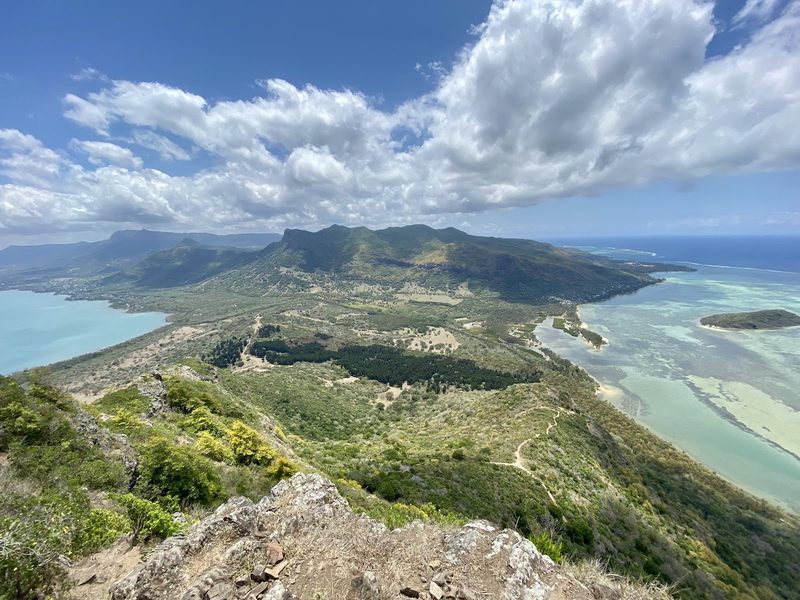
So is geography. There are 330 km of coral reefs around it and volcanic mountains exceeding 700 meters in height. In 30 minutes, you can reach from the beach to the rainforest, from the rainforest to the waterfall, and from there to the sacred Hindu lake. This is the big advantage of Mauritius compared to the Maldives: Maldives just means resort + beach + diving. Mauritius mountain + safari + beach + city + temple + restaurant + museum + hiking — six different holidays in the same holiday. Moreover, the prices are around one third of the Maldives.
This diversity is the reason for its fame as a honeymoon destination. The first day you don't leave the resort pool, the second day you climb a mountain, the third day you swim with dolphins, the fourth day you bargain at the Indian market in the city. You can both relax and have an active holiday on a single island. It is the ideal option for couples who want a tropical honeymoon but say "I would be bored at the resort for two weeks".
When to Go
Mauritius is in the southern hemisphere, so its seasons are opposite to Türkiye's. It is hot throughout the year (between 16-32°C), but there are two main periods: the dry/cool season from May to November, and the humid/hot season from December to April. When I say "winter" I mean 19-25°C — for Turks, it's spring, not winter.
| Period | Weather (daytime) | Rain | Otel Fiyatı | Notes |
|---|---|---|---|---|
| January-February | 27 / 31° | A lot | Low-Medium | Rainy season, risk of cyclones. Cavadee + Shivaratri festivals |
| March-April | 25 / 30° | Medium | Medium | Rainfall is decreasing, it is hot and humid. Holi + Independence Day |
| May | 22 / 27° | Less | Medium | The ideal season is starting. The sea is still 25°C |
| June | 19 / 24° | Less | Low | Cool and dry, hotel price lowest |
| July-August | 17 / 23° | Less | Medium | French families flee 'winter' peak for European summer |
| September | 18 / 24° | Less | Medium | The weather is getting warmer, the water is 24°C, not too crowded |
| October-November | 22 / 28° | Low-Medium | Medium-High | The most popular months of the island. Sega Festival end of November |
| December | 25 / 30° | Medium | Very High | European Christmas escape is the busiest and most expensive period |
Our general recommendation is May-November dry season. The weather is 22-28°C, the sea is still warm (24-26°C), there is little rain, there are few flies and mosquitoes. It's cool in August (22-24°C), but the beach fun continues — French families especially come here during this period. There is a risk of cyclones between December and February, and the island is under rain from January to February — definitely not recommended for honeymoon, both the price and the weather are bad.
How to get there
Mauritius's only international airport, Sir Seewoosagur Ramgoolam International Airport (MRU), is in the southeast of the island, 50 km south of the capital Port Louis.
Flights from Türkiye:
| Exit | Duration | Airline |
|---|---|---|
| Istanbul (IST) - MRU | 9 hours (direct) | Turkish Airlines (4-5 flights per week) |
| Istanbul - MRU | 12-15 hours (with transfers) | Emirates (Dubai), Etihad (Abu Dhabi), Qatar (Doha) |
Turkish Airlines has been operating direct flights since 2017 — this has opened Mauritius to the honeymoon market. Direct flight economy class costs 600-800 EUR for early purchase, 1,000-1,400 EUR for the last minute. Gulf connecting flights are cheaper but add 4-5 hours of transfer time. We recommend it directly for honeymoon.
Airport to city/hotel:
- Taxi: Fixed price. North coast (Grand Baie): 1,800-2,200 MUR (~36-44 EUR), 70-90 min. West coast (Flic en Flac): 1,500 MUR, 60 min. East (Belle Mare): 1,500 MUR, 50 min. Le Morne (southwest): 1,800 MUR, 75 min.
- Hotel transfer: Most luxury resorts include transfer or 30-50 EUR extra.
- Public transportation: There is, but we do not recommend it for first-time visitors with luggage — it takes hours.
Our advice: Ask for a transfer when making your hotel reservation and they will pick it up at your door. Negotiating a taxi with suitcases puts a strain on the island atmosphere.
Urban Transportation
There is public transportation in Mauritius, but a car is a must for a holiday. The island is 65 km long and 45 km wide — it is necessary to think not by walking, but by passing from coast to coast.
Rent a car: The most practical solution. A small vehicle costs 1,500-2,500 MUR (~30-50 EUR) per day. Left-hand traffic (former British colony of Mauritius), winding mountain roads, slippery in wet weather. Bring an international driver's license from Türkiye, some companies also give you a Turkish driver's license, but get an international driver's license to be safe. There are companies such as Avis, Hertz, Sixt + local Pingouin, ABC.
Taxi: No standard price tariff, bargaining for every trip. Hiring a hotel-based taxi driver (3,000-4,500 MUR, ~60-90 EUR per day) is the most comfortable option for most tourists — the driver is also a guide, knows the dining spots.
Bus: Very cheap (30-100 MUR, 1-2 EUR), wide network throughout the island. Main line: Port Louis - Curepipe - Mahebourg. Separate lines are required to reach the beach-resort zone. If you're not in a rush, try it for a day to feel the local atmosphere.
Metro Express: Light rail system between Curepipe and Port Louis, opened in 2020. It only works on that line.
Bolt/Uber: None. There is a native Taxi.mu application, but it is not widespread.
Accommodation Regions
In Mauritius, the choice of hotel/resort determines the type of holiday — each region has a different character.
Grand Baie and the North: The entertainment capital of the island. Restaurants, bars, nightclubs and shopping are busy. The beaches are calm (Trou aux Biches) and city life side by side. Ideal for young couples and those who want a social holiday. Family budget + luxury resort mix.
Belle Mare and the East: Luxury resort belt. Constance, LUX*, One&Only, Long Beach are here. 10 km long beach, the morning sun rises from the sea, less crowded. For quiet honeymoon couples and those who want a premium holiday. If you want to go out in the evening, a taxi is required.
Flic en Flac and West: Sunset side. The beach is long and safe, the restaurant-bar strip is lively but not as busy as Grand Baie. Good balance for families. Tamarin region is attractive for surfers and dolphin tours.
Le Morne and the Southwest: Premium honeymoon destination. Paradis, Dinarobin, Lux Le Morne, RIU resorts at the foot of Le Morne Brabant mountain. Nature, mountains, beach together. Windsurfing center (Kite Beach).
Bel Ombre and Güney: The quietest, least touristic area. Exclusive resorts like Heritage Le Telfair. Ideal for a nature-focused, "nobody knows" holiday.
Mahebourg and Southeast: Close to the airport, the local atmosphere is the busiest. Boutique accommodation, old town, fishing ports. For budget travelers and those who want a local experience.
What we do not recommend: Accommodation in the city center (Port Louis, Curepipe) — the beach is far away, the island pleasure becomes dull. Make sure your accommodation is on the coast.
Budget Plan
Mauritius is an expensive destination but cheap compared to the Maldives. Plan with flight + 7 days accommodation + food + car rental.
| Budget Style | Accommodation (night) | Food (person/day) | Activity/Transportation (day) | Total (2 people/7 days, excluding flight) |
|---|---|---|---|---|
| Economic (3* hotel or guesthouse) | 60-100 EUR | 25 EUR | 30 EUR | ~1.400 EUR |
| Moderate (4* resort half board) | 180-260 EUR | 30 EUR (non-half board) | 40 EUR | ~2,400 EUR |
| Comfort (5* resort full board) | 350-500 EUR | included | 50 EUR | ~3,500 EUR |
| Luxury (One&Only, Royal Palm, Constance Le Prince Maurice) | 800-2,000 EUR+ | included | 80 EUR | ~7,000 EUR+ |
Practical items: Phoenix beer (50 cl) 100-200 MUR (~2-4 EUR), Ti Punch cocktail 300-450 MUR (~6-9 EUR), creole lunch 400-800 MUR (~8-16 EUR), fine dining dinner 2,000-4,000 MUR (~40-80 EUR), snorkel tour 1,500-2,500 MUR (~30-50 EUR), rental car 1,500-2,500 MUR (~30-50 EUR) per day, gasoline 70 MUR (~1.4 EUR) per liter, Le Morne climb 1,800 MUR, Île aux Cerfs catamaran tour 3,500 MUR (~70 EUR).
Practical Tips
Currency: Mauritian Rupee (MUR). 1 EUR ≈ 50 MUR. Cards are accepted in resorts and large restaurants, cash is accepted in small places. ATMs are common in the city centre, sometimes less in coastal towns. There are places that accept Euro, but it's a bad exchange rate — convert to MUR.
Water: Tap water is drinkable, but if you are sensitive to taste, choose bottled water (50-80 MUR/1.5 lt).
Vaccination: No mandatory vaccinations. A yellow fever certificate is only required if you come from a yellow fever area. Hepatitis A and typhoid are recommended but not mandatory. There is no malaria.
Sun: UV index is high (8-12) throughout the year. High factor sunscreen is a must — choose coral-friendly (oxybenzone-free) for the reefs. Hat, glasses, out in the shade.
Street food: Dholl puri (Mauritius' national snack), gateau piment, alouda (rose water milk drink), boulettes (Chinese meatballs). Look at the cleanliness of the counter, the place where there is a line is a good place.
Languages you will encounter: Creole on the street, French in the media, English in official documents, Hindi-Tamil in the temple. Everyone speaks English — getting along is no problem.
Sega nights: Most resort hotels hold "sega evenings" 1-2 nights a week — local dancers, drums, open buffet. Is it touristic? Yes, but you get to meet a fun and UNESCO heritage culture.
Phone: Turkish number works, roaming is expensive (4-8 EUR/min). Buy Emtel or MyT SIM at the airport (local operator), 200-400 MUR (~4-8 EUR) plenty of GB for 1 week.
Time difference: 1 hour ahead from Türkiye (same in summer time). There is no jet lag problem.
Travel Guide with Children
Mauritius is family-friendly — its beaches are shallow, its resorts feature kids' clubs, and its nature parks are interactive.
Recommendations by Age Group
0-3 years: Trou aux Biches and Mont Choisy beaches are shallow and there are no waves, ideal for babies. There is usually a baby club in resorts. Pamplemousses Botanical Garden can be visited with a stroller. Bring a vacuum aspirator and cloth with you, local brands are not identified.
4-7 years: Children's section of Casela Adventure Park, La Vanille turtle reserve, Île aux Cerfs day trip beach are the favorites. Glass-bottom boat tours (Blue Bay marine park) are great for exploring underwater. Families with children usually choose the kids club of 5* resorts — Constance, LUX*, Heritage have good programs.
8-12 years: Casela full adventure park, Île aux Aigrettes nature reserve, short hiking routes in the Black River Gorges (2-3 km from Pétrin), snorkeling tour in Blue Bay. The giant water lilies in Pamplemousses are interesting.
13+ ages: Le Morne climbing (difficulty level appropriate for high school age), swimming with dolphins, surfing or diving course (there are PADI certified diving schools in Mauritius), Casela zip-line, parasailing, banana boat.
Top 5 Kid-Friendly Activities
Île aux Cerfs day trip — Shallow lagoon, white sand, banana boat, glass-bottom boat. A package where children can spend a full day.
Casela World Adventure Park — Zebra and antelope safari, cheetah feeding (age limit), zip-line. Full day of fun per family.
La Vanille — Turtle and Crocodile Farm — Touching area for 1,000-year-old Aldabra turtles, Nile crocodiles, insect collection. Educational and entertaining.
Pamplemousses Botanical Garden — Giant water lilies, kids can't believe the size. Tests on which a 30-pound child can stand are common on social media.
Blue Bay Marine Park snorkel — Protected marine park in the southeast of the island. It's shallow, clear, fish and coral dense. Ideal snorkeling starter for ages 7+.
Practical Information
Baby stroller: There is no problem in the resorts, the sidewalks are not flat in the city center. Off-road baby stroller preferred.
Food: Resort full board is the most practical. Indian cuisine out there can be spicy — order with "no chili, no spice" for the kid. Rice, pasta, grilled chicken are everywhere.
Child-friendly menu: Children's menu is standard in luxury resorts. Not available in street food shops.
Diapers/baby food: International brands (Pampers, Nestle) are available in city supermarkets but limited in coastal towns. Put a spare in your suitcase.
Warnings
- There may be currents on some non-resort beaches — ask locally before swimming.
- Corals cannot be touched or stepped on — both protection and safety (injury).
- Tropical sun is harmful to children's skin, SPF 50 and UV protective swimsuit is a must.
- During the cyclone season (December-March), the weather may change suddenly, be registered in the hotel's warning system.
Local Label and Culture Notes
Mauritians are friendly, smiling people. The mix of Indian, African, Chinese and European cultures has created a culture of tolerance — generally patient and helpful to tourists.
Greeting: English "hi/hello" occurs everywhere. French "bonjour" is more urban, Creole "bonzour" is local. Handshakes are standard, including between men and women. In a Hindu temple, take off your shoes and cover your head (scarf is recommended for women).
Restaurant rules: 10% tip is standard outside the resort, most bills do not add a "service charge". In Creole cuisine, eating with hands is accepted (especially for Indian dishes), but cutlery is always ready on the table.
Tip: 50-100 MUR (~1-2 EUR) per day for hotel staff, 10% for taxi driver, 100-200 MUR for beach-spa services. Even in all-inclusive resorts, tips are considered separately.
Perspective on Turks: The number of Turkish tourists in Mauritius has been increasing for the last 5 years (after THY direct flights), people know Türkiye positively. Since there is a Muslim population, the halal dining option is common — especially in Muslim neighborhoods such as Plaine Verte (Port Louis), Triolet, Goodlands, halal restaurants are easily found. In resorts, halal food is cooked separately for Muslim customers (notify in advance).
Sega culture: Local music and dance. If you have the chance to watch it in the evening programs, don't miss it - rhythms dating back to the slave era, sad and joyful at the same time. It is on the UNESCO Intangible Cultural Heritage list.
Hindu temple protocol: At Grand Bassin and other temples, remove shoes, head covering (female), don't wear shorts/short skirts, keep quiet inside, don't participate in rituals — just observe respectfully. Ask before taking photos.
Bargaining: There is bargaining in marketplaces and street vendors, the initial price is 30-50% inflated. Fixed price in resort and modern shops.
FAQ
Mauritius vs Maldives — which one? Both are tropical paradises but different holidays. Maldives = resort only + beach + diving, one hotel per island, luxury and isolated. Mauritius = mountains + safari + beach + city + culture + restaurant variety, active honeymoon, one third the price. If you say "All I do is relax on the beach", Maldives is the place. If you say "I want a variety of activities on holiday", Mauritius is the place. Ideal combination: both in the Indian Ocean, on the same flight line — there are many who do the combination of 4 days Mauritius + 3 days Maldives.
How to get there from Türkiye, how many hours? Turkish Airlines operates direct flights from Istanbul to Mauritius, 4-5 days a week. The flight takes 9 hours — shorter than Europe, shorter than Thailand. Departure is around 19:00-20:00 in the evening, arrival is around 06:00-07:00 in the morning, you can spend the whole night sleeping on the plane. Connecting flights (via Dubai, Doha, Abu Dhabi) are cheaper but take 12-15 hours. Directly recommended for honeymoon.
When is the best season? May-November is the dry season. The weather is 22-28°C, the sea is 24-26°C, there is little rain. June to August is ideal for those escaping Türkiye's summer heat — Mauritius "winter" is 22°C, beach enjoyment continues, hotel prices are the most affordable. December-February cyclone risk is the worst period. October-November and May are the most balanced months.
How many days are enough for a honeymoon? Minimum 7 days, ideal 10 days. We do not recommend less than 5 days — considering the length of the journey and getting used to the time period, you will have a 3-4 day holiday. With 7 days, you can divide it into 3 days resting at the resort and 4 days island tour. With 10 days you can go to the island of Rodrigues (90-minute flight from Mauritius, island-within-an-island) — a quieter, more “pristine” holiday.
Do I have to rent a car? If you want to go to non-beach places, yes. Not if you plan to just stay at your resort and take organized island tours. When you have a vehicle, you can go to places like Chamarel, Le Morne, Grand Bassin, Black River Gorges with your own plan, it is much more flexible. Left-hand traffic and mountain roads are challenging, but the roads are well-maintained. Renting a hotel taxi daily (3,000-4,500 MUR) is also a good alternative — the driver acts like a guide.
Can I find Turkish food? There are no Turkish restaurants in Mauritius — it is a remote destination, the Turkish diaspora is small. But Indian cuisine is very common and familiar to the Turkish palate — you'll find biryani, vindaye, dholl puri, kebabs (Indian style) galore. Since we are a Muslim population, halal food is standard and meat is safe. As Turkish customers increase in resorts, familiar options at "world cuisine" buffets are increasing — request in advance.
Is vaccination required? No, there is no mandatory vaccination. A yellow fever certificate is only required if you have crossed from a yellow fever risk country (Sub-Saharan Africa, tropical South America). There is no malaria, dengue fever is rare. Hepatitis A and typhoid are recommended but not mandatory. Just make sure your basic routine vaccines from Türkiye are up to date.
Currency and card usage? Mauritian Rupee (MUR), 1 EUR ≈ 50 MUR. Resorts, restaurants and shopping malls accept cards (Visa, Mastercard). Small local places (street vendors, taxi drivers, market) require cash. ATMs are common in cities, you can withdraw MUR with a Turkish bank card. There are places that accept Euro, but they convert at a bad exchange rate, switch to MUR.
Is Mauritius safe? Generally very safe. Violent crime rates are low and tourist areas are particularly good. Still, some precautions: don't walk on deserted beaches at night, leave valuables in the hotel safe, don't leave anything visible when parking a rental car. Some neighborhoods of Port Louis (Roche Bois, Plaine Verte inner streets) are deserted and not recommended at night, but there is no reason for tourists to go there. Female solo travel is casual — local women are seen out and about even at night.