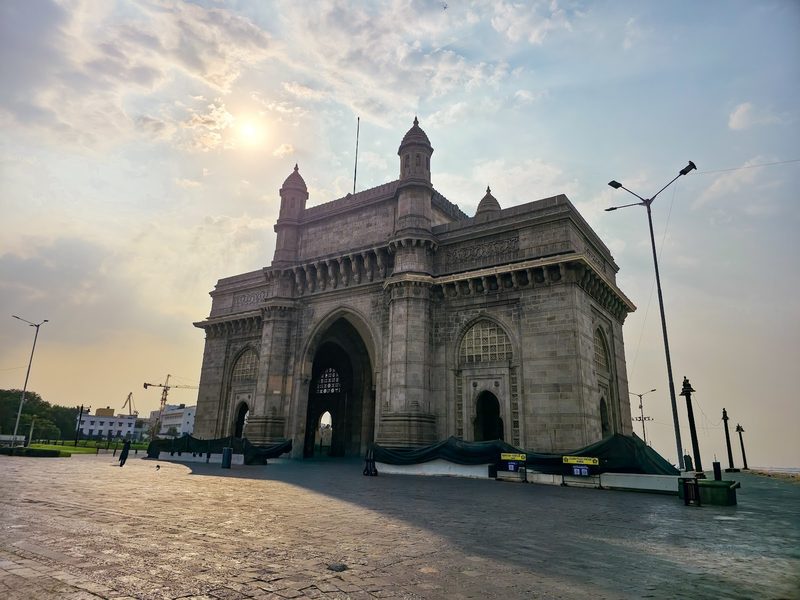
About
Mumbai is a city that welcomes you like a slap in the face. The moment you leave the airport, horn sounds, spice smells and the energy created by 21 million people come over you like a wave. Before you even get into the taxi, you realize that this place is like no other—it's as if the crowds of Istanbul, the pace of Tokyo, and the chaos of Cairo were mixed together in a blender.
This city, formerly known as Bombay, was built on seven islands off the coast of the Arabian Sea. Over time, the islands were connected to each other, the land was filled, and one of the most densely populated metropolises in the world emerged. There's a story on every square foot here — literally.
Fitness enthusiasts jogging along Marine Drive at 5am, dabbawalas dashing out of Churchgate station at noon (the 6,000-strong courier network carries 200,000 lunch boxes every day, the error rate is at six sigma), extras leaving a Bollywood movie set in the evening, families eating seekh kebabs at 2am on Mohammed Ali Road at night — all in the same city, at the same time. Mumbai never sleeps because it has no time to sleep.
The real magic of the city is in its contrasts. There are leather craftsmen in the narrow streets of Dharavi, 2 km away you sit in the shadow of Antilia (the world's most expensive house, Mukesh Ambani's 27-storey residence). While you are eating vada pav for 30 INR in Colaba, the Taj Mahal Palace Hotel, dating from 1903, rises behind you. These contrasts may disturb you, fascinate you — but they are impossible to leave indifferent.
Mumbai is also the financial capital of India, the home of Bollywood and the holy land of street food. Indian cinema dreams are made here, the heartbeat of the stock market is felt here, some of the best street food in the world is sold here for 30-50 INR (10-15 TL). Start exploring Mumbai with vada pav in one hand and chai in the other — this city will give you unforgettable stories.
When to Go
Mumbai's weather is simple: hot-humid, hotter-humid, and monsoon. If you choose the right time, it will be enjoyable; if you choose the wrong time, you will feel like you are on holiday in the shower stall.
November - February (Winter Season): Mumbai's golden period. The weather is 20-32 degrees, humidity is relatively low, there is no rain. December-January are the most comfortable months — 28-30 degrees during the day, 18-20 degrees in the evening. Walking on Marine Drive, going to Elephanta, and trying street food are always the most enjoyable during this period. But because everyone knows this, hotel prices are rising.
March - May (Summer Season): 33-40 degrees, 70-80% humidity. April-May are the most depressing months. If you walk on the street for 15 minutes and squeeze your shirt, water comes out. But the festival of Holi (mid-March) is during this period and the experience is indescribable. Prices are low, tourists are few.
June - October (Monsoon Season): Significant rain from mid-June to late September. In July-August, some parts of Mumbai may be under water, train services may be disrupted, and flights may be cancelled. In late August-early September there is the Ganesh Chaturthi festival — wet but incredible. If you want to see monsoon Mumbai, be prepared for this, there is no escape.
Short answer: if you're going for the first time, go between November and February. If you want to see Ganesh Chaturthi, aim for late August-early September, but be prepared for rain. Don't go in summer — Mumbai summer is brutal.
How to get there
Turkish Airlines has a direct flight from Istanbul to Mumbai — approximately 5.5-6 hours. You are landing at Chhatrapati Shivaji Maharaj International Airport (BOM). THY usually flies at night, you leave Istanbul at night and arrive in Mumbai early in the morning.
| Airline | Route | Duration | Average Price (Round Trip) |
|---|---|---|---|
| THY (direct) | IST → BOOM | ~5.5 hours | 350-550 EUR |
| Emirates | IST → DXB → BOM | ~9-11 hours | 300-480 EUR |
| Qatar Airways | IST → DOH → BOOM | ~10-12 hours | 320-500 EUR |
| Etihad | İST → AUH → BOM | ~10-12 hours | 310-490 EUR |
The best prices are generally seen in June-September (monsoon season) and early November. Diwali (October-November) and late December - early January (New Year's Eve) are the most expensive periods.
Transportation from the airport to the city center:
- Metro (Line 3 - Aqua Line): Direct connection from the airport to BKC, Worli, CSMT. 45-60 minutes, 60-100 INR. The most practical way.
- Ola/Uber: 300-600 INR, 45 minutes if there is no traffic, 2 hours+ if there is traffic. Mumbai traffic is brutal.
- Prepaid Taxi: Buy it from the official counter at the airport, the price is determined in advance. 700-900 INR to Colaba.
- AC Bus (BEST): Convenient but slow. 100-150 INR, 1.5-2.5 hours.
Tip: Mumbai traffic dwarfs even Istanbul. Roads stop between 8-11 in the morning and 17-21 in the evening. Plan a metro or night arrival for airport transfer.
Urban Transportation
Transportation in Mumbai is an adventure. If you choose the right vehicle at the right time, you will travel around the city efficiently; if you choose the wrong one, you will spend days in traffic.
Mumbai Metro: As new lines are opened, it saves lives. Line 1 (blue) Versova-Andheri-Ghatkopar line; Line 3 (aqua) airport-BKC-CSMT line is the most functional. Air-conditioned, fast, reliable. 10-50 INR one way.
Local Train: The lifeblood of Mumbai. Western Line and Central Line are the two main lines. It carries 7.5 million passengers a day. You'll have the most crowded experience of your life during morning and evening rush hour — don't ride at peak hours, you'll be crushed. Fast and 5-15 INR during off-peak hours. Buy a first class ticket (INR 50-90), a little more comfort.
BEST Buses: City buses go everywhere but are slow due to traffic. AC buses are more comfortable, 15-40 INR. Google Maps shows the routes correctly.
Ola/Uber: Both operate in Mumbai, Ola is slightly more common. Price determined in advance, GPS, safe. There is also an auto-rickshaw option (in the suburbs), it is cheaper.
Auto-rickshaw: Available everywhere in the north of the city (north from Bandra). It works by meter, short distance costs 20-50 INR. In South Mumbai (Colaba, Fort) auto-rickshaws are prohibited — you have to use a taxi.
Kaali-Peeli Taxi: Iconic black and yellow Mumbai taxis. It works by meter, minimum 28 INR. Old but nostalgic. A new generation of taxi drivers are switching to Uber, but there are still many of them.
Ferry: Ferries depart from Gateway of India to Elephanta Caves and Alibaug. Mandwa ferry (Alibaug direction) is also a good daily option, 150-200 INR.
Golden rule: Book a hotel close to the metro or local train route. Definitely prefer the rail system during peak hours (08:00-11:00, 17:00-21:00). Ola/Uber for short distance, auto-rickshaw north of Bandra. Getting stuck in traffic takes hours off your life.
Accommodation Regions
Where to stay in Mumbai depends on what you want to see and your wallet:
Colaba / Fort: Tourist center. Gateway of India, Taj Mahal Palace, museums, Colaba Causeway are all here. Many places to visit within walking distance. Every budget, from hostel to 5 star hotel. 20-400 EUR per night.
Bandra West: Mumbai's hip neighborhood. Cafes, restaurants, bars and shopping are busy. The neighborhood of Bollywood stars. Relatively close to the airport. 40-200 EUR per night.
Lower Parel / Worli: Business district but full of bars and restaurants that comes alive in the evening. High Street Phoenix Shopping Mall is here. Metro connection is getting stronger. 50-250 EUR per night.
Juhu: Coastal area. Bollywood houses, beach restaurants, relaxed atmosphere. Close to the airport but far from the city center. 60-300 EUR per night.
BKC (Bandra Kurla Complex): New business centre. Luxury hotels, corporate buildings. Metro connection is good but it is a soulless area. Ideal for business travel. 80-400 EUR per night.
Andheri: The closest area to the airport. There are many budget-friendly options. Practical for night arrival or early departure. 15-80 EUR per night.
Recommendation: Colaba/Fort if you are going for the first time, Andheri or Colaba hostels if your budget is limited, Bandra if you want a Bollywood atmosphere, BKC if you are on a business trip.
Budget Plan
Mumbai is the most expensive city in India, but it is still very affordable by Turkish standards. You can experience Mumbai with street food for even 15 EUR per day.
| Category | Economical | Medium | Luxury |
|---|---|---|---|
| Accommodation / night | 800 INR (hostel) | 4,000 INR (3-4*) | 20,000 INR+ (5*) |
| Meal/day | 400 INR (street) | 1,500 INR | 6,000 INR+ |
| Transportation / day | 100 INR (train/metro) | 500 INR (metro + Ola) | 2,000 INR (Ola/taxi) |
| Activity / day | 200 INR | 1,000 INR | 4,000 INR |
| 3 days total | ~4,500 INR (~50 EUR) | ~21,000 INR (~230 EUR) | ~96,000 INR (~1,050 EUR) |
| 7 days total | ~10,500 INR (~115 EUR) | ~49,000 INR (~535 EUR) | ~224,000 INR (~2,450 EUR) |
Yes, you can have a great time in Mumbai with 15-20 EUR per day on an economical plan. Vada pav 30 INR (10 TL), chai 15 INR (5 TL), local train ticket 5-15 INR. One of the cheapest big cities in the world.
1 EUR is approximately 92 INR (May 2026 exchange rate). 1,000 INR is about 11 EUR.
Practical Tips
- Download Ola app while you are in Turkey. There is also Uber in Mumbai, but Ola is more common and offers the auto-rickshaw option. Finding a taxi eliminates the hassle.
- Carry cash but give it out. Street stalls, auto-rickshaws and small shops require cash. Keep 1,000-2,000 INR in your pocket. UPI (digital payment) is becoming widespread, but foreign cards do not work everywhere.
- Drink water, don't drink tap water. Bottled water costs 20 INR everywhere. Be careful with ice—big restaurants are safe, street stalls can be risky.
- Start slowly for the stomach. Start with light street food on the first day, wait for your stomach to get used to it. It's smart to take probiotics. Be careful with raw vegetables and salads — cooked meals are safer.
- Take a raincoat, not an umbrella, during monsoon. Mumbai rain turns the umbrella upside down for fun. Water-resistant shoes and a waterproof case for your phone are a must.
- Avoid local train peak hours. Riding trains between 8-11am and 5-9pm is like bodybuilding — you'll get stuck, you'll get crushed, you'll sweat. Comfortable and fast during off-peak hours.
- Get SIM card from airport. Jio or Airtel 28 days tourist package 500-800 INR, unlimited data. A passport photocopy and photo may be required, they activate it instantly at the airport.
- Bargaining culture: Bargaining is expected at Colaba Causeway, Crawford Market and street stalls. Offer 50-60% of the initial price. Bargaining in fixed price stores and shopping malls.
- When visiting temples and mosques, take off your shoes and dress conservatively. Women should choose clothes that cover shoulders and knees. In some mosques, women's entrance may be restricted.
- Be careful when taking photos. Ask for permission before taking photos of people. It is unethical to take photos outside of the tour in Dharavi. Photography is prohibited in military zones and some government buildings.
- Tip: 10% of the bill or 50-100 INR at restaurants, 50 INR to hotel porter, rounding up for auto-rickshaw is sufficient.
- Electrical socket: Type C/D/M is used. Type C (Europlug) is compatible with sockets in Türkiye, but it is wise to bring an adapter. Voltage 230V, frequency 50Hz — same as Türkiye.
Travel Guide with Children
Mumbai is a challenging but rewarding destination for families with children. Indians love children — attention, smiles and “cute baby!” everywhere. You will get comments. It may be hot, crowded and noisy, but exotic experiences and kid-friendly venues surprise.
Recommendations by Age Group
0-3 years: Mumbai pavements are stroller-friendly — a kangaroo carrier is a must. There are baby care rooms in large shopping malls (High Street Phoenix, Palladium). Hotel pools and shopping mall playgrounds are saviors. Stay away from street food, prefer hotel restaurants.
4-7 years: Nehru Science Center interactive science museum is perfect for this age group. EsselWorld/Water Kingdom is a full day of fun. Sand castle and pani puri experience at Juhu Beach makes kids happy.
8-12 years: Elephanta Caves ferry and cave exploration are full of adventure. CST railway station and dabbawalas are interesting. Film City Bollywood tour gives the most pleasure at this age. If you get a chance to watch a cricket match, don't miss it.
Ages 13+: Colaba Causeway shopping and street food tour, Dharavi Reality Tour (there is an age limit, check), Kala Ghoda art gallery. Watching Bollywood movies (PVR IMAX) is a different experience.
Top 5 Kid-Friendly Activities
Nehru Science Centre — Interactive science museum. Learning by touching, experimenting, planetarium. Ideal for rainy day. Kids ages 4-14 love it.
EsselWorld & Water Kingdom — Mumbai's amusement park and water park. Full day activity. Located on Gorai Island, far from the city center but rewarding for kids.
Elephanta Caves Ferry — Race with seagulls on the ferry, explore caves on the island, encounter monkeys. Adventure, history and sea together.
Juhu Beach — Sand, waves, guys selling kites, pani puri stalls. Mumbai's most child-friendly beach. Free and loose.
Taraporevala Aquarium — Small but cute aquarium on Marine Drive. 30-45 minutes is enough, but it's perfect as a walking break. Entrance is 100 INR.
Practical Information
Baby stroller: Mumbai pavements are full of potholes, cables and construction materials. A kangaroo carrier or lightweight folding car is more practical. Shopping malls and metro stations are car-friendly.
Children's menu: Children's menus are rare in Indian restaurants, but they are ubiquitous with jeera rice, plain naan, paneer tikka (grilled cheese) and mango lassi. Be careful with spicy foods — learn to say "no spice please" or "mild."
Child ticket discounts: Children are half price or free in most museums and activities. Children under 5 are free on the local train. Shopping mall activities generally apply child prices.
Toilet: Clean and free in shopping malls. It's hard on the streets and in the stations. Always keep wet wipes and disinfectant in your bag.
Warnings
- Heat and humidity tire children quickly. Take frequent breaks in air-conditioned places and drink water constantly.
- Hygiene standards in street food vary. Do not give raw vegetables, ice or street water to young children.
- Crowds and noise can overwhelm young children. Do not take public transportation at peak hours.
- Mumbai traffic is stressful for families with children. Use Ola/Uber, there are no child seats in the auto-rickshaw.
- Monkeys (Elephanta, some parks) may snatch food from children's hands — holding food in hand.
Local Label and Culture Notes
Mumbai is India's most cosmopolitan city. Every religion, every language, every culture lives together here. But there are some sensitivities that are easy to offend without knowing.
Right hand rule. Use your right hand when eating, handing something, and greeting. The left hand is considered reserved for unhygienic tasks. This rule is valid all over India.
Namaste greeting. Bowing slightly with hands folded at chest level — Indian way of greeting. Indians also accept handshakes, but namaste is always welcome. Before shaking hands with someone of the opposite sex, wait for the other party's initiative.
Shoe policy. Take off your shoes when entering temples, mosques and some houses. If you see a pile of shoes at the door, leave. Some shops and restaurants also follow this rule.
Cow is sacred. In India, especially in Hindu culture, the cow is considered sacred. Do not touch, honk or disturb the cows wandering on the street. Steak is forbidden or taboo in most places — avoid eating beef, at least not openly.
Photo sensitivity. Ask permission before taking photos of people, especially women and children. In Dharavi and similar neighborhoods, photography without permission is unethical and may attract backlash.
Caste system talk. Even though the caste system has been officially abolished in India, its social impact remains. This topic is sensitive — as a foreigner, don't comment, don't ask questions, don't tell jokes.
Caution in religious areas. Only Hindus can enter some interiors of Hindu temples. Women's entry may be restricted in mosques. Follow the rules, don't hesitate to ask, but don't insist.
Alcohol laws. The purchasing age for alcohol in the state of Maharashtra is 25 (India's highest limit). On some days (Gandhi Jayanti, Republic Day, etc.) the sale of alcohol is prohibited (dry day). Hotel minibars are generally exempt.
Tip: 10% or INR 50-100 at the restaurant. If the service charge has already been added, there is no expectation of an extra tip, but the waiters will be pleased. 50-100 INR to hotel carrier, rounding up in taxi/auto-rickshaw is enough.
FAQ
How many days to visit Mumbai? Minimum 3 days, ideal 5-7 days. You can fit South Mumbai's icons, Elephanta and street food in 3 days. Bandra, Bollywood, monsoon (depending on the season) and neighborhood exploration are added in 5-7 days.
Is there a language problem? Mumbai is one of the most English-speaking cities in India. Hotels, restaurants, museums, Ola/Uber drivers understand English. Street stalls are limited but hand signals and Google Translate are sufficient. Learning a few words in Hindi (namaste = hello, dhanyavaad = thank you, kitna = how much) is welcomed with a smile.
Is Mumbai safe? Generally safe, especially in tourist areas. Violent crime against tourists is rare. Things to watch out for: pickpocketing (carry your bag in front on crowded trains and in markets), scams (fake guides, inflated prices) and wandering around alone late at night (especially for women). Ola/Uber is a safe option at night.
Is street food safe? Mumbai's street food is world-famous and generally safe. Choose stalls with queues — high circulation means fresh ingredients. Start light on the first day, preferring cooked foods to raw ones. It is wise to take probiotic medication. If you have stomach sensitivity, eat at the hotel restaurant for the first 2 days, then transition slowly.
Is Mumbai expensive? Expensive by Indian standards, but very affordable by Turkish standards. Vada pav 30 INR (10 TL), chai 15 INR (5 TL), local train ticket 5-15 INR, a good lunch 300-500 INR (35-55 TL). Luxury hotels and rooftop bars are expensive, but the overall cost of living is low.
How to get an Indian visa? An e-Visa is required to enter India with an ordinary (burgundy) Turkish passport. Apply online via indianvisaonline.gov.in, USD 25-80 fee, 3-5 business days processing time. The passport must be valid for at least 6 months and have at least 2 blank pages.
Why is the drinking age 25? Law of the state of Maharashtra. It is forbidden to buy and drink alcohol under the age of 25. Some venues check, some don't, but this is the rule. Additionally, the sale of alcohol is completely prohibited on so-called "dry days".
Which is the best transportation app? Ola and Uber both work. Ola is slightly more common and offers an auto-rickshaw option. Google Maps is reliable for routes. M-indicator app shows local train and bus times.
Can we go during monsoon? You can go, but be prepared. There is heavy rain between June and September, and some days the city may be flooded. Elephanta ferry may be canceled and train services may be disrupted. But Ganesh Chaturthi (late August-early September) is during the monsoon season and this experience is not available anywhere else. Raincoat, waterproof shoes and a flexible plan are a must.
How to get from Mumbai to Goa? Plane (1 hour, 3,000-8,000 INR), train (Konkan Railway, 8-12 hours, 500-2,000 INR, views are stunning) or bus (10-14 hours, 800-2,000 INR). The train is the most enjoyable option, the coastal view is beautiful in every frame. Buy tickets in advance via IRCTC.
What are Dabbawalas? Mumbai's legendary food courier system. Every day, 6,000 dabbawalas carry 200,000 lunch boxes from homes to offices. The error rate is 1 in 6 million deliveries — efficiency that Harvard has made a case study. You can watch it at Churchgate station at noon.