About
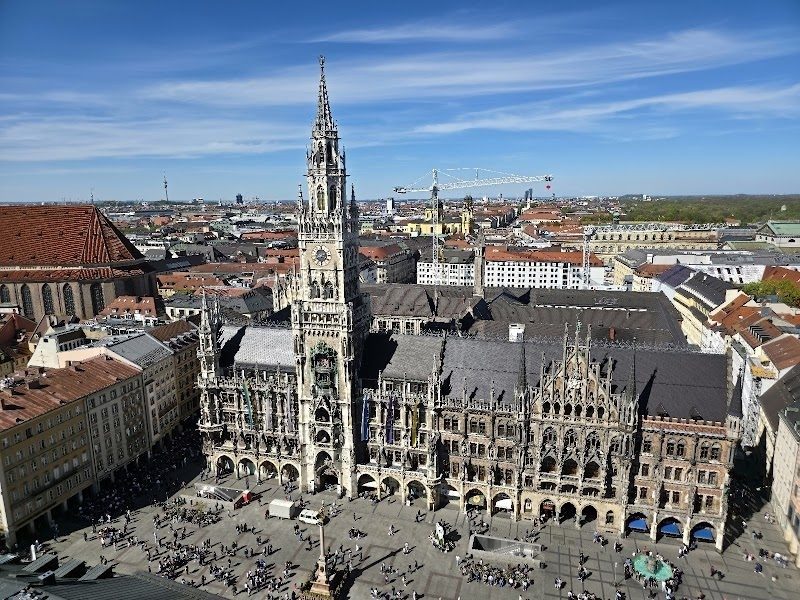
The best word to describe Munich is: comfortable. It's Germany's third largest city, but you won't find the chaos of Berlin, the wind of Hamburg, or the suit-wearing stress of Frankfurt here. Instead, there are people sitting under the chestnut tree in the beer garden, watching the Alps, happy with their lives. The Bavarians say “leben und leben lassen” — live and let live. This philosophy is felt in every corner of the city.
Founded on the banks of the Isar River, 100 km north of the Alps, Munich geographically promises both city and nature. You can drink coffee at Marienplatz in the morning and swim by a lake in the afternoon. In winter, you can go to the ski slopes in 1 hour from the city center. This is a luxury that very few big cities in Europe have.
The Wittelsbach dynasty ruled this city for 738 years — from 1180 to 1918. Nymphenburg Palace, Residenz, Alte Pinakothek... we owe all of this to them. But Munich is not just history and palaces. BMW's headquarters are here, Siemens was established here, Allianz does insurance here. Bavaria is Germany's richest state and Munich is its showcase. You feel this wealth in the streets, but it's not ostentatious — like a good Bavarian beer, it's quality but not ostentatious.
As for the beer culture: In Munich, beer is not a beverage, it is a way of life. The Reinheitsgebot (Purity Law) of 1516 was born in this city — beer is made only from water, barley malt, hops and yeast, you are not allowed to add anything else. The six major breweries (Augustiner, Paulaner, Spaten, Hacker-Pschorr, Löwenbräu, Hofbräu) are like the six pillars of the city. Each has its own beer garden, its own character, its own fans. Augustiner is the favorite of locals, Hofbräu is the favorite of tourists. When you raise your first Maß (1 liter beer glass) you will understand why they take it so seriously.
Let's talk about the cuisine: Bavarian cuisine is not elegant, but satisfying. Weißwurst (white sausage) is eaten in the morning, Schweinshaxe (crispy pork shank) in the evening, Knödel (dough balls) at every meal. Brezel (salt pretzel) is on every corner, Obatzda (cheese paste) is in every beer garden. Are you a vegetarian? Don't worry, Munich has evolved in this regard, too—restaurants in Glockenbach and Schwabing, in particular, are among the best in Germany for vegetarian and vegan options.
For travelers from Türkiye, Munich is a city that feels familiar. One of the largest Turkish communities in Germany lives here. There are Turkish markets, restaurants, mosques. It is not difficult to find Turkish-speaking tradesmen around the Hauptbahnhof (main train station) and in the Sendlinger Tor area. Bavarians differ from the rest of the Germans in friendliness — “Servus!” They smile and their sincerity is real.
When to Go
Munich has four distinct seasons. Due to the Alpine climate, summers are warm and winters can be cold and sometimes harsh.
| Period | Weather (daytime) | Density | Otel Fiyatı | Notes |
|---|---|---|---|---|
| January-February | -3 / 3° | Low | Low | Cold but beautiful; Starkbierfest in early March |
| March | 1 / 9° | Low-Medium | Low | Starkbierfest! Strong beer season |
| April | 4 / 14° | Medium | Medium | Spring is coming, beer gardens are opening |
| May | 8 / 19° | Medium-High | Medium-High | One of the most beautiful months; everywhere is green |
| June | 12 / 23° | High | High | Tollwood Festival; long days |
| July | 14 / 25° | High | High | Summer peak; Isar edge live |
| August | 13 / 24° | Medium-High | Medium | Some locals are on holiday |
| September | 10 / 20° | Very High | Very High | OKTOBERFEST! Hotels are 2-3 times the price |
| October | 5 / 13° | Medium-High | Medium | Autumn colors; Auer Dult |
| November | 1 / 6° | Low-Medium | Low | Christmas markets open at the end of November |
| December | -1 / 3° | High | High | Christmas markets, Glühwein, winter magic |
Our general recommendation is May-July and End of September-early October. But be careful: Oktoberfest period (mid-September-early October) increases hotel prices 2-3 times and the city explodes. If you are aiming for the festival, book a hotel at least 3-4 months in advance. If you're not aiming for it, skip that period entirely. December is magical for Christmas markets, while March offers a local experience with Starkbierfest.
How to get there
Munich's main airport, Franz Josef Strauss Airport (MUC), is 30 km northeast of the city centre. Germany's second largest airport.
Flights from Türkiye:
| Exit | Duration | Airline |
|---|---|---|
| Istanbul (IST) - MUC | 2 hours 45 min | THY, Lufthansa (5-6 flights per day) |
| Istanbul (SAW) - MUC | 3 hours | Pegasus, SunExpress (2-3 flights per day) |
| Ankara (ESB) - MUC | 3 hours 10 min | THY (5 flights per week) |
| Izmir (ADB) - MUC | 3 hours | THY, SunExpress (4-5 flights per week) |
| Antalya (AYT) - MUC | 3 hours 15 min | SunExpress, Corendon (seasonal) |
2 hours and 45 minutes flight from Istanbul — even for a long weekend.
From airport to city:
- S-Bahn S1/S8: 40-45 min, Marienplatz or Hauptbahnhof, 13 EUR one way. The most practical option.
- Lufthansa Express Bus: 45 min, Hauptbahnhof (main station), 13 EUR. Same price as S-Bahn but direct.
- Taxi: 40-50 min, 70-80 EUR fixed fee. It's expensive, but it might make sense if you're 3-4 people.
Our recommendation is S-Bahn — it's cheap, reliable and connects directly to the city's transportation network. It's even cheaper if you buy Strifen Karte (multiple tickets).
Train option: With Deutsche Bahn Vienna 4 hours, Salzburg 1.5 hours, Prague 5 hours, Innsbruck 2 hours, Zürich 4.5 hours. Bayern Ticket: See all of Bavaria for 29 EUR per day — Neuschwanstein, lakes, Alpine towns.
Urban Transportation
Munich's public transport operates under the umbrella of MVV (Münchner Verkehrs- und Tarifverbund). Tidy, clean and easy.
U-Bahn (Metro): 8 lines cover the city comprehensively. It operates between 04:30 - 01:00, with additional trips on Friday and Saturday nights. Frequency in the central region is 5-10 minutes.
S-Bahn (Suburban train): 8 lines connect the surrounding districts and the airport. You reach Marienplatz, Hauptbahnhof and Ostbahnhof via the Stammstrecke (central tunnel line).
Tram (Straßenbahn): 13 lines, especially useful for Schwabing and the northern regions. There are N-Tram night lines.
Bus: It covers the points not covered by the metro and tram. Night buses (N lines) operate on weekdays.
Ticket system: Munich works with the zone system. For the central zone (M), one way costs 3.70 EUR, day pass 8.80 EUR, 3-day pass 18.60 EUR, group day pass (up to 5 people) 17.80 EUR. The group day pass for 3 people or more is very advantageous — it costs 6 EUR per person.
IsarCard Woche (weekly): 20.20 EUR for Zone M. If you're staying 4+ days, get this.
Bicycle (MVG Rad): Shared bike throughout the city. 1 EUR for the first 30 minutes, 0.08 EUR/min thereafter. Munich is flat, with a good cycle path network — the Englischer Garten and the Isar edge are great for cycling.
Taxi/Uber: Uber, Bolt and Free Now work. Short distance within the city costs 10-18 EUR.
Accommodation Regions
Munich is compact — with the right choice of area, you can get everywhere by metro or on foot.
- Altstadt (Old Town / Zentrum): Marienplatz, Viktualienmarkt, Residenz are all within walking distance. It is the most expensive area, but it is unrivaled in terms of location. Ideal for short visits and couples.
- Schwabing: University area, cafes, bars, adjacent to Englischer Garten. Young and energetic. Prices are 20-30% more affordable than in the center. For solo travelers and young couples.
- Glockenbachviertel / Isarvorstadt: The trendiest neighborhood in Munich. Boutique hotels, vintage shops, vegan cafes. LGBTI+ friendly. Nightlife is lively. For travelers with an alternative spirit.
- Maxvorstadt: Pinakothek museums, universities, bookstores. Culture and arts focused region. Prices are reasonable, 10 minutes by tram from the center.
- Hauptbahnhof surroundings: The most practical means of transportation - train station, airport shuttle, metro in all directions. There are plenty of hotel options, prices to suit every budget. It can be a bit crowded and noisy at night.
What we do not recommend: During Oktoberfest Theresienwiese area gets noisy at night; Moosach and Feldmoching are far from the center and have little to offer in terms of tourism.
Budget Plan
Munich is the most expensive city in Germany. But thanks to the beer garden culture, it is possible to have a quality experience with a reasonable budget.
| Budget Style | Accommodation | Food | Activity/Transportation | Total (2 people/3 days) |
|---|---|---|---|---|
| Economic (hostel/2* hotel, Leberkäse + beer garden) | 250 EUR | 150 EUR | 60 EUR | ~460 EUR |
| Moderate (3* hotel Schwabing/Maxvorstadt, mixed) | 450 EUR | 250 EUR | 100 EUR | ~800 EUR |
| Comfort (4* boutique hotel, gastronomy + beer) | 900 EUR | 400 EUR | 150 EUR | ~1.450 EUR |
| Luxury (5* hotel Altstadt, fine dining) | 2.200 EUR+ | 800 EUR+ | 250 EUR | ~3.250 EUR+ |
Practical items: Maß beer (1L) in the beer garden 10-13 EUR, Weißwurst + Brezel 8-12 EUR, Schweinshaxe 16-22 EUR, Leberkäse Semmel 4-5 EUR, coffee 4-5 EUR, museum entrance 7-15 EUR, metro day pass 8.80 EUR, Schmalznudel 2-3 EUR, Obatzda + Brezel 8-10 EUR.
During Oktoberfest: Add 30-100% to everything. Hotel prices go up 2-3 times, Maß in the beer tent is 15-16 EUR.
Practical Tips
Water: Munich's tap water comes from the Alps and is of excellent quality. You can say “Leitungswasser bitte” (tap water please) in a restaurant, but in Germany some waiters may grimace — ordering bottled water is more common and expected behavior. Don't worry about water in beer gardens, you'll be drinking beer anyway.
Sundays: Stores are closed on Sundays throughout Germany. Supermarkets, clothing stores, all of them. Only restaurants, cafes, museums and some bakeries are open. Finish your Saturday shopping. Shops inside the Hauptbahnhof are open every day, including Sunday — rush there for urgent shopping.
Tip: Tipping is not mandatory in Germany, but it is customary to leave 5-10%. At the restaurant, it is enough to round up the bill and say "stimmt so" (keep the change). No tip is expected in the self-service section of the beer garden; Leave 1-2 EUR at the waiter service.
Bayern Ticket: You can use all Bavarian regional trains (RE, RB, S-Bahn) for 29 EUR per day (2nd class, single person). Each additional person +10 EUR. Group of 5 69 EUR — all day train for 14 EUR per person. Neuschwanstein, Salzburg and Tegernsee are perfect for daily tours. Valid only on regional trains, not on ICE/IC high speed trains. Starting from 09:00 on weekdays, all day on weekends.
Weather surprise: The Föhn wind is Munich's famous weather phenomenon — the warm wind blowing in from the Alps can suddenly warm the air and turn the sky crystal clear, even in winter. But it can cause headaches. Even in summer there may be sudden rains, carry a folding umbrella.
The art of carrying a Maß: A 1 liter beer glass (Maß) weighs approximately 2.3 kg (with beer). It's tradition to carry it with one hand, but your arm will hurt. It's not a shame to hold it with two hands, it's a shame to knock it over.
Beer garden rules: You can bring your own food (Brotzeit tradition) but you must buy the drink there. This rule has been around for 200 years and everyone abides by it. When you sit at the table, if there is someone, "Ist hier noch frei?" Ask (is this place empty?) — communal table culture is a must in Bavaria.
Health: Emergency 112, police 110. Hospitals are of high quality and serve tourists. EU citizens with a European Health Insurance Card (EHIC) can receive free treatment; Turkish citizens must have travel insurance. Pharmacies (Apotheke) are located with a green cross sign, there is a guard system.
Travel Guide with Children
Munich is a great city for families with children. Germans' meticulousness regarding child safety and infrastructure is evident here.
Recommendations by Age Group
0-3 years: Englischer Garten is flat and wide, ideal for a stroller. Munich's parks are everywhere — Hofgarten, Nymphenburg park, Olympiapark are all cozy. Elevators are standard on U-Bahn and S-Bahn. High chairs (Kinderstuhl) in restaurants are ubiquitous.
4-7 years: The Kinderreich section of the Deutsches Museum offers interactive experiments — water channels, levers, playing with sound. Hellabrunn Zoo (on the edge of the Isar, 40 hectares) is a favorite of this age group. The BMW Welt Junior Campus workshop is also fun.
8-12 years old: The Deutsches Museum is truly the paradise of this age group — go down into the mining tunnel, enter the submarine, sit in the airplane cockpit. Olympiapark roof tour (walking with harness) for ages 10+. Allianz Arena stadium tour for football fans.
Ages 13+: Watching (or trying) the Eisbach surfing, vintage shops of Glockenbachviertel, picnic by the Isar, BMW Welt showroom attract young people.
Top 5 Kid-Friendly Activities
Deutsches Museum + Kinderreich — The world's largest science museum. Children pull levers, design water channels, and sit in the airplane cockpit. Take a full day, it's impossible to get bored.
Hellabrunn Zoo — 40 hectares on the banks of the Isar River. With the Geo-zoo concept, animals are grouped according to continents. There is elephant house, polar region, tropical bird house. Children's playgrounds are distributed throughout the park.
Englischer Garten + Eisbach surfing — Running in the park, watching surfers in Eisbach, drinking lemonade in the Chinesischer Turm beer garden. Children's playground next to Chinesischer Turm.
BMW Welt Junior Campus — Workshops for children aged 7-13: design a car, make a motorcycle miniature. Advance reservation required. Free or low fee.
Olympiapark — SeaLife aquarium, mini golf, pedal boat in summer. Ice skating in winter. City view from 190 meters above Olympiaturm. There is something for every season.
Practical Information
Baby stroller: Munich is a flat city (even though it is at the foot of the Alps, the city center is flat). Elevators are standard on U-Bahn and S-Bahn. Trams have low floors. The sidewalks are wide and well-maintained.
Children's menu: Kindermenü is standard in Bavarian restaurants. Small Schnitzel, Knödel, Kaiserschmarrn (puff pastry dessert), Spätzle (Bavarian pasta) are children's favorites. There are many places with children's menus and playgrounds in beer gardens.
Child ticket discounts: At MVV, children under 6 are free, 6-14 are half price. Children under 18 are free or discounted at state museums. Ages 6-14 are free on Bayern Ticket (with adult ticket).
Toilet: Available in museums, shopping malls and cafes. Public toilets (0.50-1 EUR) are clean and common. Free in beer gardens.
Warnings
- There are FKK (nude sunbathing) sections in the Englischer Garten. Inform children in advance or stay away from those areas.
- Shops are closed on Sundays — plan your entertainment around museums, parks and restaurants.
- Oktoberfest can be visited with children, but only on weekdays before noon (Familientag). It is definitely not a children's environment in the evenings.
- You can swim in the Isar River, but the current can be strong. Do not leave the children aside.
Local Label and Culture Notes
Bavarians are different from the rest of Germany — they'll be glad if you tell them that. They define themselves first as Bavarians and then as Germans. "Grüß Gott" is the standard greeting, "Guten Tag" is also accepted, but "Grüß Gott" immediately moves you into the "this guy knows" category. When you leave, say "Pfiat di" (God bless you) or simply "Servus".
Beer garden etiquette: The beer garden is a sacred institution. Buy your own beer and food in the self-service section and bring it to the tables yourself. There is a separate section with waiter service. It's normal to sit at communal tables — "Ist hier noch frei?" you ask and sit down. Chatting with people you don't know is expected behavior, keeping your distance is considered strange. "Prost!" and clink glasses while making eye contact — there is a Bavarian superstition that says skipping eye contact is bad luck.
Dress: Munich dresses casually but neatly. Lederhosen and Dirndl are worn at Oktoberfest and in beer gardens — not in everyday life. But wearing these at festivals is not a "costume", it is a sign of respect. There are rental shops, you can rent Lederhosen for 30-50 EUR. There is a dress code in P1 and similar clubs.
Punctuality: Bavarians are punctual. Being late for a tour, restaurant reservation, or meeting is not tolerated. Be there 5 minutes in advance.
Weißwurst rule: Traditionally, Weißwurst (white sausage) is eaten before 12:00 noon. "Weißwurst darf das Mittagsläuten nicht hören" — the white sausage must not hear the noon bells. The sausage is not cut with a knife, it is sucked into the mouth using the "zuzeln" technique, or it is cut lengthwise and separated from its shell. Sweet mustard (Süßer Senf) is served with it, but adding bitter mustard upsets the Bavarians.
Beer types: Helles (light lager, most common), Weißbier/Weizen (wheat beer), Dunkel (dark), Starkbier/Doppelbock (strong, 7-9%). Radler beer + lemonade mix is popular on hot days. "Ein Helles bitte" (one open beer please) is the safest order.
Quiet hours: "Ruhezeit" (quiet time) in Germany between 22:00 - 06:00 at night and all day on Sundays. Making noise in a hotel, Airbnb or outside may lead to a neighbor complaint. This rule is taken seriously in Bavaria.
FAQ
How many days to visit Munich? Three days comfortably cover the main points of the city. If you give it five days, you can add Neuschwanstein or Alpine lakes for a day. Ideal for a week Munich + Bavaria combination. During the Oktoberfest period, 3-4 days are enough, the rest will go to your lungs.
Is English sufficient? Definitely. Munich is an international city, English is spoken smoothly in hotels, museums and tourist restaurants. You may sometimes have a hard time in beer gardens and local venues, but for basic orders, "Ein Helles bitte", "Zahlen bitte" (check out please) and "Danke" are enough.
How do I prepare for Oktoberfest? Book the hotel at least 3-4 months in advance — during Oktoberfest, prices increase 2-3 times and occupancy reaches 95%. Admission to the beer tents is free, but finding a spot is difficult; Your chances are higher on weekday afternoons, almost impossible on Saturday evening. Wearing Lederhosen/Dirndl makes it easier for you to join the atmosphere. There are also sitting areas in the open area like a park, if you can't get into a tent you can have fun there too.
Is it possible to visit Neuschwanstein on a day trip? Yes, train to Füssen is 2 hours with Bayern Ticket. You need to reserve a full day, including the rest of the time in the castle. Buy your ticket online in advance — the box office may run out of tickets. Some indoor areas may be closed during the winter months.
Munich or Berlin? Completely different cities. Munich is orderly, rich, traditional, close to nature. Berlin is chaotic, alternative, cheap, its nightlife is legendary. In Munich you sit in the beer garden and watch the Alps, in Berlin you are still dancing at 6:00 in the morning. See both, but adjust your expectations on the same trip — going from one to the other will feel like you've gone to another country.
I don't drink beer, what will I do in Munich? Much! Alte Pinakothek is a world-class museum, Deutsches Museum is endless entertainment even with children, Englischer Garten is a giant park, Nymphenburg Palace is baroque elegance. Munich's cuisine is not just about beer — Kaiserschmarrn, Apfelstrudel, Lebkuchen... Desserts are also Bavaria's strong suit.
How to get from Munich to Salzburg? Regional train with Bayern Ticket: 1 hour 40 min, only 29 EUR. ICE high speed train 1 hour 15 min but more expensive (30-60 EUR). Bayern Ticket valid until Salzburg — cross-border bonus. It can be easily visited as a day trip.
Are there Turkish food options in Munich? Plenty. There are dozens of Turkish restaurants around the Hauptbahnhof, Sendlinger Tor and Goetheplatz area. Doner, lahmacun, pita, Adana kebab are easily found. There are well-established restaurants such as Hasir and Merhaba. Turkish markets are also common — if you're going nostalgic, you won't have any shortage of ingredients.
What can I do on Sundays? Shops are closed, but museums, restaurants, beer gardens and parks are open. Englischer Garten is at its liveliest on Sundays. Alte Pinakothek entrance only 1 EUR on Sunday. Viktualienmarkt is closed on Sunday, but the Hofbräuhaus and beer gardens are in full swing.