About
Oslo is one of the most expensive capital cities in the world, and the reason is simple: Norway's oil fund (Statens pensjonsfond utland) is the world's largest wealth fund, with $1.5 trillion. This money is reflected in the street — design, architecture, public transport, museums, everything is quality. But when you see the bill, your eyes fill with tears. A beer costs 100-130 NOK (~9-11 EUR), a simple restaurant meal costs 250-400 NOK (~22-34 EUR), a Michelin evening like Maaemo costs 8,000 NOK (~700 EUR) for two.
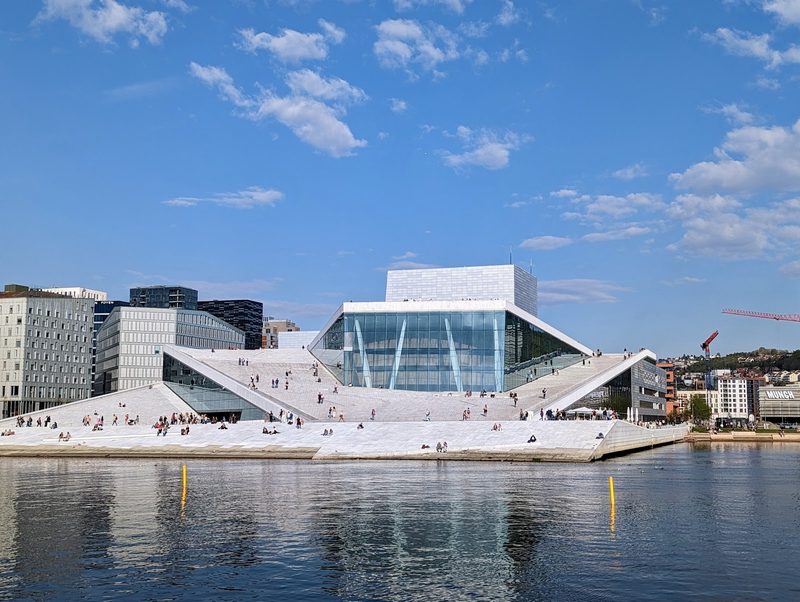
The heart of the city is Oslofjord — the city center descends to the water. Operahuset is stuck in the harbor like a marble iceberg, standing next to Bjørvika's new Munch Museum, Aker Brygge and Tjuvholmen are the modern harbor area. The whole center can be visited on foot, the distances are small compared to Istanbul. The Akerselva river flows through the Grünerløkka hipster neighborhood and flows into Bjørvika, while Holmenkollen's jumping ramp overlooks the city.
Vigeland Park is a unique place in the world: the largest sculpture park dedicated to a single artist. Gustav Vigeland spent forty years creating 227 sculptures, and the Norwegian government gave him a studio and a house in return. Now the park is open 24 hours a day, with free admission — the kindest thing Norway has done with its oil money. The sculptures are all naked human figures, depicting the stages of life; In the Monolith, 121 figures hug each other from a single 14-meter granite.
Another unique thing is the Opera roof — the only opera house in the world that can be walked on. The signature of Snøhetta architecture firm is made of white Italian marble. As you climb onto the roof and walk towards the sea, you forget that what you are walking on is a work of art. Free, open 24 hours. Munch's "The Scream" is exhibited in three versions alternately at the new Munch Museum, which opens in 2021.
But Oslo is actually the gateway to the fjords. The city itself can be visited in 3 days, but the Bergen train legend (Bergensbanen — one of the most beautiful railway journeys in the world), Sognefjord, Geiranger, Pulpit Rock — these can be reached from Oslo. If you are coming to Norway, reserve at least 5-7 days, don't just leave Oslo.
When to Go
Oslo's seasons are sharp. Summer is short but intense, winter is long and dark.
| Period | Weather (daytime) | Density | Otel Fiyatı | Notes |
|---|---|---|---|---|
| January-February | -4 / 0° | Low | Low | Dark, cold; Holmenkollen ski season is at its peak |
| March | -1 / 4° | Low | Low-Medium | The snow is starting to melt, the days are getting longer |
| April | 3 / 10° | Medium | Medium | Spring is blooming, parks are coming to life |
| May | 7 / 16° | Medium-High | High | May 17 Independence Day; prices are at the ceiling |
| June | 11 / 20° | High | High | Sankthansaften summer solstice; twilight at 23:00 |
| July | 13 / 23° | Very High | Very High | Peak season; reservation required |
| August | 12 / 22° | High | High | Jazz Festival; there is still light |
| September | 8 / 16° | Medium | Medium | Autumn colors; good balance |
| October | 3 / 9° | Low-Medium | Low | Darkness is falling; the cost is decreasing |
| November | -1 / 4° | Low | Low | Dark but pre-Christmas atmosphere |
| December | -3 / 1° | Medium | Medium-High | Christmas markets, Nobel ceremony; day 6 hours |
Our general recommendation June-August — access to fjords, long days (18 hours per day), outdoor activities. May and September are also beautiful, but the weather is more variable. For the northern lights, forget Oslo, head to Tromsø or Lofoten — the lights cannot be seen from Oslo's latitude. If you come in winter, there are ski and Christmas markets, but there are only 6 hours of light during the day, so adjust your mood accordingly.
How to get there
Oslo's main airport, Oslo Gardermoen (OSL), is 47 km north of the city centre.
Flights from Türkiye:
| Exit | Duration | Airline |
|---|---|---|
| Istanbul (IST) - OSL | 3 hours 45 min | THY (direct 1-2 times a day) |
| Istanbul (SAW) - OSL | 4-6 hours | Pegasus (with transfers, via Riga or Berlin) |
| Ankara (ESB) - OSL | 5-6 hours | Transfer (via Istanbul) |
THY direct flight costs approximately 350-450 EUR (round trip). Wizz Air has cheap options via Budapest (200-300 EUR) but it's an 8-10 hour connecting journey. It's worth buying tickets early when coming to Norway — last minute prices are brutal.
From airport to city:
- Flytoget Express Train: 19 minutes to Central Train Station (Oslo S), 230 NOK (~20 EUR). It leaves every 10 minutes.
- VY R11 / Vy regional train: 22 minutes, 124 NOK (~11 EUR). Half the price, slightly slower than Flytoget — this option!
- Flybussen bus: 50-60 minutes, 219 NOK (~19 EUR). Longer if stuck in traffic.
- Taxi/Bolt: 45-60 minutes, 1,200-1,800 NOK (~100-150 EUR). It's not really necessary.
Our recommendation Vy R11 regional train — Half the price and only 3 minutes slower than Flytoget. Tickets can be purchased from the vy.no app or from the station machine.
Train option international: Stockholm 5.5 hours (SJ X2000), Copenhagen 8 hours (night train via Berlin). It's an interesting alternative if you're coming from Europe by rail.
Urban Transportation
Oslo's public transport is operated by Ruter — metro (T-bane), tram (Trikk), bus, ferry integrated into one ticket. Common, punctual, expensive.
Metro (T-bane): 5 lines (1-5). It covers the city center and its suburbs. Line 1 to Holmenkollen, line 2-3 to Frogner Park. From 05:30 to 01:00, until 02:30 on weekends.
Tram (Trikk): 6 lines. It is more practical than the metro in the city center. Trams 11, 17, 18 cover the Karl Johans, Aker Brygge, Grünerløkka lines.
Bus: For points not reached by metro and tram. Bus number 30 to Bygdøy (ferry preferred in summer).
Ferry (Fjordbåt): Aker Brygge to Bygdøy, Hovedøya, Gressholmen and other islands. Included with public transport ticket — sightseeing in the fjord without paying for tourist boats.
Ticket system: Single ticket 42 NOK (~3.5 EUR, 1 hour), 24 hours 121 NOK (~10 EUR), 7 days 354 NOK (~30 EUR). Buy 3 days or more and 7 days, it will be delivered to your account. Buy from the RuterBillett app.
Oslo Pass: 24/48/72 hour versions (495/720/895 NOK ~42/61/76 EUR). Public transport + free entrance to more than 30 museums. If you're going to see the Bygdøy museums and go up Holmenkollen, do the math — the 48-hour pass usually pays off.
Bicycle — Oslo Bysykkel: City bike system. 49 NOK per day (~4 EUR), 99 NOK per month. The city center is flat and has bicycle paths, making it ideal.
Taxi/Bolt: Bolt works but is expensive even in Oslo. Stopping a taxi on the street — call from the app.
Accommodation Regions
Oslo center is small, almost every area is within walking distance. Location selection is a matter of atmosphere.
- Sentrum (Center): Karl Johans, Aker Brygge, Oslo S surroundings. Most central but quiet at night. Ideal for short holidays. Expensive.
- Grünerløkka: Hipster neighborhood, vintage shops, brunch places. For young travelers. 10 minutes by tram to the center.
- Frogner / Majorstuen: The area around Vigeland Park is quiet and stylish. For families and those who want silence. Expensive but 5 minutes from the center by T-bane.
- Bjørvika / Sørenga: Newly developed port area, modern hotels, Opera and Munch very close. Walking distance to the beach (Sørenga sea bath).
- St. Hanshaugen: Local neighbourhood, with parks and restaurants. The budget is mid-range, the atmosphere is normal Norwegian city.
What we don't recommend: Tøyen has been gentrified for a long time, but some parts are still disturbing. Grønland is cheap but the night atmosphere is questionable — Tøyen-Grønland is active during the day, stay away at night.
Budget Plan
Oslo is one of the most expensive cities in Europe — competing with Zurich and Reykjavík. Keep the budget realistic to avoid surprises.
| Budget Style | Accommodation | Food | Activity/Transportation | Total (2 people/3 days) |
|---|---|---|---|---|
| Economic (hostel/2*, Mathallen/Vippa) | 400 EUR | 250 EUR | 100 EUR | ~750 EUR |
| Moderate (3-4* hotel Sentrum, mixed) | 750 EUR | 450 EUR | 180 EUR | ~1.380 EUR |
| Comfort (4-5* hotel, fine dining mixed) | 1.400 EUR | 800 EUR | 250 EUR | ~2.450 EUR |
| Luxury (The Thief, Maaemo) | 3,000 EUR+ | 1.500 EUR+ | 400 EUR | ~4,900 EUR+ |
Practical items: Espresso 45-60 NOK (~4-5 EUR), pizza slice 60-90 NOK (~5-8 EUR), beer (pub) 100-130 NOK (~9-11 EUR), wine glass 120-180 NOK (~10-15 EUR), wafer 70-90 NOK (~6-8 EUR), simple restaurant plate 250-400 NOK (~22-34 EUR), Mathallen plate 150-250 NOK (~13-22 EUR), T-bane single ticket 42 NOK (~3.5 EUR).
Money saving tactics:
- Eat at places like Mathallen, Vippa, Pizza Lykke instead of restaurants
- Age 18+ for Vinmonopolet (government alcohol store), much cheaper than bar — to buy drinks home
- Buy Oslo Pass, the sum of museum entrance fees issues the card
- Drink water from the tap (Norwegian water is among the cleanest)
- Supermarkets: Rema 1000, Kiwi are the cheapest. Sandwich, ready meal 50-80 NOK
- Lunch is discounted on Sundays, cheaper than dinner
Practical Tips
Currency: Norway is not a member of the EU, its own currency is NOK (Norwegian Krone). Card payments are everywhere — you almost don't need to use cash, some places even only accept cards. It is not necessary to withdraw money from the ATM. Contactless Apple Pay/Google Pay works.
Water: Norwegian tap water is among the cleanest in the world. Buying bottled water is nothing but waste — fill your bottle and travel around.
Weather: Changing rapidly. Take a raincoat even in summer, it gets windy. “There is no bad weather, only bad clothing” Norwegian proverb — take it seriously.
Alcohol: Only low-alcohol beer is sold in supermarkets. Vinmonopolet (government store) for wine, spirits — Closed on Sunday, 10:00-18:00 on weekdays (10:00-15:00 on Saturday). Bars 21+ entry required.
Dinner time: Norway eats early. Restaurants are full between 17:00 and 21:00, the kitchen is closed after 22:00. Reservation culture is strong — reserve popular places in advance.
Smoking: Prohibited in closed areas. Snus (intraoral nicotine) is very common — Norwegians use it instead of tobacco.
Tipping: Tipping culture is poor in Norway — service charge is included in the price. If you like it, rounding up 5-10% is enough. Restaurant staff are already well-paid.
Norwegian language: Norwegian has two official written languages (Bokmål and Nynorsk), but there are many dialect differences in everyday language. Almost everyone speaks English, even the older generation is fluent. Norwegian words you should try: "Takk" (thanks), "Hei" (hello), "Hade" (see you), "Skål" (cheers).
WiFi: Free and fast everywhere. It even works on public transport.
Travel Guide with Children
Oslo is one of Scandinavia's child-friendly cities. Open green spaces, variety of museums, safe streets — no problem even with small children.
Recommendations by Age Group
0-3 years: Vigeland Park is wide and flat, ideal for strollers. Oslofjord islands (Hovedøya) are calm, green. Children enjoy the tram tour. Most museums have breastfeeding rooms.
4-7 years: Naturhistorisk Museum (Botanisk Hage has free dinosaur skeletons). Tusenfryd amusement park (outside Oslo, 30 min by bus). Sørenga sea bath in Bjørvika is a children's pool in summer. Vigeland Park is great for renting a bike and wandering around.
8-12 years: The pleasure of boarding the Fram Museum and exploring. Norsk Folkemuseum open-air museum — bringing Norwegian history lessons to life. Climbing Holmenkollen Jump Hill. Astrup Fearnley has interactive contemporary art pieces.
Ages 13+: Munch Museum (teens already know "The Scream" as a meme). Walk along the Akerselva river + Grünerløkka brunch. Holmenkollen ski simulator. If you can add a trip to Stavanger, the Preikestolen walk is challenging but unforgettable.
Top 5 Kid-Friendly Activities
Vigeland Park — Free, open-air, large space. Children can climb the statues and run. There is also a children's pool and playgrounds in the park.
Bygdøy Peninsula Museums — Climbing the Fram, seeing Kon-Tiki rafts, wandering through the wooden church at Norsk Folkemuseum. Museum package that can be visited in one day.
Oslofjord Ferry Tour — Aker Brygge to any island. Free with a public transport ticket, kids are happy for hours because they love the cruise.
Holmenkollen Jump Hill — Lift ride to the top of the ramp, see the panorama, 4,000 years of ski history at the Ski Museum.
Sørenga Sea Bath — Free swimming pool at Bjørvika in summer, fjord landing stairs. There is also a children's pool. Enjoying free water in the expensive price of Norway.
Practical Information
Baby stroller: All public transport accessible. Baby strollers are free on the tram and metro (with adult ticket).
Children's menu: Available in most restaurants. Kjøttkaker and fiskekaker (fish cake) are options that children love.
Child ticket discounts: Public transportation free for children under 6, half price for 6-17. In most museums, under 18s are free or half price.
Toilet: Clean, free toilets in museums and shopping malls. Rare on the street.
Warnings
- Be careful with small children near the fjord — there are not always guardrails.
- Holmenkollen is icy in winter, be careful with small children.
- The Norwegian sun can be very strong in summer — don't forget sunscreen.
- Dinner restaurant hours end at 21:00, make an early meal plan with your child.
Local Label and Culture Notes
Norwegians seem aloof at first glance — this isn't rudeness, it's a cultural norm. There is a social code called Janteloven (10 Laws): "Don't think you're better than us." Norwegians take modesty seriously and avoid ostentation. If you are used to the extroversion of Istanbul, they may seem cold at first, but they will open up as you get to know each other.
Queue: Norwegian pew culture is sacred. At the grocery store, on the bus, at the museum—line up, don't skip it. You will be marked as a queue-jumping tourist.
Personal space: Norwegians overvalue personal space. Don't sit next to someone on the bus when there's an empty seat — it means there's another pair of empty seats. Silence is the norm in the elevator, even saying "hello" is a challenge.
Punctuality: Be on time for an appointment. Norwegians find arriving even 5 minutes late nervous.
Tip: Service fee included. Round up 5-10% if you like it — restaurant staff are already well-paid. No tip for taxi.
Shoes: It is mandatory to take off your shoes when entering Norwegian houses. Bring sandals or socks when invited home.
Beverage culture: Norwegians drink on the weekends, rarely on weekdays. The city center comes alive on Friday evening, peaking on Saturday evening. Almost everyone is home on Sunday — most restaurants and bars close early.
Cheers (Skål): When toasting, look someone in the eye and say "Skål!" Say, then take a sip, then look into your eyes again. This order is important, don't skip it.
Complaint culture: Norwegians enjoy complaining about the weather, prices, the government. If you want to start a conversation with a Norwegian, start with the weather — you'll get a sure reaction.
FAQ
Is Oslo really that expensive? Yes, it is more expensive. A beer costs 100-130 NOK (~9-11 EUR), a simple restaurant meal costs 300 NOK (~26 EUR), Maaemo dinner costs 8,000 NOK (~700 EUR) for two. Have fish soup at Mathallen + pay 130 NOK and you are satisfied — the same thing happens at the restaurant for 500 NOK. Think of the budget as twice that of Europe. There are budget tactics (Mathallen, Vippa, Vinmonopolet, supermarket), if you can apply it, it reduces by half.
How to get from Istanbul to Oslo? There are 1-2 direct flights a day from THY Istanbul, 3 hours 45 minutes. Round trip costs around 350-450 EUR (decreases between December and March, increases between June and August). Pegasus does not have direct flights, it has connecting (Riga, Berlin) options, but it takes 6+ hours. If you buy early, you can get an economy of 280-320 EUR at THY.
Can the northern lights be seen in Oslo? No. Oslo latitude (59.9°N) is too south for the northern lights, and light pollution is high. For the northern lights, head to Tromsø (69.6°N), the Lofoten Islands, or Alta — a 2-hour flight from Oslo. If the northern light is at the center of your trip, make Tromsø your route and make a 1-2 day transfer in Oslo.
How to reach Norwegian fjords from Oslo? The "Norway in a Nutshell" package organizes fjords via the Oslo-Bergen route (fjordtours.com). From Oslo, take the Bergensbanen train to Myrdal (4.5 hours), then take the Flåm train and go down to Aurlandsfjord, take the Fjord cruise to Gudvangen, from there by bus to Voss, by train to Bergen - you can see the fjords in one day. Price 1,890 NOK (~160 EUR) one way. The most popular route is Norway. Hardangerfjord, Geirangerfjord, Sognefjord are each a separate trip — allow at least 2-3 days from Oslo.
Is Vigeland Park free? Completely free, open 24 hours. The most generous gift ever made with Norway's oil money. Gustav Vigeland made an agreement with the Oslo Municipality in 1921: the municipality would give him a studio and a house, and after his death, the municipality would own all his works. Result: 200+ sculptures, open to everyone, free.
How many days to visit Oslo? City center 3 days — Opera, Vigeland, Munch, Bygdøy museums, Holmenkollen, Aker Brygge. If you are going to visit the fjords, you need 7-10 days. 3-day Oslo + 4-day Bergen/Sognefjord/Stavanger Plan to see Norway thoroughly. However, do not spend 5 days in Oslo — the city is compact, more gets repetitive.
Is Norway in Schengen, is a visa required? Norway is not a member of the EU but is a party to the Schengen Agreement (part of the Schengen area). A Schengen visa is required for Turkish ordinary passports. If you have a Schengen visa, you can enter Norway without any problems. Special/service/diplomatic passports are visa-free for up to 90 days. Application via VFS Global Norway Turkey, appointment required, average 15 business days.
Where's a budget dinner between Mathallen and Vippa and Maaemo? Vaaghals (modern Nordic, 550-1,200 NOK), Olympen Lompa (traditional Norwegian, 350-500 NOK), Hitchhiker at Mathallen (200-300 NOK), Hai Cafe at Grünerløkka (220-350 NOK) — these are the middle ground. You can also try Brygg Bar & Restaurant in Bjørvika and Lofoten Fiskerestaurant in Aker Brygge. In Norway, the 250-400 NOK range is a "decent dinner", although there is no Turkish translation.