About
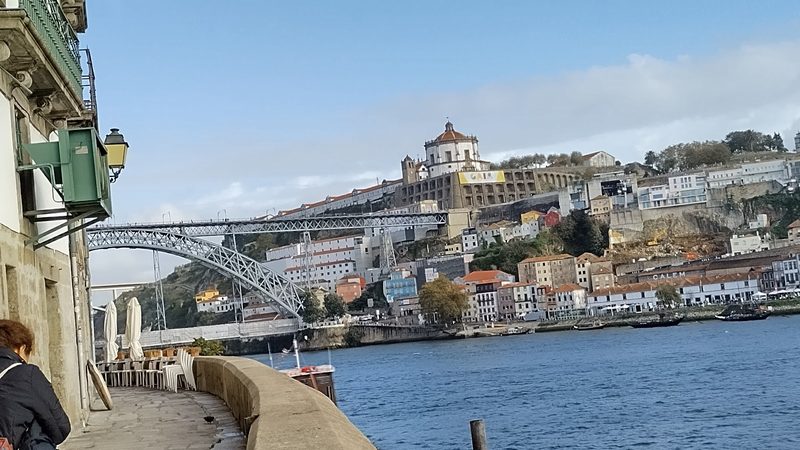
Although Porto seems to be in the shadow of Lisbon, it is actually the city where you experience the true character of Portugal. This is the place that gave the country its name — Portugal, meaning "port of Porto." Where the Douro River flows into the Atlantic Ocean, colorful houses leaning on granite hills, churches covered with blue and white tiles and wooden boats that have been carrying wine for centuries. Porto's light is different from Lisbon's — harsher, more honest, like its people.
240,000 people live in the city, but the metropolitan area exceeds 1.7 million. The people of Porto call themselves "tripeiros" (tripe eaters) - a nickname they wear with pride, dating back to the time when, in times of famine, they gave all the meat to sailors and made do with tripe themselves. That's the kind of place this is: not ostentatious, but friendly. There are luxury hotels, but the soul of Porto is hidden in the tascas in the narrow streets, the fishermen's bars by the river, and the port wines tasted while wandering from cellar to cellar.
Porto has undergone a serious transformation in the last decade. Ryanair's cheap flights, the influx of digital nomads, the explosion of the gastronomy scene and the Airbnb craze have reshaped the city. But unlike Lisbon, Porto has resisted touristization a little more — you can still see aunties hanging laundry on the streets, you can still buy cheese from the local grocery store, you can still get your fill of food at a tasca for 8 EUR. I don't know how long it will last, but it's in perfect balance right now.
Porto has a few constants: port wine (of course), francesinha (the world's most aggressive sandwich), azulejo tiles (an art gallery on every corner), São João night (crazy festival where people get hit over the head with plastic hammers) and the pride in the saying "o Porto é uma nação" (Porto is a nation). This city doesn't host you, it accepts you. The difference is big.
The pace is a little slower than Lisbon, much slower than Istanbul. Breakfast is quiet, lunch is long, dinner is between 20:00-21:00, nightlife starts after 23:00 in Galerias de Paris. On Sundays the city almost stops — get used to it, Porto is the enemy of haste.
One final note: Porto is one of Europe's price/quality champion cities. Beer 2 EUR, espresso 0.80 EUR, francesinha 12 EUR, a good dinner 20-25 EUR. Even Lisbon is now more expensive than Porto. If you're coming from Paris, your wallet will breathe a sigh of relief.
When to Go
Porto's average annual temperature is 15°C. Winters are mild but rainy, summers are hot but not scorching like the Mediterranean. The ocean effect is felt in every season.
May-June is the best period. The weather is between 18-24°C, there is plenty of sun, the crowds have not peaked yet. NOS Primavera Sound festival at the beginning of June, 23-24 June in São João — Porto's wildest night. It's worth coming alone to experience São João, but it gets harder to find a hotel that week; Early reservation is required.
September-October is the second golden period. The summer crowds have dispersed, the temperature is still 19-25°C, and the vintage season has begun in the Douro Valley. The best time for wine tours. Prices have come down from their summer peak.
July-August hot (25-30°C) and crowded. The beaches of Foz do Douro and Matosinhos are lively, but you may feel overwhelmed in the historical center at noon. Hotel prices are through the roof.
November-March is low season. Between 8-14°C, rain is frequent. But Porto's winter mood is also beautiful — wine cellars, museums and tascas are highlights. Prices are very affordable, Christmas decorations are warm. There is the Fantasporto film festival in February-March.
Accommodation prices increase significantly during festival periods (São João in June, Primavera Sound in June, Serralves em Festa in late May). Make a reservation 2-3 months in advance for these dates.
How to get there
Airway: Porto Francisco Sá Carneiro Airport (OPO) is 14 km from the city center. Turkish Airlines operates direct flights from Istanbul; Flight duration is approximately 4 hours 40 minutes. Pegasus offers seasonal direct flights from time to time. It is possible to find tickets between 150-200 EUR if purchased early; It can go up to 300-400 EUR in the summer months. Ryanair and easyJet also offer cheap options with intra-European connections.
Airport-City center:
| Option | Duration | Cost |
|---|---|---|
| Metro (Purple line - E) | 25-35 min | ~2.50 EUR (with Andante card) |
| Uber/Bolt | 20-25 min | 15-20 EUR |
| Taxi | 20-25 min | 20-30 EUR |
| Bus (3M) | 35-45 min | ~2.50 EUR |
Metro is the most practical and cheap option. From the airport stop (Aeroporto), you can take the purple line to Trindade, and from there take the yellow or green line to Aliados, Bolhão or São Bento. Get the Andante card from the machines at the airport (card costs 0.60 EUR + travel fee). Attention: Z4 zone between the airport and the center is more expensive than the normal city ticket.
From Lisbon: 3 hours 15 minutes from Lisbon to Porto by Alfa Pendular high speed train, ticket 25-35 EUR. It goes down to Campanhã station, from there it's 5 minutes by metro or suburban train to São Bento. 3.5-4 hours by Rede Expressos bus, ticket 15-22 EUR.
Urban Transportation
Porto's public transport is operated by STCP (bus, tram) and Metro do Porto. The metro has 6 lines, is modern and clean. It covers the city center well but does not reach some tourist spots.
Andante card is the key to urban transportation. You can load a Z2 single ride (1.40 EUR) or a daily pass (Andante Tour 1 day 7 EUR, 3 days 15 EUR — metro+bus+tram unlimited) onto a 0.60 EUR card. The Andante card is different from the Viva Viagem in Lisbon, it is incompatible.
Historical tram: 3 old tram lines are still operating in Porto. #1 goes from Ribeira to Foz do Douro — a 30-minute cruise along the river that's more experience than transportation. Number 18 makes a tour around the center, number 22 makes a wider tour. Andante card is valid.
Metro: 6 lines, 82 stations. It reaches the center, Matosinhos beach and Gaia from the airport. Clean, punctual, safe. Aliados and Trindade are the most central stations.
Uber and Bolt are very active in Porto and significantly cheaper than a taxi. Short distances 3-5 EUR, airport transfer 15-20 EUR. A good alternative when you don't want to climb hills.
Walking is the best form of transportation in Porto, but trust your legs. Although the city is not as hilly as Lisbon, it is not flat either. Climbing up Ribeira makes you sweat. Comfortable shoes are a must — granite pavers are slippery when wet.
Accommodation Regions
Ribeira / Centro Histórico: Right in the middle of the UNESCO area. Douro river view, restaurants, São Bento within walking distance. The most logical region for a first visit. Disadvantage: slopes and noise at night (especially São João week).
Aliados / Bolhão: The commercial heart of the city. Metro, market, shopping streets, Galerias de Paris are all close. The best price/location balance. Business hotels and boutique hotels are concentrated here.
Cedofeita / Miguel Bombarda: Porto's bohemian neighborhood. Art galleries, independent cafes, vintage shops. Walking distance to Galerias at night. Ideal for young travelers and creative types.
Foz do Douro: Oceanside, quiet, coastal walk. 20 minutes to the center by tram or Uber. Suitable for families and long stays. Nightlife is limited.
Vila Nova de Gaia: The opposite shore of the Douro. Right next to the wine cellars, the view over Porto is unbeatable. 10-15 minutes to the center by walking across the bridge or by metro. There are more budget-friendly options.
Budget Plan (3 days, per person, EUR)
| Category | Backpacker | Medium | Luxury |
|---|---|---|---|
| Accommodation (2 nights) | 40-70 (hostel) | 120-200 (3-4 stars) | 400+ (5 stars / boutique) |
| Food | 35-55 | 80-130 | 200+ |
| Transportation (Andante + metro) | 12 | 18 | 50 (taxi/Uber) |
| Museum + entrance fees | 15 | 45 (including cellar tours) | 90 (private tours) |
| Entertainment / night | 15 | 40 | 120+ |
| Total (3 days) | 117-167 | 303-433 | **860++ |
Porto is even cheaper than Lisbon. Food prices, in particular, are ridiculously affordable — francesinha 12 EUR, tascada lunch 8-10 EUR, espresso 0.80 EUR, beer 2 EUR, pastéis de nata 1 EUR. I'd say it's the best value city in Western Europe for budget travelers.
During the São João and Primavera Sound weeks, accommodation can double. Outside of festival dates, it is easy to find quality accommodation at good prices in Porto.
Practical Tips
Be prepared for Francesinha. This sandwich may be heavy on the stomach even if it comes from Istanbul. For your first try, ask for a half portion — seriously, the regular portion is huge and dense. French fries and Super Bock beer are traditional accompaniments.
Port wine is not just “port”. Ruby, tawny, vintage, LBV, colheita — there are types and they are all different. You learn the difference at the first taste. Tour + tasting at Graham's, Taylor's or Sandeman 15-20 EUR. Go to at least two cellars and do a comparative tasting.
Go on an Azulejo hunt. Porto is the most tile-covered city in the world. São Bento Station, Igreja do Carmo, Capela das Almas, Igreja de Santo Ildefonso — all free open-air galleries. Raise your head, look around, there is a surprise around every corner.
If you come across a São João night, buy a plastic hammer (sold everywhere, 1-2 EUR) and hit the heads of those around you. They will hit you too. This is a tradition and no one is offended. Geranium flowers are also thrown. Watch the midnight fireworks from Ribeira.
Don't neglect vinho verde. Port wine is famous, but Porto's daily drink is actually vinho verde — light, fizzy, young white wine. On summer days, an ice-cold vinho verde is as refreshing as a cold beer. You can have a bottle opened in restaurants for 3-5 EUR.
Go to Matosinhos. 20 minutes by metro to the center, dozens of fish restaurants on the beach. Fresh grilled fish for 8-12 EUR (serious). People from Porto come here to eat fish on the weekends. Not a tourist trap, real local experience.
Be prepared for hills. Porto is not as steep as Lisbon, but it is not flat either. Walking from Ribeira to Clérigos makes you sweat. Comfortable shoes are a must. The narrow, stepped streets are granite-stoned and slippery when wet.
Consider Porto Card. 1 day 13 EUR, 2 days 20 EUR, 3 days 25 EUR — including public transportation, discounts on museums and cellar tours. It saves money if you're staying 2+ days.
Be planned on Sunday. Mercado do Bolhão and many shops are closed on Sundays. Most museums are open, but some smaller venues are closing. Some museums are closed on Monday (including Serralves). Make your week plan accordingly.
Travel Guide with Children
Porto has a child-friendly rating of 3.7/5 — the hills and stony streets are challenging, but the riverside, trams and friendly people compensate. The Portuguese are very tolerant towards children; Children's noise in restaurants does not bother anyone.
Recommendations by Age Group
0-3 years: Foz do Douro beach walk is flat and wide, best suited for strollers. Jardins do Palácio de Cristal is also good — shady, grassy, there are peacocks. Ribeira's narrow slopes and stairs are impossible with a stroller, use a kangaroo carrier.
4-7 years: Historic tram number 1 adventure train for children — goes from Ribeira to the ocean. The World of Discoveries museum (an interactive museum that tells the Portuguese age of discovery) is the star of this age group. The Douro river tour (1 hour, 15 EUR) also excites children.
8-12 years: Livraria Lello's Harry Potter connection appeals to children. Walking from the top of the Dom Luís Bridge is unforgettable (if you are not afraid of heights). Running around on Matosinhos beach and eating ice cream is also classic.
Ages 13+: Gaia wine cellars (children can taste grape juice), Serralves contemporary art museum, surf lessons on Foz beach and the bohemian streets of Cedofeita attract young people.
Top 5 Kid-Friendly Activities
World of Discoveries — An interactive museum depicting Portugal's age of discovery. You explore the world in small boats (in exact models). Kids love it, and adults are surprised too.
Tram #1 — Nostalgic 30-minute tram ride along the river from Ribeira to Foz do Douro. Both transportation and entertainment for children.
SEA LIFE Porto — Aquarium in Foz do Douro. Sharks, seahorses, octopus and interactive pools. Perfect for rainy days.
Douro River Cruise — 50-minute boat tour passing under 6 bridges. While the kids are busy counting the bridges, you enjoy the view.
Jardins do Palácio de Cristal — Peacocks roam freely in the gardens. Children never get tired of chasing birds. Picnic areas are large and have plenty of shade.
Practical Information
Baby stroller: Porto's historical center is hilly and stony. The Ribeira and Sé area is anti-baby strollers. Foz do Douro, Parque da Cidade and Gaia riverside are flat and convenient. The metro has elevators, buses have sidewalks — trams are difficult.
Children's menu: In Portuguese restaurants, you can ask for a children's portion (meia dose or dose de criança). Chicken, fish, potatoes and rice are everywhere. Francesinha may be heavy for children, the sauce is hot — be careful.
Children's ticket discounts: Metro is free for children under 4 years old. In most museums, children under 12 are free or discounted. There is no family version of Porto Card, but discounts can be collected with individual cards.
Toilet: Available in museums and shopping malls. There are few on the streets. There are public toilets at Mercado do Bolhão and São Bento Station (usually €0.50).
Warnings
- Granite paving stones are very slippery when wet, make sure children wear appropriate shoes.
- The upper deck of the Dom Luís Bridge is windy and has low railings — be careful with small children.
- In the summer months the sun is scorching, water and a hat are a must. Shadow areas are limited.
- Wine cellar tours can be long for kids — opt for the short format.
Local Label and Culture Notes
People from Porto have a different character from people from Lisbon. They have a straighter, harder shell but are soft inside. They may seem cold at first glance, but chat for two minutes and they will invite you to dinner while giving you directions to their home.
The greeting is the same as in Lisbon — kiss on both cheeks, start on the right cheek. "Bom dia" (good morning), "Boa tarde" (good afternoon), "Boa noite" (good evening). "Obrigado" for men, "obrigada" for women. This small distinction is sympathetic to the people of Porto.
The issue of couvert in the restaurant also applies here. They bring bread, butter, olives to the table — not free, between 2-4 EUR. If you don't want it, send it back, no problem. But whoever touches pays.
Tipping is not mandatory, but 5-10% is appreciated. The tipping culture in Porto is even lower-profile than in Lisbon — just round up.
The Porto-Lisbon rivalry is taken seriously. Don't tell the people of Porto "Lisbon is more beautiful" — that's where your friendship ends. Porto people see themselves as more hard-working, more sincere and more realistic. This rivalry is also reflected in football: FC Porto vs Benfica matches are a national affair.
Francesinha is Porto's pride. Every Porto resident knows his own best francesinha and is ready to discuss it. “Where is the best francesinha?” Ask him, he will explain for 30 minutes. Asking this question is the easiest way to open a conversation.
São João night (June 23) is Porto's most sacred tradition. Be prepared to get hit in the head with a plastic hammer — it's a sign of affection. Throwing geranium flowers is also a tradition. Sardines are cooking on street barbecues and everyone is dancing. Don't say you got to know Porto until you've experienced this night.
Know one thing about port wine: Port people drink it as a tasting, their daily drink is vinho verde. You'll usually see vinho verde and Super Bock beer on a Porto person's table. Port wine is a drink of celebration and hosting guests.
Meal times are similar to Lisbon. Lunch 12:30-14:30, evening 19:30-21:00. The late food culture is not as extreme as Madrid. The city slows down on Sundays, with many restaurants closing after lunch service.
FAQ
How many days does it take to visit Porto? 3 days are enough for Ribeira, Gaia and the central trio. If you want to add a Douro Valley day trip to Matosinhos, Braga or Guimarães, plan 5-7 days. If you just want to see the city center quickly, 2 full days will be enough, but you will feel rushed.
Where to eat Francesinha? Café Santiago and Cervejaria Gazela are classic addresses. Side Café is also a strong alternative. Every Porto resident has their own favorite — try more than one and decide for yourself. Ask for a half portion the first time, I'm serious.
Where to taste port wine? There are dozens of cellars in Vila Nova de Gaia. Graham's (view + quality), Taylor's (history + atmosphere), Sandeman (iconic cape), Cálem (central location) are the most popular. You can enter without a reservation, but make it in advance during the summer months. Tour + tasting for 15-20 EUR.
Is Porto safe? It's very safe. One of the cities with the lowest crime rates in Europe. You can walk comfortably on the streets even at night. But beware of pickpockets in tourist areas (Ribeira, São Bento, tram number 1). Common sense is enough.
Is it possible to travel from Türkiye without a visa? No with ordinary (maroon) passport — Schengen visa required. Green (special), gray (service) and black (diplomatic) passport holders can enter without a visa for up to 90 days in 180 days. Schengen application via VFS Global; Start 6-8 weeks in advance in the summer months.
How to get from Lisbon to Porto? 3 hours 15 minutes by Alfa Pendular high speed train, ticket 25-35 EUR. 3.5-4 hours, 15-22 EUR by Rede Expressos bus. There is also a plane, but it takes the same time as the train, including airport transfers.
How to get to Douro Valley? From São Bento by CP train to Régua or Pinhão. The train journey passes through the most beautiful views of the valley (2-3 hours). Alternative: organized tour (40-80 EUR, including wine tasting + lunch). It is also nice to go by car, but if you are going to taste wine, there is a driver problem.
Best transportation from the airport to the city? Metro purple line (E) is the cheapest and most practical — 2.50 EUR, 25-35 minutes. Uber/Bolt 15-20 EUR, 20-25 minutes. Taxi 20-30 EUR. Metro is the most logical choice; Get your Andante card from the machine at the airport.
Is English spoken in Porto? Yes, English is common, especially among the younger generation and in the tourism industry. Restaurant menus are generally available in English. But learning a few words of Portuguese (olá, obrigado/a, por favor, saúde) makes people smile.
Porto or Lisbon? Both are great but different. Porto is smaller, friendlier, cheaper and has a tougher character. Lisbon is more cosmopolitan, larger, more diverse. I would say go to both, but start with Porto — your expectations will be lower than in Lisbon and the surprise effect will be stronger.