About
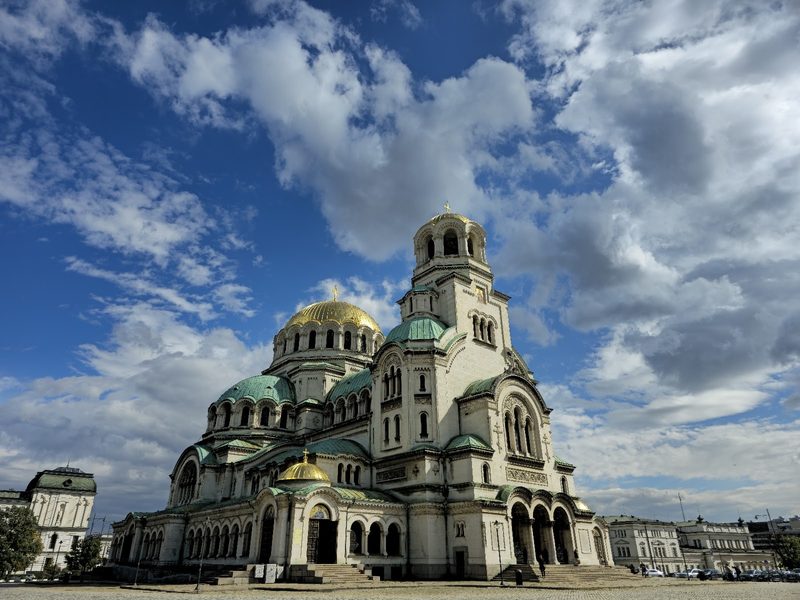
Sofia is one of the least known of European capitals, but perhaps the most layered. It was founded in Thrace, became a Roman city (named Serdika), a Byzantine province, an Ottoman principality, then the capital of the Bulgarian kingdom, then communist Sofia, now a modern EU member capital. You can see all these layers in the same square — the golden dome of the Aleksandar Nevsky cathedral, the 4th-century Roman rotunda next to it, the Ottoman mosque opposite, the Soviet-era administration buildings all around it. You can't put this together in any other city.
Vitosha Mountain is the natural border of the city and half of its character. The 2,290-meter mountain rises just south of Sofia — visible from every point in the city. Sofians are here for the weekend — hiking in summer, skiing in winter. This proximity gives the city a mountaineer, open-air, slightly "town spirit" character; Something that doesn't exist in flat cities like Belgrade or Bucharest. You take the cable car from the city center in 30 minutes, and you are near the summit in an hour.
The Ottoman period lasted 500 years and its traces are in every corner. Banya Bashi Mosque is still standing, built by Mimar Sinan's student. The mineral bath building in the city center was an old Ottoman bath. Minced meat, yoghurt, baklava, pastry (banitsa) are common in meals. Bulgarian words such as tea, coffee, sugar, pillow and soup are directly translated into Turkish. When you walk through Sofia and say you are Turkish, you generally get a positive reaction from Bulgarians — especially the older generation. Apparently, living together for centuries was not a simple neighbourhood.
Bulgarian cuisine is not foreign to the Turkish palate. Banitsa (cheese pastry), shopska salad (tomato, cucumber, sirene cheese), tarator (cold yoghurt soup), kebapçeta (thin meatballs), kavarma (meat stew) — everything you see on the plate is familiar. Rakija (our raki) is the national drink here too, but it is made with fruit (grapes, plums, apricots). Bulgarian wine has come a long way in the last 15 years — Mavrud and Melnik grapes are making waves in the domestic, European wine world.
Budget is perhaps Sofia's strongest feature. Cheapest among European capitals — noticeably cheaper even from Budapest. You can get enough for a lunch for 8-12 EUR, a quality dinner is 20-25 EUR, beer is 2.5 EUR, a medium quality hotel is 50-70 EUR. Cheap doesn't mean lower quality — it's just a place where tourism prices haven't gone up too much yet.
When to Go
Sofia experiences four distinct seasons — harsh winter, hot summer, golden spring and autumn.
| Period | Weather (daytime) | Density | Otel Fiyatı | Notes |
|---|---|---|---|---|
| January-February | -3 / 4° | Low | Low | Ski season in Vitosha, Surva festival |
| March | 3 / 11° | Low | Low | Film Festival month, still cold |
| April | 8 / 17° | Medium | Medium | Spring begins, Easter season |
| May | 12 / 22° | Medium-High | Medium | The most ideal month, mountain walks open |
| June | 16 / 26° | High | Medium-High | Long days, rose festival |
| July | 18 / 29° | High | High | It's hot, it's time to escape to the mountains |
| August | 18 / 28° | High | High | Beer festival, hot but tolerable |
| September | 13 / 23° | Medium-High | Medium | Second best month, grape harvest |
| October | 8 / 16° | Medium | Low-Medium | Autumn colors, Vitosha gold |
| November | 3 / 9° | Low | Low | Season close |
| December | -1 / 5° | Medium | Medium | New Year's market, skiing begins |
General recommendation May-June and September-October. May is also the month of the Kazanlak Rose Festival, ideal for Vitosha walks. If you are going to ski, January-February. August is hot but more bearable than other European capitals, and prices remain low.
How to get there
Sofia Airport (SOF) is 10 km east of the city centre.
Flights from Türkiye:
| Exit | Duration | Airline |
|---|---|---|
| Istanbul (IST) - SOF | 1 hour 30 min | THY (2-3 flights per day) |
| Istanbul (SAW) - SOF | 1 hour 35 min | Pegasus (4-5 times a week) |
| Ankara (ESB) - SOF | 1 hour 45 min | THY (2-3 times a week) |
The flight time from Istanbul is very short — almost like a domestic flight. Ticket prices are 100-150 EUR if purchased early, 200-250 EUR in season. Wizz Air operates flights from time to time, keep an eye on the prices.
Bus alternative: Istanbul-Sofia direct bus from Metro Turizm and other companies (~10 hours). There is a Kapıkule border crossing. If you have a visa or a special passport, it is problem-free. Ticket 30-40 EUR. Long but cheap option.
From airport to city:
- Metro M4: 18 minutes, directly to the city center (Serdika). 1.60 BGN (~0.80 EUR). The most practical and cheap.
- Taxi: 25-30 minutes, 15-25 BGN (~8-13 EUR). OK Supertrans is reliable, pick up from the airport taxi stand.
- Bolt/Yandex Go: Applications running, 12-20 BGN.
Our recommendation is Metro M4 — Sofia's newest and cleanest line, which goes directly to the city centre.
Urban Transportation
Sofia's public transport is widespread and very cheap.
Metro: 4 lines (M1-M4), modern and clean. The M1-M4 junction covers the airport-center-Vitosha axis. It works between 05:30 - 24:00.
Tram: 15+ lines. The old socialist era trams still exist, some lines have been modernized. Lines 1 and 7 cover tourist routes.
Bus and trolleybus: Covers places not reached by metro/tram.
Ticket: Single ticket 1.60 BGN (~0.80 EUR), 24 hours 4 BGN (~2 EUR), 72 hours 10 BGN (~5 EUR). A single ticket is valid for metro, tram, bus and trolleybus. Buy from mobile app or vending machine.
Sofia Card: 24/48/72 hour city card, includes public transport + museum discounts. It makes sense if you're going to visit a lot of museums.
Taxi/Bolt: Bolt works, OK Supertrans app is reliable. Hailing a taxi on the street — beware of fraudulent taxis in tourist areas. 5-12 BGN (~2.5-6 EUR) in the city.
Walking: Sofia center is compact. A 15-20 minute walk from Aleksandar Nevsky to Vitosha Boulevard and Sentral Market. Bicycles are also a good option, but infrastructure is limited.
Accommodation Regions
Sofia is compact; If you choose well, you can reach everywhere by walking.
- Tsentar (Center): Aleksandar Nevski, Vitosha Boulevard, Sveti Sedmochislenitsi surroundings. It's the most expensive area, but everything is at your doorstep. Ideal for short holidays.
- Oborishte: Close to the center, quiet streets, boutique hotels. For romantic getaways and couples.
- Lozenets: Local and hipster, plenty of cafes and restaurants. Green streets. For young travelers.
- Studentski Grad: University area, cheap but far from the center. Good for Airbnb for longer stays.
- Boyana / Dragalevtsi: Villa neighborhoods on the outskirts of Vitosha. Ideal if you want nature, but city center requires car/bus.
Recommended to avoid: Some areas in the north of the city (Lyulin ends) are far from the center and not touristy. The area around the train station is dim at night, but smooth during the day.
Budget Plan
Sofia is one of the most affordable among European capitals. Significantly cheaper than Budapest.
| Budget Style | Accommodation | Food | Activity/Transportation | Total (2 people/3 days) |
|---|---|---|---|---|
| Economic (hostel/2* hotel, mehana + street food) | 90 EUR | 60 EUR | 30 EUR | ~180 EUR |
| Moderate (3-4* hotel central, mixed) | 220 EUR | 130 EUR | 60 EUR | ~410 EUR |
| Comfort (4-5* boutique hotel, gastronomy) | 450 EUR | 220 EUR | 100 EUR | ~770 EUR |
| Luxury (Sense, Grand Hotel, fine dining) | 900 EUR+ | 400 EUR+ | 150 EUR | ~1.450 EUR+ |
Practical items: Espresso 2-3 BGN (~1-1.5 EUR), banitsa 1.5-3 BGN (~0.75-1.5 EUR), shopska salad 6-10 BGN (~3-5 EUR), kavarma 12-18 BGN (~6-9 EUR), metro single ticket 1.60 BGN (~0.80 EUR), beer 4-6 BGN (~2-3 EUR), rakija 4-7 BGN, Bulgarian wine glass 6-10 BGN.
Practical Tips
Currency: Bulgaria is a member of the EU but has not yet adopted the Euro (2026 was targeted but is being postponed — check). Currency is Bulgarian Lev (BGN), fixed exchange rate of 1 EUR ≈ 1.96 BGN. Payment by card is common, accepted everywhere except small market stalls and mehanas. Reject "conversion" when withdrawing money from ATM.
Water: Sofia's tap water is drinkable, even some of the highest quality in Europe. There are mineral water springs (Lavov Most, Sofia Fountain) in the city — locals fill their bottles, and you can too.
Cyrillic: Street signs are mostly in the Latin alphabet as well, but in some places only Cyrillic. Learning a few letters (С=S, Р=R, Н=N, П=P) helps. The Google Translate camera feature does the trick.
Scam alert: There are taxi scams around Vitosha Boulevard and the airport — just use OK Supertrans or Bolt. Don't believe the "cheap tour" offers you receive. Choose ATMs from large chains (UniCredit Bulbank, DSK).
Tip: 10% standard in restaurants. In some places it is added automatically, check your account. It is enough to round up the number for taxis and hairdressers.
Turkish speaking: There are many Turkish speakers in the older generation and especially in southern Bulgaria. You encounter it less in Sofia, but especially in the Muslim neighborhood (Banya Bashi area) and Turkish restaurants. Don't be shy about saying you're Turkish — there's usually a positive reaction.
Rakija label: Bulgarian rakija is generally fruity and 40% alcohol. The first glass is "Nazdrave!" Drink with (cheers), eye contact is mandatory. It is customary to drink glasses without placing them on the table.
Sundays: Most shops are open, only some small shops are closed. Museums are generally closed on Mondays.
Travel Guide with Children
Sofia is the quiet alternative of the Balkans for families with children. It's not crowded, there's plenty of parking, the mountains are close.
Recommendations by Age Group
0-3 years: Borisova Gradina park is wide and flat, suitable for strollers. Boyana park on the outskirts of Vitosha is quiet. Metro M4 line is new and accessible. Most cafes have high chairs.
4-7 years: Sofia Zoo (medium sized but well maintained). Muzeiko (children's science museum) is interactive. The Knyazhevo village train on the outskirts of Vitosha is enjoyable. Vitosha cable car is a great adventure.
8-12 years: The storyteller of the frescoes in the Boyana Church. The Thracian gold treasure in the National History Museum is impressive. Short hiking routes on Vitosha Mountain (Zlatnite Mostove "Golden Bridges" area suitable for children). Aquapark Sofia is a good option in summer.
Ages 13+: Visiting the communist era heritage site (NDK, Largo) is interesting for young people with historical knowledge. For those looking for adventure skiing or cycling in Vitosha. Plovdiv is a daily history tour.
Top 5 Kid-Friendly Activities
Vitosha Mountain Cable Car + Golden Bridges — A cable car adventure and an easy hike. Picnic among spring waters and big stones in summer.
Muzeiko Science Museum — Sofia's children's science center, 3 floors of interactive exhibitions. A savior on rainy days.
Sofia Sentral Market + Banitsa Workshop — Watching and tasting the hot banitsa bake, kids love it.
Borisova Gradina park — The largest park in the city, playgrounds, pond, bicycle paths. The weekend is full of local families.
Vitosha Boulevard + Dessert Shop — Pedestrian street, ice cream break, watching street musicians.
Practical Information
- Baby stroller: Metro M4 accessible, M1-M2-M3 variable. Sidewalks are in good condition in the centre. Choose a carrier around Boyana village and the foothills.
- Children's menu: Children's portions are common in mehanas. Banitsa, palaçinki (pancakes), kebapçeta are options that children love.
- Discounts: Public transportation is free for children under 7, half price for 7-14. In museums, children under the age of 7 are free, 7-18 are discounted.
- Toilet: Available in cafes and museums. Paid toilets in parks and squares cost 0.50 BGN.
Warnings
- The weather on Vitosha Mountain can change quickly, take extra warm clothes when leaving with your child.
- Sofia's weather can sometimes be bad (especially in winter), so children with asthma should be careful.
- Some streets in the old city are paved, walk slowly with small children.
Local Label and Culture Notes
Bulgarians may seem a little distant at first encounter — this is not rudeness, but a cultural attitude. They are very generous and friendly people once you meet them. The relationship with the Turks is interesting: historically close neighbourhood, commonality of language and cuisine, but mixed feelings about the Ottoman period. Sofia residents generally have a positive view of today's Türkiye.
Greeting: Handshake is standard. “Zdravei” (hello), “Blagodarya” (thanks), “Da/Ne” (yes/no). Bulgarians nod their heads when saying yes and tilt their heads when they say no — the opposite of us. If you mix it up, funny situations may happen.
Restaurant rules: Wait until the waiter comes to the table. Water does not come on its own, tell me. Tip is 10%. Bulgarians take their time eating, dinner can take up to 2 hours — be patient, take your time.
Rakija and wine: Rakija (with appetizers) at the beginning of the meal, wine with the meal, coffee at the end. Eye contact is mandatory for the first glass, “Nazdrave!” don't say
Church etiquette: Women's headscarves are not mandatory in Orthodox churches, but they are useful for respect. There is a fee to light a candle (1-2 BGN), there are two rows — one for the living (left), one for the dead (right). Be quiet at the service, no phones.
Turkish-Bulgarian partnership: Half of the food names are Turkish (banitsa = our pastry, kebapçeta = meatballs, kavarma = roasting). Emphasizing this partnership opens up good conversation.
FAQ
How many days to visit Sofia? Three days are enough to see the city center, Vitosha and Boyana. It adds five days of Plovdiv day tour and one day of museum immersion. A week will give you the full taste of Bulgaria with day tours such as Rila Monastery and Veliko Tarnovo.
Should I use Bulgarian Lev or Euro? Definitely Leva (BGN). Although Euro is accepted in some tourist attractions, the exchange rate is disadvantageous. Card payment is common, cash is required in small places. When withdrawing from ATMs, reject "conversion" — use your own bank's rate.
Is a visa required for Bulgaria? Visa required for Turkish ordinary (maroon) passport holders — Entry can be made with a Bulgarian national visa or a valid multiple-entry Schengen visa. Special (green), service and diplomatic passport holders are visa-free for up to 90 days. Visa application through the Bulgarian Consulate or VFS Global.
Is it possible to go to Plovdiv as a day trip? Yes, easily. Train from Sofia Train Station to Plovdiv takes 2 hours (~10 BGN one way), bus 1.5 hours. Leave at 7-8 in the morning and return at 7-8 in the evening. Plovdiv's Old Town, Roman theater and Kapana art district can be visited in one day. The most valuable day tour.
How to get to Vitosha Mountain? Minibus 64, bus number 93 or tram + minibus transfer from the city center. Bus until Boyana village, then minibus or walking. You can reach the Aleko area and take the cable car (15 BGN, return included). Spring-summer market is full of walkers — Sofia's weekend routine.
Is Sofia safe? Overall it is very safe — it has one of the lowest crime rates among European capitals. Pickpocketing rarely happens in tourist areas. Walking at night is smooth. The only thing to watch out for is taxi scams — just use Bolt or OK Supertrans.
Is it possible to visit Rila Monastery as a day trip? Yes, but it's tiring. 120 km from the city, 2.5 hours by bus. Tour companies organize full-day tours for 60-80 BGN (~30-40 EUR), including transportation and guide. The holiest spot in Bulgarian Orthodoxy, on the UNESCO list — well worth devoting a day to.
What is Banitsa and where to eat? Banitsa is a classic Bulgarian pastry made with sirene cheese (Bulgarian feta), egg and phyllo dough. Morning food — hot banitsa and ayran (ayryan in Bulgarian, cold yoghurt) is the classic breakfast. 1.5-3 BGN in street bakeries. Best place: Sentral Market upstairs or local bakeries. Shtastlivetsa restaurant also does well.