About
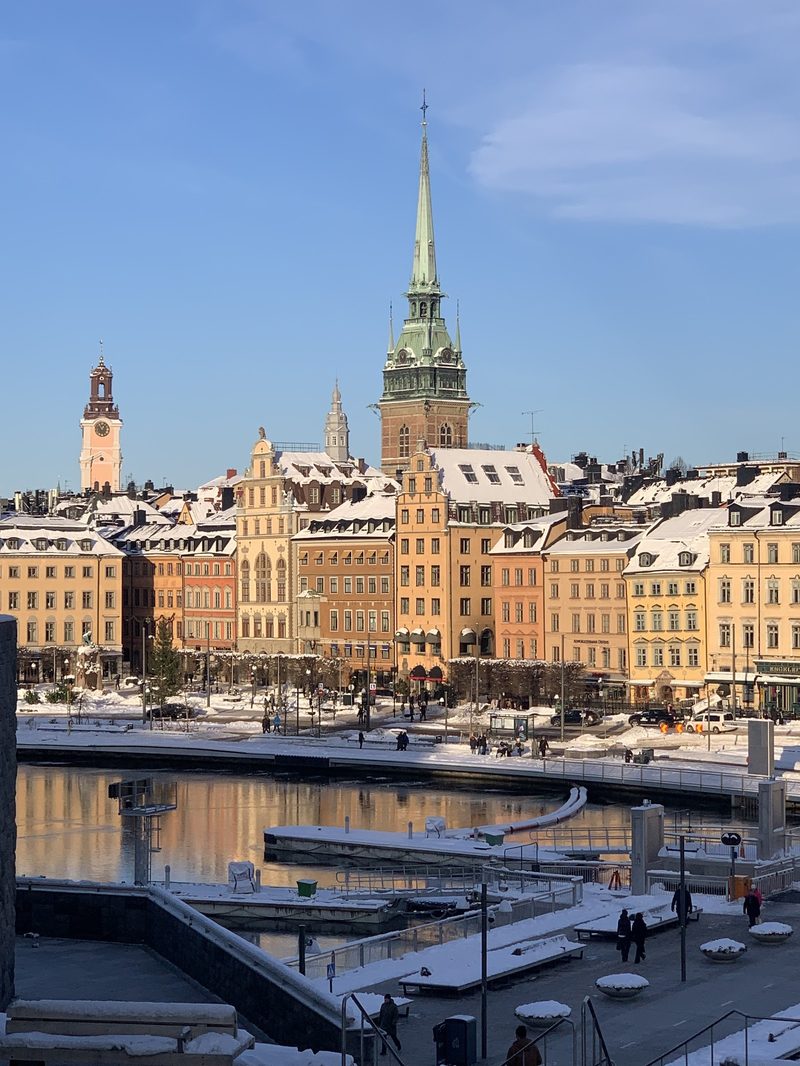
The first surprise about Stockholm is this: this city is not a landmass, but an archipelago. Built on 14 islands, where Lake Mälaren meets the Baltic Sea, water seeps in from every corner. The nickname "Venice of the North" is not in vain — there is a bridge at the end of every street you walk, and from each bridge you cross to another island. This geography makes the city fragmented but keeps it connected; The metro takes you to the island every three minutes, and ferries depart hourly in summer.
Gamla Stan, or Old Town, is an island consisting of colorful houses dating back to the 13th century. Mustard yellow, brick red and ocher facades line the narrow cobblestone streets shoulder to shoulder. The Royal Palace, Stockholm Cathedral, Nobel Museum are all on this island. But Stockholm isn't just Gamla Stan — Söndermalm is the hipster core, Östermalm is luxury, Djurgården is the green haven (three major museums + parks), Skeppsholmen is the art island.
This is the center of the Swedish miracle. ABBA, IKEA, H&M, Spotify, Skype, Volvo, Ericsson — a list of brands that have spread around the world from a small northern country. Part of this miracle comes from the social contract: high taxes, strong civil service, egalitarian education. The other part is from design culture: functional, simple, durable. You can see this philosophy in every corner of Stockholm — from the rock art walls in subway stations to the wooden details in hotel receptions.
The Vasa Museum deserves a day on its own. The royal warship Vasa, which sank on its maiden voyage while leaving Stockholm harbor in 1628, was recovered almost intact in 1961 after lying at the bottom of the Baltic for 333 years. 95 percent original — wood carvings from the Baroque heyday, cannon mounts, and crew members' personal belongings — are laid out across seven floors. The title of the world's best maritime museum is not an exaggeration, really give it 3 hours.
Let's be honest about prices: Stockholm is expensive. By Istanbul standards, coffee starts from 4-5 EUR, lunch from 20-25 EUR, dinner from 50 EUR. But everything is high quality — the coffee is really coffee, the fish is really fresh, the museum is really curated. The experience you get for your money here is at Berlin or Paris standards, and in some places even better.
When to Go
Stockholm has two attractive periods and are contrasting: summer white nights and winter dark-candle atmosphere.
| Period | Weather (daytime) | Density | Otel Fiyatı | Notes |
|---|---|---|---|---|
| January-February | -3 / 0° | Low | Medium | Dark, cold. Ice rinks, museums, quiet |
| March | -1 / 4° | Low | Medium | Spring is approaching, the days are getting longer |
| April | 2 / 9° | Low-Medium | Medium | The park and the islands come to life |
| May | 6 / 16° | Medium | Medium-High | Summer is starting, all open spaces are opening |
| June | 11 / 21° | High | High | Midsommar week is the best time. white nights |
| July | 14 / 23° | Very High | Very High | Peak season. Islands, boat tours, open-air bars |
| August | 13 / 22° | High | High | Stockholm Pride. Still long days |
| September | 8 / 16° | Medium | Medium | Autumn colors are starting, calmer |
| October | 4 / 10° | Low-Medium | Low-Medium | Ideal for museums, prices are decreasing |
| November | 1 / 5° | Low | Medium | Darkness begins, Christmas markets open |
| December | -2 / 2° | Medium-High | High | Lucia (13th), Nobel (10th), Christmas markets. snow season |
Our general recommendation: June-August is the classic tourist season and for long days (at the end of June, the sun sets at 22:30 at night and rises at 03:30 in the morning — it is practically never dark). December is a completely different Stockholm for Christmas markets, Lucia parades and candlelight atmosphere — don't miss it if you're ready for winter. Between September and May, the crowd is less, the weather is mild, and the price is medium.
Go on Midsommar weekend (the Friday closest to June 21) if you can — Swedes go out into the forest and welcome the white night with dancing. Free ethnography for foreign tourists.
How to get there
Stockholm's main airport, Stockholm Arlanda (ARN), is 42 km north of the city centre. There are three other airports, but 95% of tourist flights are from ARN.
Flights from Türkiye:
| Exit | Duration | Airline |
|---|---|---|
| Istanbul (IST) - ARN | 3 hours 30 min | THY (daily direct, 2 flights) |
| Istanbul (SAW) - ARN | 4 hours 10 min | Pegasus (non-transfer seasonal) |
| Istanbul - via ARN | 6-9 hours | Lufthansa (Frankfurt/Munich), KLM (Amsterdam), Finnair (Helsinki) |
THY direct option is open and comfortable all year round. Ticket prices are 250-350 EUR if purchased early, and 500 EUR at the last minute.
From airport to city:
- Arlanda Express (train): 20 minutes, T-Centralen, 320 SEK (~28 EUR). The fastest and most reliable.
- Flygbussarna (bus): 45 minutes, Cityterminalen, 119 SEK (~11 EUR). The most economical.
- SL Pendeltåg (commuter train): 38 minutes, Stockholm C, 173 SEK (~15 EUR). It is more affordable if you have an SL ticket.
- Taxi: 35-50 minutes, 550-650 SEK (~50-58 EUR). Fixed price — agreed before boarding.
Our recommendation: Flygbussarna if your budget is tight, Arlanda Express if you are pressed for time. Taxi is unnecessarily expensive if you are going alone.
Train option: Copenhagen 5 hours, Oslo 6 hours, Gothenburg 3 hours. Companies SJ and Snälltåget operate comfortable high-speed trains.
Urban Transportation
Stockholm's public transport is clean, punctual and comprehensive. SL (Storstockholms Lokaltrafik) operates the entire system — one card, all vehicles.
Tunnelbana (Metro): 100 stations, 3 main lines (red, green, blue) and 7 branches. The Stockholm metro is known as the "longest art gallery" in the world — more than 90 stations feature art carved from rocks. You can only go to Solna Centrum, T-Centralen and Stadion stations and take a gallery tour. 05:00 - 01:00 (24 hours on weekends).
Pendeltåg (Commuter Train): Train connecting surrounding towns, including Arlanda. It goes directly to Uppsala.
Tram: Line 7 is the only tram line, but it's important — it runs from the city center to Djurgården. You get Vasa, ABBA, Skansen with this.
Bus: For surrounding neighborhoods. Blue numbered auto lines are fast, red are local.
Ferry: During the summer months, it departs every 7-8 minutes between Slussen and Djurgården (SL ticket is valid). Waxholmsbolaget ferries to the archipelago from Strömkajen.
Ticket system: Single ticket 42 SEK (~4 EUR, 75 minutes), 24 hours 175 SEK (~16 EUR), 72 hours 350 SEK (~31 EUR), 7 days 455 SEK (~40 EUR). If you are going to stay for three days or more, get a 72-hour pass. Valid for all vehicles. Buy your ticket on the SL app — contactless cards are also accepted.
Stockholm Pass: There are 1/2/3/5 day options. Including 60+ museums, spas and attractions. 1-day 749 SEK (~67 EUR), 3-day 1,349 SEK (~120 EUR). If you're planning a lot of museums, do the math — especially expensive ones like Vasa, ABBA, Skansen, Stadshuset.
Bicycle: There is no city bike sharing system anymore, but there are apps like Donkey Republic and Voi. Stockholm is good for cycling, but hilly — the Söndermalm slopes are tiring.
Taxi: Bolt, Uber and Cabonline are reliable. Hailing a taxi on the street - prices can be free and outrageous. 150-300 SEK (~13-27 EUR) in the city.
Accommodation Regions
Stockholm is not compact — its city is divided into islands, and proper location is critical.
- Norrmalm / Gamla Stan (City): Walking or short metro distance to all tourist attractions. The most expensive area but the most practical. Ideal for couples and short holidays.
- Östermalm: Luxurious and quiet. Stureplan entertainment center right next to it, Diplomatic Quarter atmosphere. Exceptional hotels (Grand Hotel, Diplomat). For premium travelers.
- Söndermalm (Söder): Hipster neighborhood. Staying in Söndermalm is like staying in Brooklyn — bohemian, young, boutique hotels. With a view (Monteliusvägen, Fjällgatan). For independent travelers.
- Djurgården: Green and calm. Vasa, ABBA, Skansen are right next door. There are several boutique hotels and hostels. For those who want to stay focused on nature.
- Kungsholmen: Stadshuset is on this island. It's a place where local people live, it's not touristy, but it's 10 minutes away from the center by metro. For long stays.
What we don't recommend: Outskirts like Solna or Bromma — looks cheap, but transportation costs and time loss are a total detriment. Stay in the city centre.
Budget Plan
Stockholm is an expensive European capital. Three to four times the Istanbul standards. But for these prices, everything is high quality.
| Budget Style | Accommodation | Food | Activity/Transportation | Total (2 people/3 days) |
|---|---|---|---|---|
| Economic (hostel/2* hotel, market + 1 restaurant) | 350 EUR | 200 EUR | 100 EUR | ~650 EUR |
| Moderate (3-4* hotel Söndermalm, mixed) | 700 EUR | 350 EUR | 150 EUR | ~1.200 EUR |
| Comfort (4-5* boutique hotel, fine dining mixed) | 1.200 EUR | 550 EUR | 200 EUR | ~1.950 EUR |
| Luxury (Grand Hotel, Ett Hem, Michelin) | 2,500 EUR+ | 1,000 EUR+ | 350 EUR | ~3.850 EUR+ |
Practical items: Espresso 35-50 SEK (~3-4.5 EUR), lunch menu (dagens lunch) 130-180 SEK (~12-16 EUR), dinner 250-450 SEK (~22-40 EUR), museum entrance 130-300 SEK (~12-27 EUR), metro single ticket 42 SEK (~4 EUR), beer (33 cl) 70-100 SEK (~6-9 EUR), bottled water market 15 SEK / bar 35 SEK.
Tip: Many restaurants offer 'dagens lunch' menus — fixed price lunch is 40% cheaper than dinner. Practical savings.
Practical Tips
Currency: Sweden is a member of the EU but does not use the Euro — Swedish Krona (SEK). Even more interesting: Stockholm is the most card-carrying city in the world. Cash is almost never used anywhere — some banks don't even have cash machines. Always have your card ready. Visa/MasterCard is accepted everywhere, contactless payment is the standard.
English: Stockholm has one of the highest non-English speaking rates in the world. The waiter, taxi driver, museum attendant all speak fluent English. You don't need to learn Swedish, but saying "Tack" (thank you) and "Hej" (hello) is welcome.
Water: Stockholm's tap water is high quality, drinkable — the city gets its water from Lake Mälaren.
Tipping: Tipping is not mandatory in Sweden, most venues add the service fee to the bill. If you are satisfied with the restaurant, you can round up 5-10%. It is not expected in taxis and bars.
Tax-Free shopping: VAT refund (approximately 18%) on purchases over SEK 200 with a non-EU passport. Request a Global Blue or Planet form and have it approved at the airport. The department stores on NK and Drottninggatan are knowledgeable about the process.
Dusk (winter): In December-January, the sun sets at 14:30 in the afternoon. This is a psychological challenge — maximize daylight, leave early in the morning, plan around museums and restaurants. Taking vitamin D capsules is not a bad idea.
White nights (summer): June-early July, the sun is twilight between 22:30-03:00, it is never completely dark. Check if the hotel's curtains are good, you may have sleeping problems. Bring an eye mask.
Northern lights: South of Stockholm, too south for Aurora Borealis — visible 2-3 times a year but Lapland (Kiruna, Abisko) is the correct route. If you come to Stockholm alone don't expect the northern lights.
Sistembolaget: Alcohol sales are under state monopoly in Sweden. You can't buy beer/wine/spirits in the supermarket (above 3.5%) — only in Sistembolaget government stores. Closed on Sunday, until 15:00 on Saturday. If you're going to buy drinks for dinner, plan ahead.
Travel Guide with Children
Stockholm is the easiest capital of Scandinavia for families with children. The city design is stroller-friendly, most museums have children's programs, and nature is easily accessible.
Recommendations by Age Group
0-3 years: On the island of Djurgården, they really like the pet section of Skansen — goats, rabbits, sheep are hand fed. Junibacken (interactive museum based on children's books by Astrid Lindgren) is ideal for this age. The children's section of the Stockholm Library (Stadsbiblioteket) is open to the public on Friday mornings. Strömparterren duck feeding classic.
4-7 years: Skansen main destination — historic farmhouses, local fauna (Northern wolves, bears, deers), Christmas market, Midsommar events. Gröna Lund amusement park (Djurgården) is open in summer. Junibacken's Saga Train travels through Pippi Longstocking's world. Vasa Museum has a children's audio guide, it takes 1 hour.
8-12 years: Vasa Museum (full museum experience), Stockholm Municipality tour, Tom Tits Experiment (science center in Södertälje, metro distance) fascinate children. The ABBA Museum is interactive and sing-along — kids this age won't get bored. Naturhistoriska Riksmuseet (Natural History) is popular for its dinosaur skeletons.
Ages 13+: The interactive side of the ABBA Museum, Fotografiska modern exhibitions, Moderna Museet attract young people. Stockholm escape rooms are of high quality. The ferry tour to the islands (Vaxholm) is enjoyable for young people. Visiting Söndermalm vintage shops is an activity in itself.
Top 5 Kid-Friendly Activities
Skansen Open Air Museum — Designed for a whole family day out. It is both a museum, a zoo and a playground. Exploring 150 historical buildings is an adventure.
Vasa Museum — The 1628 ship feels like a real treasure hunt. Seeing from different angles throughout the 7 floors keeps the child's interest alive. There is a children's version of the audio guide.
Junibacken — Interactive children's museum based on Astrid Lindgren's books. Pippi's house, Ronja's forest, Saga train. In Djurgården, next to the ABBA Museum.
Gröna Lund Amusement Park — Open in Djurgården during the summer months (late April-September). Classic amusement park vibes, by the sea. Train options for all ages.
Stockholm Archipelago Boat Tour — 1-hour ferry to nearby islands like Vaxholm. Kids love the boat ride, exploration of castles and wooden houses on the island. Full day adventure.
Practical Information
Baby stroller: Stockholm has difficulties in places with ramps (Söndermalm), Norrmalm and Östermalm are flat. Most metro stations have elevators. SL buses are designed for rear door drive-in.
Kids menu: Most restaurants have barnmeny — meatballs, pasta, fish fingers. Portions are reasonable sized. 100-150 SEK (~9-13 EUR) per person.
Child ticket discounts: Public transport Under 7 years old free with an adult. Half price for ages 7-19. In most museums, children under 18 are free (especially Vasa, Moderna Museet, Nordiska Museet).
Toilet: Free in museums, shopping malls, metro stations. Public toilet in all parks (usually 5-10 SEK).
Warnings
- The sun sets very late in the summer months — it can disrupt children's sleep patterns, buy an eye mask.
- During the winter months, it gets dark quickly in the afternoon, so plan accordingly.
- Water is everywhere — watch out on the banks of the Danube, on the slopes of Söndermalm. There are sections without railings.
- Stockholm Bekoz (recycling) system is tight — get children into the habit of not throwing rubbish on the ground.
- Reservations at restaurants and museums are wise to avoid crowds, especially on the weekend.
Local Label and Culture Notes
Swedes seem aloof at first encounter, but this is the Northern version of politeness — respect for social boundaries. The philosophy of "lagom" (not too much, not too little, balanced) applies everywhere in society. Overreacting, talking loudly, and making dramatic gestures seem foreign. Be quiet, composed, punctual — like a native.
Greeting: Handshake is standard, even at first meeting. Cheek kissing is between close friends. “Hej” is the most common greeting — used in all situations, day or night, formal or informal. "Hej då" (goodbye) as you leave.
Punctuality: Sacred for Swedes. Being 10 minutes late is seriously rude. If your restaurant reservation is for 19:00, be at the door at 18:55. Arrive 5 minutes early for work appointments.
Queue: Never skip a queue. From the bus to the subway, from the post office to the store — everywhere there is a "nummerlapp" (number) system, or an invisible queue. Disrespecting the queue is one of the biggest sins.
Restaurant rules: The waiter comes to the table himself, do not call. Eye contact is enough to ask for an account. "Notan, tack" (account please) will do. Tipping is not mandatory, but 5-10% rounding is a courtesy.
Fika: Sweden's unofficial national ritual — coffee break. Definitely once in the morning and once in the afternoon. Coffee + dessert (kanelbulle/cinnamon bun) classic. The center of socialization, even business deals are closed at fika. A Swede asked "Shall we get some fika?" If he says, this is a sincere offer.
Allemansrätten (Everyone's Right): Swedish natural law — anyone can freely wander, camp, pick mushrooms in any piece of nature (except private land). This law determines Swedish nature culture. To experience this around Stockholm, go to Djurgården or Tyresta national park.
Lucia traditions: On December 13, girls in white dresses enter the church with a candle crown and the song "Sankta Lucia" is sung. This is the ritual that celebrates the coming of light in the North's darkest time. Lussekatter (saffron bun) and glögg (hot spiced wine) are special to this period.
Respect for the environment: Sweden is one of the most environmentally friendly countries in the world. Recycling is meticulous — don't throw the bottle away randomly. Use public transportation, walk, bike. Take the mesh bag you brought to the market, the plastic bag is paid for.
FAQ
Is Stockholm really that expensive? Yes. Three to four times the price of Istanbul. Coffee starts from 4-5 EUR, lunch from 12-16 EUR, dinner from 22-40 EUR. But everything is high quality — the coffee is really coffee, the fish is fresh, the museum is curated. Use dagens lunch options, market meals and the Stockholm Pass to save money. It's not cheap, but the experience you get for your money is worth it.
Is English sufficient? More than enough. Stockholm is one of the cities with the highest English speaking rate in the world. Swedes of all ages speak fluent English. Learning Swedish is unnecessary; Only saying "Tack" (thank you) and "Hej" (hello) is welcome.
When is it best to go? There are two clear periods. June-July for white nights — the sun sets at 22:30, rises at 03:30, there is practically no darkness at all. All open-air bars, archipelagos and parks are lively. December is for Christmas markets, Lucia ceremony (13th), Nobel week (10th) and candlelight atmosphere — winter lovers should not miss it. September and May are the middle option: the crowds are less, the weather is mild.
How to get to the archipelago? Waxholmsbolaget ferries depart from Stockholm port Strömkajen pier. Vaxholm (1 hour, nearest) is the ideal half-day start. Sandhamn (2.5 hours, for sailors), Grinda (1.5 hours, hiking) require a full day. Departures are frequent in summer, infrequent in winter. Ticket 165-330 SEK (round trip, 15-30 EUR). Pick up from Waxholmsbolaget or at the pier.
Can the northern lights (Aurora) be seen from Stockholm? Mostly no. Stockholm is at latitude 59° north — on the southern border of Aurora Oval. It can be seen 2-3 times a year when there is a strong solar storm, but there is no guarantee. If you want to see an aurora, you have to go to Lapland (Kiruna, Abisko, Jokkmokk) — 80%+ probability there from November to March. There are round-trip holiday packages to Kiruna, a 1-hour flight from Stockholm.
How to get there from Istanbul? THY has a direct flight from Istanbul (IST) to Stockholm (ARN), it takes 3 hours 30 minutes, 2 flights per day (morning and evening). Pegasus opens non-stop seasonal. If the ticket is purchased early, it costs 250-350 EUR, and at the last minute it costs 500 EUR. Transfer options (Lufthansa-Frankfurt, KLM-Amsterdam, Finnair-Helsinki) take 6-9 hours, but sometimes they are cheaper.
How many days to visit Stockholm? Three days is acceptable to see the main spots — Gamla Stan, Vasa, ABBA, Skansen, Stadshuset. Five days is ideal — adding the archipelago (Vaxholm) and Söndermalm day to the above. One week luxury — Drottningholm, Uppsala day trip, museum day, Söndermalm deepening. The city is not small and is divided into islands — take your time.
Does Vasa Museum really take 3 hours? Yes. The ship is seen from 7 floors, each floor has different details. The audio guide gives a tight tour of 1 hour, the exhibition panels are an additional hour, the IMAX movie is 17 minutes, the museum restaurant is an additional 30 minutes. If you want to "just see the shipwreck", you can go out in 1 hour, but this is unfair to the museum. Make a reservation.