About
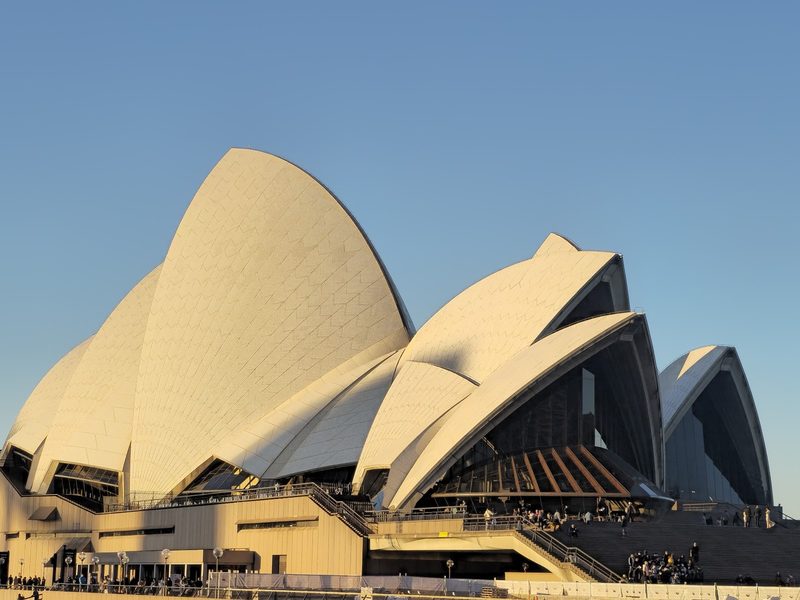
Sydney is a city built on the most beautiful harbor in the world. It's not me saying this, everyone who comes here says the same thing — and they're right. When you stand together with the white sails of the Opera House, the steel arch of the Harbor Bridge, turquoise waters, golden beaches and the skyscrapers rising behind, you realize that some cities are children favored by nature.
But Sydney isn't just postcard beauty. Despite its population of over 5 million, the city gives you the feeling of a big town. You can sit next to the man who went swimming with his surfboard in Bondi on Saturday morning at a boutique restaurant in Surry Hills in the evening. The Rocks' 200-year-old pub reeks of British colonial history, while two streets away, dim sum steams in Chinatown. While punk rock plays on the graffitied walls of Newtown, a jazz festival caresses your ears at Circular Quay.
Sydney's secret is this: each neighborhood has a different personality. The CBD, that is, the business center, is full of people running around in the shadow of skyscrapers, but take the ferry for 15 minutes and find yourself in another world in Manly. Paddington's Victorian terraces line up like something straight out of Instagram, while Aboriginal culture is kept alive in Redfern and Waterloo. While the Darlinghurst night is painted in rainbow colours, the glass-fronted restaurants overlooking the harbor in Barangaroo offer a quiet elegance.
The climate is just right. Even in winter it stays around 15-16 degrees and there is no snow. Summers are hot, but more bearable than the Istanbul summer — there is humidity, but the sea is always on the doorstep. In a city where it is sunny 340 days a year, the question "what should we do today" is unnecessary: go out, walk, swim, eat, drink.
The only caveat: Sydney is not a cheap city. The Australian Dollar is strong, restaurants and bars are 2-3 times the prices in Istanbul, and so is accommodation. But cook your own food in public BBQ areas, use public transportation with your Opal Card, join free walking tours and eat from the stall at the Fish Market — you can still have a great time without breaking the bank. Sydney makes you spend the money, but it pays off.
When to Go
Sydney can be visited any month of the year — even winter is relatively mild — but some periods stand out.
September - November (Spring): Sydney's most balanced period. 18-24 degrees, little rain, flowers are blooming, tourist season has not started yet. At the end of October, the Sculpture by the Sea festival turns Bondi waterfront into an open-air museum. Prices are reasonable, beaches are calm.
December - February (Summer): 25-30 degrees, beaches are crowded, hotel prices are through the roof. Spending New Year's Eve in Sydney is legendary — the world's most famous fireworks display — but accommodation costs twice as much and good places are hard to find. In January, Sydney Festival offers free events.
March - May (Autumn): The weather is still nice (20-25 degrees), the summer crowds are dispersed, prices are falling. Mardi Gras starts in February-March, Vivid Sydney starts at the end of May. If you are going for the first time, this period is golden.
June - August (Winter): 10-17 degrees, there are rainy days but no snow. Vivid Sydney runs until mid-June — the light show is a sight to behold on winter nights. The most affordable accommodation prices are during this period. You can do a whale watching tour (June-November).
Short answer: September-November is first choice, March-May is second. If you want New Year's Eve, it's December, but early booking is a must. Late May - mid June for Vivid Sydney.
How to get there
There are no direct flights from Istanbul to Sydney — it's the other side of the world, approximately 20-24 hours total flight time (including layovers). Main options:
Emirates (transfer Dubai): Most popular route. Istanbul-Dubai 4.5 hours, Dubai-Sydney 14.5 hours. 2-4 hour wait in Dubai. Total 21-23 hours.
Qatar Airways (Doha transfer): Istanbul-Doha 4 hours, Doha-Sydney 14 hours. Similar duration, generally competitive with Emirates on price.
Singapore Airlines (transfer to Singapore): Istanbul-Singapore 11 hours, Singapore-Sydney 8 hours. You can make a stopover in Singapore and combine the two cities.
Turkish Airlines + partner: THY has direct flights to Singapore or Kuala Lumpur, from there there is a connecting flight to Sydney. Code-share options are available.
The average round-trip ticket price for economy class varies between 650-1000 EUR. The best prices are between March-May and September-November. End of December - beginning of January (summer + new year) is the most expensive period.
Sydney Kingsford Smith Airport (SYD) is only 8 km from the city center — one of the closest airports among the world's metropolises.
Transportation from the airport to the city:
- Airport Link train: 15-20 minutes, AU$18.70 to CBD. The fastest and most practical way.
- Shuttle bus: Leaves at the hotel door, 18-22 AUD, 30-45 minutes.
- Taxi/Uber: 45-65 AUD, 20-30 minutes if there is no traffic. It can be economical for more than two people.
Urban Transportation
In Sydney, the transport system revolves around the Opal Card. Buy one card, use it for anything — simple.
Opal Card: Contactless card valid on trains, buses, ferries and trams. Pickup from the airport or any station, minimum loading fee of 10 AUD. All public transport is priced at AUD 2.50 on Sundays — make Sunday a busy sightseeing day.
Train (Sydney Trains): Extensive network extending from the CBD to the suburbs. Airport Link, Bondi Junction, Circular Quay, Town Hall are the main stops. Air-conditioned, tidy, reliable.
Ferry (Sydney Ferries): It's not a means of transportation, it's more like a trip. There are lines from Circular Quay to Manly (30 min), Taronga Zoo (12 min), Watsons Bay, Parramatta. You get the harbor view for free. Opal Card is valid.
Bus: Buses go to places where the train does not go (Bondi Beach, Coogee, Eastern Suburbs). Buses 333 and 380 to Bondi.
Light Rail: CBD to Dulwich Hill, Circular Quay to Randwick. The connection to Chinatown, Fish Market and Pyrmont is strong.
Uber / Didi: Works everywhere. Late at night or in groups, taxi/Uber makes more sense. Metered taxis are also reliable and clean.
Golden rule: Weekly spending with the Opal Card is fixed at AUD 50 (after 8 trips), after which it's half price. If you're staying in the CBD, you can walk to most places. Use the ferry not only for transportation but also for sightseeing.
Accommodation Regions
Circular Quay / The Rocks: Walking distance to the Opera House and Harbor Bridge. Tourist center, everything is close but prices are high. 150-450 AUD per night.
CBD (Town Hall / Wynyard): Business center but shopping and restaurants are also here. QVB, Strand Arcade, Pitt Street Mall are all in the CBD. Middle-upper segment. 120-350 AUD per night.
Surry Hills / Darlinghurst: Sydney's coolest neighbourhood. Cafes, restaurants, bars, vintage shops. Young people and hipsters are here. Close to Central Station. 100-250 AUD per night.
Bondi Beach: If you want beach life, this is it. Beachside accommodation, surfing, coffee culture. 30-40 minutes by bus to CBD. 120-300 AUD per night.
Manly: Quiet beach town feel, 30 mins ferry to CBD. Ideal for families and surf lovers. 100-250 AUD per night.
Darling Harbor / Pyrmont: Fun and family friendly. SEA LIFE, WILD LIFE, ICC are nearby. 130-300 AUD per night.
Kings Cross / Potts Point: Close to nightlife, walking distance to CBD. Wide range from backpacker hostels to boutique hotels. 50-200 AUD per night.
Recommendation: If you're visiting for the first time, go to CBD or The Rocks (everything is close), if you're on a budget, go to Kings Cross/Potts Point or Surry Hills, if you want a beach, Bondi or Manly.
Budget Plan
Sydney is expensive compared to European cities. The Australian Dollar is strong and daily costs are 2-3 times that of Istanbul. But with smart planning, you can control the budget.
| Category | Economical | Medium | Luxury |
|---|---|---|---|
| Accommodation / night | 50 AUD (hostel) | 200 AUD (3-4*) | 500 AUD+ (5*) |
| Meal/day | 40 AUD (market+street) | 100 AUD | 250 AUD+ |
| Transportation / day | 15 AUD (Opal Card) | 30 AUD (Opal+Uber) | 80 AUD (Uber/taxi) |
| Activity / day | 20 AUD | 60 AUD | 200 AUD |
| 3 days total | ~375 AUD (~230 EUR) | ~1,170 AUD (~720 EUR) | ~3,090 AUD+ (~1,900 EUR) |
1 AUD is approximately 0.62 EUR or 20 TL (May 2026 exchange rate).
Budget tips: Public transport costs AUD 2.50 on Sunday. Public BBQ areas (Bondi, Barangaroo, Darling Harbour) free — buy meat from Woolworths, cook it yourself. Fish Market is half the restaurant price for lunch. In most museums, the permanent collection is free. The Bondi to Coogee walk is one of the best free activities in the world.
Practical Tips
- Get Opal Card at the airport or at the first station. Contactless payment by credit card also works, but you cannot benefit from weekly Opal discounts.
- Sunscreen SPF 50+ is a must. In Australia, the ozone layer is thin and UV rays are serious. Avoid the sun between 10 a.m. and 2 p.m. Slip Slop Slap — Aussies don't joke about this one.
- Water: Tap water is safe to drink, you do not need to carry bottled water. Take a canteen, it's filled everywhere.
- Bring plug adapter. Australia uses a Type I socket (two straight angled pins + ground). Türkiye sockets do not work, buy an adapter from the airport or any pharmacy.
- Tip: There is no tip requirement in Australia, waiters already earn good salaries. If you received good service, you can leave 10%, but there is no expectation. There are tip boxes in cafes and bars where you can put change.
- Time difference: 7 hours ahead from Istanbul (+8 during summer time). Jet lag will be serious, give yourself time on the first day.
- eSIM or local SIM: Get a tourist SIM at the airport from Optus, Telstra or Vodafone. 30-day packages 30-50 AUD, unlimited data.
- Safety at sea: Swim in the flagged (red-yellow) area, do not go outside the flag. Rip currents are serious. If you get caught in the current, swim sideways, not towards the shore.
- Sunday: Public transport fixed 2.50 AUD. Blue Mountains, Manly, Bondi all for this price. Put your busiest travel day on Sunday.
- Alcohol rules: Alcohol consumption is prohibited for those under the age of 18, they may ask for ID. Alcohol is only sold in licensed venues and bottle shops, not in supermarkets.
- Animals: Don't worry about spiders and snakes in the city center, but be careful in the Blue Mountains or rural areas. Funnel-web spider is native to Australia and is dangerous, but the probability of encountering it in the city is very low.
Travel Guide with Children
Sydney is a great destination for families with children. Beaches, zoos, aquariums, parks and outdoor activities abound. Australians have a child-friendly culture, and children are tolerated everywhere, from restaurants to ferries.
Recommendations by Age Group
0-3 years: Sydney's ferries are stroller-friendly, with lifts at most stations. The Darling Harbor area is ideal with its flat, wide walking paths. Water playground in Tumbalong Park. Large lawns at the Royal Botanic Garden.
4-7 years: Taronga Zoo is this age group's favorite — seeing koalas and kangaroos drives kids crazy. Glass tunnel and sharks at SEA LIFE Aquarium. WILD LIFE Zoo at Darling Harbor indoor rainy day plan.
8-12 years: The Bondi to Coogee walk gives a feeling of adventure. BridgeClimb can be attended by people over the age of 8. In the Blue Mountains, the Scenic Railway is the world's steepest coaster — kids love it. Try snorkeling in Manly.
Ages 13+: Surf lesson in Bondi (2 hour group lesson 80-100 AUD). Newtown's street art and vintage shops. Night walk during Vivid Sydney. ZooSleepover (overnight stay at the zoo) at Taronga Zoo.
Top 5 Kid-Friendly Activities
Taronga Zoo — Ferry transportation, cable car, koala and kangaroo. Half a day passes easily. Child ticket is 30 AUD.
SEA LIFE Sydney Aquarium — Sharks swim overhead as you pass through the glass tunnel in Darling Harbour. Dugong (sea cow) is native to Australia. Perfect as a rainy day plan.
Bondi Beach — Kids can build castles on the beach, play in the waves, and swim safely in Icebergs Pool. Lifeguards are active in the Bayraklı area.
Blue Mountains Scenic World — World's steepest coaster, glass-bottom Skyway, rainforest boardwalk. Adventure and nature together.
Darling Harbor Playground (Tumbalong Park) — Free water play area, climbing wall, large grass area. There are cafes and restaurants around, it is also comfortable for parents.
Practical Information
Baby stroller: Sydney city center is generally stroller friendly. There is space on ferries, trains and buses. The Bondi to Coogee walk is difficult with a stroller — use a kangaroo carrier.
Kids menu: Most restaurants have a kids menu, usually 10-15 AUD. Fish & chips, nuggets, cake are standard. Restaurants are very conscious about allergies, be sure to ask.
Child ticket: Taronga Zoo, SEA LIFE, Scenic World all have child discounts. On public transportation, 4-15 year olds are half price, under 4 are free.
Sun protection: SPF 50+ sunscreen, hat and sunglasses are a must. The Australian sun burns a lot, reapply sunscreen every 2 hours.
Warnings
- Do not go outside the flagged area at sea. Rip currents are dangerous for children.
- Do not go off trail in the Blue Mountains, the rocks are slippery.
- There is a high risk of sunburn, take a break in the shade at noon.
- Jellyfish can be seen on the beaches between November and March, consult lifeguards.
Local Label and Culture Notes
Australians are considered among the most relaxed people in the world. "No worries mate" is truly the philosophy of daily life. But it's good to know a few things.
Relaxed but respectful. Australians speak by first name, do not use titles, and become friendly quickly. But don't interpret this comfort as condescension or disrespect. Queue culture is very strong — if you interrupt in the queue you will get serious backlash.
Beach rules. Swim in flagged area (between red-yellow flags). Lifeguards are very serious, heed their warnings. Toples sunbathing is allowed on some beaches but not everywhere. Collect your garbage, beach cleaning is sacred.
Respect for Aboriginal culture. Australia's oldest peoples have a history of 65,000 years. "Acknowledgment of Country" is frequently held at events. Pay attention to warnings when taking photos in sacred sites such as Uluru. When purchasing Aboriginal art, make sure it is original.
No tip expected. Waiters earn a minimum wage of 20-25 AUD per hour in Australia. The tipping gesture is nice but not mandatory. Leaving 10% is considered generous. You don't need to leave it in cafes and bars.
"Arvo" and "brekkie". Australians shorten each word: afternoon = arvo, breakfast = brekkie, sunglasses = sunnies, barbecue = barbie. Once you learn these abbreviations, you won't get lost in daily conversations.
Queuing culture. There is waiting in line on the bus, at the stall, and at the cafe. Interfering is one of the biggest social crimes. Be patient, say "after you mate".
Beer culture. The Schooner (425 ml) is the standard beer size in NSW. If you want pints, say so, but some places come in different sizes. Try the local craft beer scene — Young Henrys, 4 Pines, Stone & Wood are good starts.
FAQ
How many days to visit Sydney? Minimum 3 days, ideal 5-7 days. The Opera House, Bondi, The Rocks and a couple of museums can fit in 3 days. Added Blue Mountains, Manly and neighborhood explorations in 5 days. You can really feel the city in 7 days.
Is there a language problem? No. Main language is English. Australian accents can be a bit challenging at times — they talk fast and use a lot of acronyms — but if you want them to speak clearly, say so politely and no one will be offended.
Is Sydney safe? Yes, it is very safe. It is a regular on the lists of the most livable cities in the world. Even walking alone at night is generally safe. Things to watch out for: rip currents at sea, extreme sunburn and drunken crowds late at night in Kings Cross. Violent crime against tourists is rare.
Is Sydney expensive? Yes, it is above the world average. A meal costs 18-40 AUD, beer 10-15 AUD, hotel night 150-300 AUD. But you can balance the budget with free beaches, parks, museum collections and public BBQ areas.
Do I need an Australian visa? Evet, ve ETA ile değil. Türk pasaportu ETA ve eVisitor sistemlerine uygun değil; ImmiAccount üzerinden online başvurulan Ziyaretçi Vizesi (subclass 600) gerekiyor. Biyometri istenebiliyor, sonuç birkaç günden birkaç haftaya uzayabiliyor. Bileti onaydan sonra al ya da iade edilebilir bilet seç.
Which is the best transportation card? Opal Card. Valid for train, bus, ferry and tram. Fixed AUD 2.50 all day on Sundays. Weekly spending drops to half price after 50 AUD.
Can I surf at Bondi? Definitely. In Bondi, schools like Let's Go Surfing offer 2-hour group lessons (80-100 AUD). Includes board and wetsuit. Even if you haven't surfed before, you can get up in 2 hours.
When can you swim in Sydney? October to April is best. Water temperature is 20-24 degrees. In winter (June-August) it drops to 17-18 degrees, there are people who wear wetsuits, but it is cold. Bondi Icebergs Pool is open all year round.
Can Blue Mountains be visited as a day trip? Yes, in fact, this is the most popular option. 90 minutes by train from Central Station, around 6 AUD with Opal Card. Leave early in the morning and return around 18-19 in the evening. A full day is enough.
When is Vivid Sydney? It usually takes 3 weeks, late May - mid-June. Light projections, music and talk events on winter nights. Free, family friendly. The Opera House projection is the main event.