About
Tbilisi is one of the most "different" cities you can visit with a 2-hour flight from Istanbul. Visa-free, cheap, food is bomb, wine is legendary, people are warm - the reason why it is the new favorite of Turkish travelers is actually that simple. The number of Turkish tourists exploring Tbilisi has multiplied in the last 5 years, and the city has responded with Turkish menus, Turkish-speaking staff and even Turkish restaurants. But of course you don't go to Tbilisi looking for a Turkish restaurant — Georgian cuisine is so strong that it deserves to be considered in a separate category in the world.
Located on both banks of the Kura River, Tbilisi sits at the foot of the Greater Caucasus Mountains, at an altitude of 380-770 meters above sea level. It was founded in the 5th century by King Vakhtang Gorgasali — legend has it that the king discovered this valley with hot springs while hunting. "Tbili" means hot in Georgian, and the name of the city comes from these sulfur hot springs. Today you can bathe in that hot water at the baths in Abanotubani — it has been coming from the same source for 1,500 years.
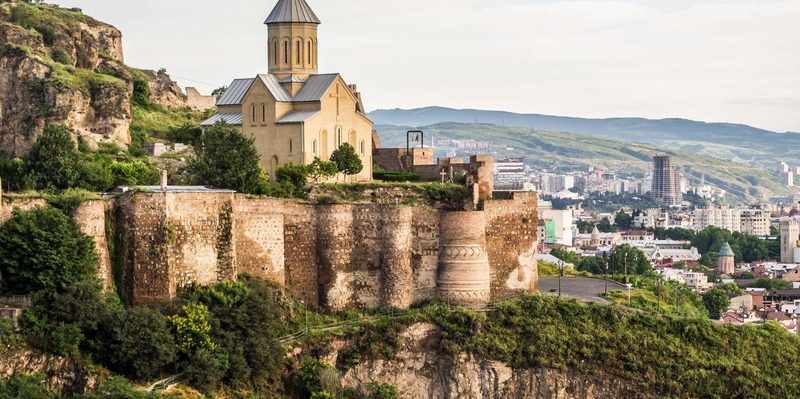
The history of Georgia is a heavy history. A country that has seen Persian, Arab, Mongol, Ottoman, Russian and Soviet occupations. Tbilisi was destroyed and rebuilt many times. This history is felt in the fabric of the city: half-ruined balconied houses in the Old Town, the ramparts of Narikala Castle, Soviet-era concrete blocks and ultra-modern structures such as the Peace Bridge sit side by side. This contrast is Tbilisi's biggest draw — at every corner you enter a different era.
Food should be separated into a separate paragraph because Georgian cuisine is the number one reason to come to Tbilisi. Khinkali (giant dumplings filled with broth), khachapuri (cheese pita but something completely different), mtsvadi (shish kebab but in Georgian style),lojio (beans), pkhali (walnut paste), badrijani (eggplant with walnut filling) — you will see them all at the same time on a Georgian table. The portions are huge, the prices are ridiculously cheap, the flavors are unforgettable. Then there is Georgian wine: 8,000 years of wine production tradition, fermentation in clay jars called kvevri, orange wine (amber wine) trend — the most exciting story of the wine world in recent years comes from Georgia.
Tbilisi has exploded onto the world stage in terms of nightlife in the last 10 years. Bassiani — a techno club built inside a former swimming pool — has been compared to Berghain and hosts Boiler Room events. Nightlife here is not just entertainment, it is a form of resistance: After the police raid in 2018, thousands of people took to the streets and defended the freedom to dance. This spirit is still alive.
A special note for Turkish travelers: Georgians are generally very friendly towards Turks. There is a language barrier (Georgian is truly a different world) but young people speak English, old people speak Russian. There are Turkish signs, a Turkish quarter and a Turkish consulate in Tbilisi. We are neighbors historically, we have a lot in common culturally — from table culture to hospitality, from the tradition of kissing hands to respect for elders. You'll feel surprisingly at home in Georgia.
When to Go
Tbilisi has a semi-continental climate: summers are hot and humid, winters are cold but not overly harsh.
| Period | Weather (daytime) | Density | Otel Fiyatı | Notes |
|---|---|---|---|---|
| January-February | -2 / 5° | Low | Low | Cold but calm. Bath season. Gudauri skiing 2 hours |
| March | 3 / 12° | Low | Low | Spring begins, trees are blooming |
| April | 8 / 18° | Medium | Medium | Beautiful period; neither hot nor cold |
| May | 12 / 23° | Medium-High | Medium | One of the best months. Greenery is at its peak, the weather is perfect |
| June | 16 / 28° | High | High | It starts hot but the evenings are pleasant |
| July | 19 / 32° | High | High | It may be very hot, what time is it at noon? |
| August | 19 / 32° | High | High | Hottest month, escape to the mountains instead of the beach |
| September | 15 / 27° | Medium-High | Medium | Rtveli (vine harvest) begins. ideal period |
| October | 9 / 19° | Medium | Medium | Tbilisoba festival. autumn colors |
| November | 4 / 11° | Low | Low | Calm and cheap. new wine season |
| December | 0 / 6° | Low-Medium | Low | New Year's decorations are beautiful but cold |
Our general recommendation is May-June and September-October. September is especially the golden period: the weather is still nice, the vintage is starting, there is the Tbilisoba festival and prices have fallen from their summer peak. July-August can be very hot — if you go, take shelter in the cafe or bathhouse during lunch hours.
How to get there
Tbilisi's airport, Shota Rustaveli Tbilisi International Airport (TBS), is 17 km southeast of the city center.
Flights from Türkiye:
| Exit | Duration | Airline |
|---|---|---|
| Istanbul (IST) - TBS | 2 hours 10 min | THY, Georgian Airways (3-4 flights per day) |
| Istanbul (SAW) - TBS | 2 hours 15 min | Pegasus (1-2 times a day) |
| Ankara (ESB) - TBS | 2 hours | THY (3-4 flights per week) |
| Trabzon (TZX) - TBS | 1 hour 15 min | THY, Georgian Airways (2-3 flights per week) |
2 hours and 10 minutes from Istanbul — you go to Tbilisi like you go to Antalya. 1 hour 15 minutes from Trabzon; If you are from the Black Sea region, Tbilisi is perfect for a weekend getaway.
From airport to city:
- Bus (number 37): 40-50 min, up to Freedom Square, 1 GEL. The cheapest option.
- Taxi/Bolt: 25-35 min, 25-35 GEL. I highly recommend downloading the Bolt app — no hassle of haggling with taxi drivers.
- Private transfer: 40-60 GEL, with advance reservation.
Our recommendation is the Bolt application — the price is fixed, the route is clear, and there is Turkish language support. Don't be fooled by the "official taxi" signs at the airport exit, the price difference can be 3-4 times.
Land option: You can enter from the Sarp border gate and come to Tbilisi via Batumi. Train from Batumi to Tbilisi takes 5 hours, minibus takes 5-6 hours. It is a nice route for those who want to see the Black Sea coast.
Urban Transportation
Tbilisi's public transport is "just okay" — not perfect, but adequate. But your real savior is the Bolt app.
Metro: 2 lines (Akhmeteli-Varketili and Saburtalo), 23 stations. It works between 06:00 - 00:00. Single ticket costs 1 GEL. Soviet-era stations are deep underground — the escalators are hypnotically long. Buy a Metrobus card (rechargeable card), valid on metro + bus + minibus.
Bus and Minibus (Marshrutka): Buses are regular on the main streets, minibuses go everywhere but it takes a while to figure out the routes. The lines appear on Google Maps, use it. 0.50-1 GEL.
Cable car: Cable car from Rike Park to Narikala Castle 2.50 GEL, Mtatsminda funicular 5 GEL. Both are transportation and scenery.
Bolt/Taxi: Bolt goes everywhere in Tbilisi and is ridiculously cheap. Average 5-10 GEL (approximately 5-10 TL) in the city. Prices are reasonable even at night. If you are going to take a taxi, use Bolt, stopping from the street is risky — if there is no taximeter, bargaining is required.
By walking: The Old Town, Rustaveli, Abanotubani and the surrounding area are completely walkable. The real joy is walking - you will discover something new on every street.
Accommodation Regions
Tbilisi is a compact city; If you choose the right area, you can reach everywhere on foot or with a 5 GEL Bolt.
- Old Town: In the center of everything. Abanotubani, Narikala, Peace Bridge are within walking distance. Boutique hotels and Airbnb options are plentiful. It can be a little noisy at night. Ideal for short stay.
- Vera: A quiet and green neighborhood, just above the Old Town. Local cafes, tree-lined streets. Prices are 20-30% lower than in the center. For couples seeking tranquility.
- Vake: The upper income district of the city. Parks, cafes, restaurants. A little far from the center but green and safe. Suitable for families.
- Marjanishvili / Aghmashenebeli: The rising region of recent years. Restored buildings, new cafes, boutique shops. Walking distance to the center, prices are reasonable. For young travelers.
- Factory environment: For hostellers and digital nomads. The courtyard of the Factory is the center of social life. Budget friendly.
We do not recommend: Gldani and Varketili — far from the center, with little to offer in terms of tourist attractions. There is no security problem, but it is unreasonable in terms of location.
Budget Plan
Tbilisi is one of the cheapest capitals in Europe. We can say that it is even cheaper than Istanbul — especially in terms of food and beverage.
| Budget Style | Accommodation | Food | Activity/Transportation | Total (2 people/3 days) |
|---|---|---|---|---|
| Economic (hostel/2* hotel, street food + 1 restaurant) | 200 GEL | 180 GEL | 60 GEL | ~440 GEL (~150 EUR) |
| Moderate (3* hotel or Airbnb, mixed) | 450 GEL | 350 GEL | 120 GEL | ~920 GEL (~310 EUR) |
| Comfort (4* boutique hotel, good restaurants) | 900 GEL | 550 GEL | 200 GEL | ~1.650 GEL (~560 EUR) |
| Luxury (5* hotel, fine dining) | 2,000 GEL+ | 900 GEL+ | 300 GEL | ~3.200 GEL (~1.100 EUR) |
Practical items: Khinkali (1 piece) 1.50-2 GEL, Adjara khachapuri 8-15 GEL, dinner for 2 at the restaurant 50-80 GEL, bottle of wine (at the restaurant) 25-50 GEL, wine from the supermarket 10-25 GEL, Bolt in the city 5-10 GEL, metro ticket 1 GEL, museum entrance 10-15 GEL, Turkish bath private room 80-150 GEL, churchkhela (each) 2-4 GEL, espresso 5-8 GEL.
Exchange rate information: 1 EUR is approximately 2.95 GEL, 1 USD is approximately 2.70 GEL (May 2026). The most logical way to withdraw GEL in Tbilisi is to withdraw it from ATMs at the airport or exchange it at the exchange offices in the city. The airport exchange rate is bad, withdraw your first taxi money from the ATM and do the rest in the city.
Practical Tips
Water: Tbilisi's tap water is drinkable but tastes a bit chalky. Bottled water is cheap (0.50-1 GEL), there is no harm in buying it. Ask for "Borjomi" (natural mineral water) in restaurants — the national pride of Georgia.
Internet: Get your Magti or Geocell SIM card from the airport (10-15 GB for 10-15 GEL). WiFi is standard in cafes and restaurants.
Security: Tbilisi is generally very safe. You can walk comfortably in the Old City even at night. Normal urban caution is enough — just watch your wallet in crowded places, that's it.
Language: Georgian has its own alphabet (33 letters, unlike any other). Young people speak English, but the older generation speaks Russian. Signs are generally in Georgian + English. Basic Georgian: "Gamarjoba" (hello), "Madloba" (thanks), "Gmadlobt" (thanks too, but more formal), "Gaumarjos" (cheers—you'll be using this a lot).
Supra tradition: The Georgian table (supra) is a serious cultural ritual. The tamada (head of table/master of speeches) makes a toast, everyone listens and drinks. If they toast you, don't refuse — it's such a shame. Drink the wine to the bottom. This tradition lives even at the tourist tavern table.
Socket: Type C/F (European type two round pins). Same as sockets in Türkiye, no adapter needed.
Tip: It's not mandatory, but leaving 10% is polite. There is no expectation of tipping taxi drivers (Bolt is already included).
Pre-flight: Georgian passport control generally does not cause any problems for Turkish citizens. They may not ask for return tickets and hotel reservations, but have them with you. Your passport must be valid for 6 months.
Travel Guide with Children
Tbilisi is a more comfortable and cheaper option for families with children than many cities in Europe. Georgians' love for children is real — you will encounter people smiling at their children in restaurants, on the streets, on public transport.
Recommendations by Age Group
0-3 years: Stroller may be difficult on the streets of the Old City (pavements are rough, there are hills). Rustaveli and Aghmashenebeli streets are flat and suitable for strollers. Restaurants usually provide high chairs. Georgians will want to pet their babies, they will want to hold them — be ready for this.
4-7 years: Mtatsminda Park is the star of this age group — amusement park, scenery, funicular ride. Cable car and funicular adventure for children. The waterfall in the Botanical Garden creates excitement.
8-12 years old: Narikala Castle adventure (go up by cable car, go down on foot), giant columns in the Georgian Chronicle, Soviet memorabilia in the Dry Bridge Market attract their attention.
Ages 13+: Factory culture, street art of the Old Town, discovery of Georgian cuisine and a Kakheti vintage tour attract young people.
Top 5 Kid-Friendly Activities
Mtatsminda Park — Funicular ride up the hill, amusement park, panoramic view. Take half a day. The evening lights are also beautiful.
Narikala Castle Cable Car — The cable car ride from Rike Park to the castle is exciting for kids. Castle exploration above, botanical garden below.
Sulfur Baths — You can get a family room. Kids love hot water, but the sulfur smell can be disturbing at first — prepare with advance notice.
Botanical Garden — Waterfall, walking path, bridges. Nature walk on the road that goes down from behind the castle. There are also free areas.
Kura River boat tour — There are short tour options, kids enjoy seeing the city from the river.
Practical Information
Baby stroller: Difficult in the Old Town, comfortable in the new areas. There are subway elevators, but don't count on them working at every station.
Children's menu: Georgian cuisine is suitable for children — khachapuri, khinkali, french fries are everywhere. Portions are large, you can ask for half a portion for the child.
Child ticket: Metro is free for children under 7 years old. In museums, children under 6 are generally free, 6-18 are half price.
Toilet: Available in restaurants and cafes. It's hard to find on the street — cafes are a savior in this regard.
Warnings
- The sidewalks are unequal, children should be careful while running.
- It can be hot in the summer months, water and a hat are a must.
- Traffic is a bit chaotic, be careful even at pedestrian crossings.
- There are stray dogs, generally harmless, but warn the children.
Local Label and Culture Notes
Georgians are one of the most hospitable nations in the world — it's not just a cliche, they really live it. The saying "A guest comes from God" (stumari ghvtisaa) is taken seriously here. If they invite you to their home, do not refuse — and do not go hungry, because they will feed you.
Table manners (Supra): The heart of Georgian food culture is the table tradition called supra. The tamada (table head) makes a toast, makes a long and enthusiastic speech, everyone listens and empties his glass to the bottom. Topics vary from God to homeland, from family to friendship. They may toast you too — give a short thank you speech, be sincere. "Gaumarjos!" Learn to say (cheers), you'll use it a lot. Attention: you are expected to drink the wine all the way to the bottom rather than sipping it — but if you say "I can't drink that much" they will understand.
Religion: Georgia is a strong Orthodox Christian country. When entering churches, women must wear headscarves and men must wear long trousers. There are borrowed headscarves at the doors. Be careful when taking photos — it's prohibited in some churches.
Rule for eating khinkali: This is a serious issue. You eat khinkali by holding the knob (kudi) on top with your hand, turning it upside down and drinking the water at the first bite. You don't eat the bun, you leave it on the edge of the plate — the number of buns indicates how many you eat. The person using knife and fork is a tourist and everyone knows it.
Alcohol culture: Wine is a part of life in Georgia. They have 8,000 years of wine tradition and they take it seriously. But at the same time, chacha (Georgian raki, made from grape grounds) is very strong (50-60 degrees) and they will insist you "try it". Watch out, chacha really hits.
Punctuality: Georgians are flexible with time. It is normal to arrive 15-20 minutes late for an appointment. You'll have to get used to it.
When taking photos: Ask for permission before taking photos of people. Most of the time they will be happy to pose, but it's polite to ask.
Ottoman sensitivity: The Ottoman period in Georgian history is a sensitive issue. Georgians are generally very warm and friendly towards the Turks, but don't bring up the subject of the Ottoman occupation - they will if necessary. Approach with diplomacy, do not get into a historical debate.
FAQ
How many days to visit Tbilisi? Three days are enough for the city. But if you give it a week, you can also add day tours such as Kakheti wine region, Mtskheta (former capital, UNESCO heritage), Kazbegi mountains. 5 days is ideal for Tbilisi + Kakheti.
Do I need a visa to Tbilisi? No. Turkish citizens can stay up to 1 year (365 days) without a visa. A passport valid for only 6 months is sufficient. In this regard, Georgia is one of the most generous countries in the world.
Is English sufficient? The majority of the younger generation (under 25) speaks English. You won't have any problems in restaurants and hotels. The older generation speaks Russian. Dealing with taxi drivers can sometimes be difficult — use Bolt.
Is Tbilisi safe? Yes, very safe overall. You can walk comfortably in the Old City even at night. Crime rate is low. Normal big city attention is sufficient.
How much money do you spend? Tbilisi is very cheap. For two people, with a medium budget, 300-350 EUR is enough for 3 days (hotel + food + activity + transportation). Even fine dining is half of Istanbul prices.
Where to withdraw money? ATMs are everywhere, Visa and Mastercard are accepted everywhere. To withdraw GEL, you can use exchange offices in the city center — compare rates. Airport rate is low, minimum check.
Where to go on a day trip from Tbilisi? Mtskheta (old capital, 30 min, marshrutka 1 GEL), Kakheti wine region (1.5 hours), Kazbegi / Stepantsminda (3 hours, striking mountain views), Gudauri (skiing in winter, 2 hours). The easiest is Mtskheta — half a day is enough, the view from the Jvari Monastery is extraordinary.
Hachapuri or khinkali? Both of them. This question is like asking "lahmacun or pita" in Georgia — the answer is always "both." But if you force it: the first meal is khachapuri, the second meal is khinkali.
How is Georgian wine? Different. The kvevri method (fermentation in earthenware jars) gives the wine its unique character. Orange wine — made from white grapes but fermented with their skins like red wine — is Georgia's gift to the world. Saperavi (red) and Rkatsiteli (white) are the most well-known grapes. A bottle costs 10-25 GEL from the supermarket, don't leave without trying it.
How to enter Bassiani? The door can be a little picky, but it's not as harsh as Berlin clubs. Dress comfortably (sneakers + t-shirt are ok), don't go drunk, be 1-2 people, not in a group. Tickets usually go on sale in advance at the door, sometimes online — follow them on Instagram.
Tbilisi or Batumi? Different experiences. Tbilisi culture, food, nightlife; Batumi sea, casino, beach. If you want to see both, start from Tbilisi and take the train to Batumi (5 hours). But if you only have time for one, Tbilisi.