About
Warsaw starts you with war stories but leaves you with stories of giving up. In World War II, 85% of the city was leveled — literally reduced to rubble. Then the Warsaw people got up and rebuilt the city, stone by stone, looking at old photographs and painters' paintings. UNESCO found this stubbornness so impressive that it included a "reconstructed" city on its world heritage list — for the first time in history.
Today's Warsaw is a city that shouldered that trauma but did not become embittered. Glass skyscrapers rise next to the concrete blocks left over from the Soviet era, while you are having your fill of 15 PLN at the milk bars of the communist era, a Michelin star restaurant is ready to explore one street away. These contrasts make Warsaw one of the most interesting capitals in Europe. It doesn't have the fairytale of Prague, it doesn't have the romance of Paris — but Warsaw has a sincerity and honesty that others envy.
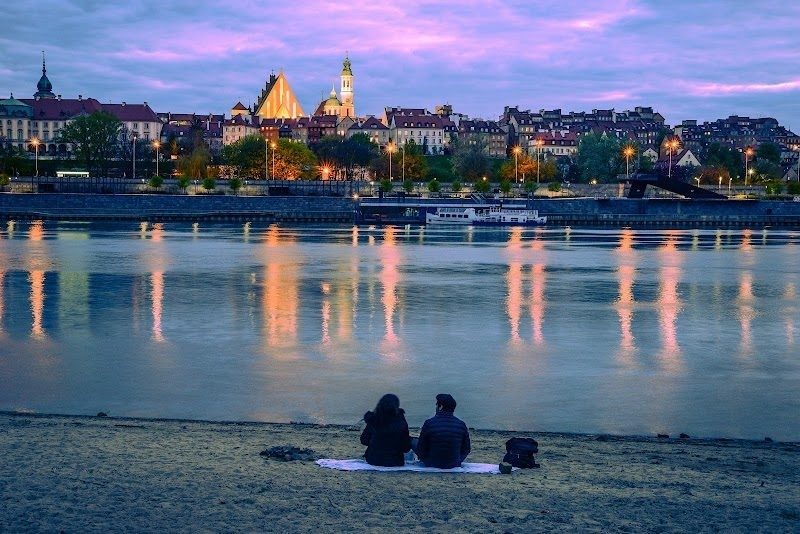
Poland's capital is the country's largest city with a population of approximately 1.8 million and has undergone an incredible transformation in the last 20 years. Abandoned docks along the Vistula river have turned into stylish boulevards and beach bars. The Praga district — once called the "dark side of the river" — is now Warsaw's Brooklyn, with street art, independent galleries and craft beer bars. A new cafe, gallery or restaurant opens on every corner, and they all have this in common: prices are almost half compared to Western Europe.
Chopin was born here. Marie Curie grew up here. The uprising in the Warsaw Ghetto came from here. This city carries some of the world's heaviest stories, but it doesn't sulk while doing so. On the contrary, while you are sitting in a bar and sipping a beer for 12 PLN (about 3 EUR), the Pole next to you will chat beer with you and make fun of the country's history. Don't look at tourist guides to understand the spirit of Warsaw — look around while drinking zurek soup at a milk bar, the spirit is there.
When to Go
Warsaw's continental climate makes sharp transitions — summers are hot, winters are freezing, and there's little compromise in between. Here is an honest summary of the periods:
May-June (Spring/Early Summer): Best period. Temperatures are 18-25°C, parks are green, Vistula shore bars are open. Chopin concerts in Łazienki start in May. Tourist density is not at its peak yet, prices are affordable.
July-August (Summer): Hot (between 28-33°C), sometimes muggy. But the Vistula coast bars, open-air festivals and parks are in full swing. Warsaw people go on vacation, the city gets a little emptier — this is an advantage.
September-October (Autumn): It rivals spring in beauty. Łazienki Park turns golden yellow, the temperature is ideal for walking with 12-20°C. Warsaw Film Festival in October. Prices are falling, crowds are decreasing.
November-March (Winter): Cold (-5 to 3°C), gray and dreary. But the Christmas markets in December are delightful and the city lighting is beautiful. January-February is the cheapest period, but the weather is really depressing. It's not bad for a museum trip — it's okay if you don't spend much time on the streets.
How to get there
Airline: Warsaw Chopin Airport (WAW) is just 10 km from the city center — one of the closest airports in Europe. Turkish Airlines and LOT Polish Airlines offer direct flights from Istanbul Airport (IST). Flight duration is approximately 2 hours 20 minutes. Early tickets are between 90-180 EUR — one of the most affordable routes in Europe.
Airport - City center transportation:
| Option | Duration | Cost | Note |
|---|---|---|---|
| SKM/KM Train | 20-25 min | 4.40 PLN (~1 EUR) | Under the airport to Warszawa Centralna. The fastest and cheapest. |
| Bus 175 or 188 | 30-40 min | 4.40 PLN (~1 EUR) | There is also the N32 line up to the center at night. |
| Taxi / Bolt / Uber | 15-25 min | 40-60 PLN (~9-14 EUR) | Use an app, airport taxi drivers can be expensive. |
Train options: Warsaw is connected to the European railway network. From Berlin it is 5.5 hours by EuroCity train, from Kraków it is 2.5 hours by EIP (express), from Prague it is about 8 hours by direct train (night train available). Warshawa Centralna (central station) is close to everything.
Urban Transportation
Warsaw's public transport system (ZTM) operates efficiently and covers the entire city.
Metro: 2 lines: M1 (north-south, blue) and M2 (east-west, red). M2 is especially useful for passing to the Praga district. Centrum or Świętokrzyska stations provide access to everywhere.
Tram: More than 30 lines, the real transportation backbone of the city. Night trams are also available. There are no trams to the Old City, but the surrounding area is very well connected.
Bus: It completes the places that the metro and tram cannot reach. Night lines (those starting with N) operate between 23:00-05:00.
Ticket System: 20-minute ticket 3.40 PLN (~0.80 EUR), 75-minute ticket 4.40 PLN (~1 EUR), 24-hour ticket 15 PLN (~3.50 EUR), 72-hour ticket 36 PLN (~8.50 EUR). A single ticket is valid on metro, tram and bus. Press your ticket on the validation device at check-in. Unvalidated ticket: 280 PLN fine.
Jakdojade App: Warsaw's best transport app. Plan a route, buy tickets, do it all from your phone. Google Maps also works well, but Jakdojade is more detailed.
Walking: Old Town, Nowy Świat and Łazienki are within walking distance. Metro or Świętokrzyski bridge (15 min walk) to Praga. Warsaw is flat — no hills, easy to walk.
Accommodation Regions
Warsaw is a large city, it matters where you stay:
Śródmieście (Center): Close to Nowy Świat, Złote Tarasy and the main station. Everything is within walking or short metro distance. The price range is wide, there is everything from hostel to luxury. The most practical location.
Stare Miasto (Old Town): In the tourist center, the atmosphere is great but accommodation options are limited and expensive. There may be noise at night. For those who want a romantic getaway.
Praga (Across the river): The coolest district in Warsaw. Independent hotels, Airbnbs and boutique accommodations. Nightlife is on your doorstep. 5 minutes to the center by M2 metro. Best value in terms of budget and experience.
Mokotów: Quiet neighborhood where local people live. Cafes, parks and affordable accommodation. 10-15 minutes to the center by metro. Suitable for families.
Powiśle: On the banks of the Vistula, close to the Copernicus Science Center and river bars. It is a young and dynamic region. Boutique hotels and stylish Airbnbs are here.
Budget Plan (3 days, per person)
| Category | Backpacker | Medium | Luxury |
|---|---|---|---|
| Accommodation (2 nights) | 120-300 PLN / 28-70 EUR (Hostel) | 500-1000 PLN / 117-234 EUR (3-4★) | 2000+ PLN / 468+ EUR (5★ Hotel) |
| Public Transportation | 36 PLN / 8.50 EUR (72 hours) | 36 PLN / 8.50 EUR | 300 PLN / 70 EUR (Uber/Taxi) |
| Food | 150-300 PLN / 35-70 EUR | 400-700 PLN / 93-164 EUR | 1200+ PLN / 280+ EUR |
| Entrance Tickets | 100 PLN / 23 EUR | 200 PLN / 47 EUR | 400 PLN / 93 EUR |
| Beverage and Nightlife | 80-150 PLN / 19-35 EUR | 200-400 PLN / 47-93 EUR | 800+ PLN / 187+ EUR |
| Total (3 days) | 486-886 PLN / 114-207 EUR | 1336-2336 PLN / 312-546 EUR | 4700+ PLN / 1098+ EUR |
Warsaw is one of the most budget-friendly capitals in Europe. Backpacker has a very comfortable day with 40-70 EUR per day, including museums, meals and nightlife. Milk bars cost 15 PLN, beer costs 10-15 PLN, tram tickets cost 4.40 PLN — these prices are a third of Paris or London.
Practical Tips
Currency: Polish Zloty (PLN). Poland is a member of the EU but does not use the Euro. Some big stores accept EUR but the exchange rate is terrible. Withdraw PLN from the ATM, decline the "DCC" option. There are many Kantor (currency exchange offices) in the city center, but be careful of those that say "0% prowizji" (0% commission) — the exchange rate can be deceiving.
Card payment is very common. You can pay with contactless card almost everywhere in Poland — even at market stalls. But a few small milk bars and tram ticket machines may require cash. Keeping 50-100 PLN in cash is sufficient.
Land of vodka, drink with respect. Vodka is a culture in Poland, it is drunk as a shot accompanied by appetizers (zakąski). “Na zdrowie!” Say (cheers) and make eye contact. A bottle of good vodka from the supermarket costs 30-50 PLN, a shot at the bar costs 8-15 PLN.
Free museum days: POLIN Thursday, Royal Castle Wednesday, Uprising Museum Monday. But those days are very crowded and seats are limited — buy tickets online.
Learn Polish (a little): “Dziękuję” (cenkuyé — thank you), “Proszę” (proşe — please), “Na zdrowie” (na zdrovye — cheers). Poles really appreciate you trying Polish, they smile even if you say it wrong.
Polish cuisine is heavy. Pierogi, bigos, zurek, kotlet schabowy... they are all filling and heavy. Don't try them all on the first day, let your stomach get used to it. The portions of milk bars seem small, but they are surprisingly filling.
Praga district is now safe. It used to have a bad reputation, but it has undergone a serious transformation in the last 10 years. It is very safe during the day, and there is no problem on the main streets at night. But still be careful when wandering around the back streets alone late at night.
Winter is really cold. It can reach -10°C between December and February. The wind blows from the river and is merciless. Dress in layers, hat and gloves are a must.
Travel Guide with Children
Warsaw is a budget-friendly and enjoyable European capital for families with children. Large parks, interactive museums and straight streets are navigable even with a baby stroller. Poles are friendly to children — children's menus and high chairs are standard in restaurants.
Recommendations by Age Group
0-3 years: Łazienki Park is wide, flat and shaded — ideal with a stroller. Metro and trams have low floors and are easy to access. There are cobblestones in the Old Town, but they are manageable.
4-7 years old: Copernicus Science Center is heaven for this age group — learning by touching, pressing, turning. The peacocks and squirrels in Łazienki are interesting. The mermaid statue in the Old Town attracts children's attention.
8-12 years: The Copernicus Planetarium, the sewer tunnel replica in the Uprising Museum and the panoramic terrace of the Palace of Culture attract this age group. The Neon Museum is also very popular.
Ages 13+: The street art of the Praga district, Pawilony bars (alcohol age 18), the Vistula coast and the energy of modern Warsaw appeal to young people.
Top 5 Kid-Friendly Activities
Copernicus Science Center — 450+ interactive experiment stations and planetarium. Give it a full day, the kids won't want to leave.
Łazienki Park — Peacocks, squirrels, lake and wide lawns. Have a picnic and let the kids go. Chopin concerts on Sundays are a bonus.
Exploring the Old Town — Mermaid statue, narrow streets and ice cream stands. View from the walls of Barbakan castle.
Neon Museum (Praga) — Colorful neon signs from the communist era are displayed in a dark environment. Kids and teenagers love it.
Vistula Rim Bike Tour — Bike paths along the river are straight and safe. A family tour can be done with a Veturilo (city bike).
Practical Information
Baby stroller: Warsaw is generally flat and suitable for strollers. Metro and trams are accessible. There are some cobblestone streets in the Old Town but it is navigable.
Children's menu: Menu dla dzieci (children's menu) is common in Polish restaurants. Kotlet schabowy (schnitzel) + frytki (french fries) is a classic children's dish. Naleśniki (pancakes) are a dessert alternative.
Children's ticket discounts: Public transportation is free for children under the age of 7, with a discount between 7-16. Most museums have children's tickets. Family tickets are available at some museums.
Toilet: Available in museums and restaurants. There are automatic toilets (1-2 PLN) on the streets, but their number is small. Toilets in shopping malls are the most comfortable option.
Warnings
- Railings on the banks of the Vistula river are sparse, be careful with small children.
- During the winter months, pavements can freeze, so non-slip shoes are a must.
- Restaurants in the Old City can be touristy-priced, look one street back.
- Copernicus Science Center weekend tickets are selling out fast, buy them online.
Local Label and Culture Notes
Poles seem a bit formal and serious at first impression, but it's not hard to break that shell — a "dziękuję" (thanks) or "na zdrowie" (cheers) is enough. Especially the older generation pays attention to etiquette: hold the door for the person behind, give seats to the elderly in the subway, shake hands when greeting. The younger generation is more relaxed, but basic rules of courtesy apply to everyone.
Vodka is an integral part of Polish culture. But be careful: Poles do not drink vodka just for the sake of it. It is served cold, drunk slowly, accompanied by zakąski (appetizer — pickled cucumbers, bread, herring). When someone says "na zdrowie" to you, make eye contact and finish your glass—it's considered rude to leave it unfinished.
The food culture is friendly and sharing. Poles are hospitable and will not leave you unfed when you sit at the table. Even if you say “Nie, dziękuję” (no, thank you) they offer again — it's not rudeness, it's the culture. Finishing your plate is appreciated, but don't force yourself to eat, smiling and saying "pyszne!" (delicious) is enough.
Tip in restaurants is around 10%. When the bill arrives, you can round it up by saying the total amount — for a bill of PLN 87, just say "100". The waiters come to your table and settle the bill there.
There is also this: Poles know their history very well and are sensitive about it. Do not describe Poland as "Eastern Europe" - they say "Central Europe" and attach importance to this distinction. Be respectful about war and communism, but if you're curious you can ask, most people are willing to explain.
The smoking ban applies in closed areas. Generally free on outdoor terraces.
FAQ
How many days to visit Warsaw? 3 days is enough for the main points — Old Town, museums, Łazienki and some nightlife. But Warsaw is a city that becomes more beautiful as it gets deeper. If you want to explore the Praga district, go to Wilanów and maybe add a day trip to Kraków, 5-7 days is ideal. Even two quick days show a lot, but it feels rushed.
Is Warsaw expensive? One of the most affordable capitals in Europe. You'll be satisfied for 15 PLN (3.50 EUR) at the milk bar, 10-15 PLN (2-3.50 EUR) for a half liter of beer at the bar, and 4.40 PLN (1 EUR) for a tram ticket. Dinner for two at a mid-range restaurant costs 150-250 PLN (35-58 EUR). One third to half of Western European prices.
How to get a Polish visa? Ordinary (burgundy) passport holders must obtain a Schengen visa. Application is made through VFS Global. Appointments can take 3-6 weeks, start applying at least 2-3 months in advance. Green, gray and black passport holders can travel without a visa for up to 90 days within 180 days.
Should I use Euro or PLN in Poland? Definitely PLN. Poland is a member of the EU but has not adopted the Euro. Some big stores accept EUR but the exchange rate is terrible. Withdraw PLN from ATM, reject DCC. Payment by card is possible almost everywhere.
Is English spoken in Warsaw? English is very good in tourist areas and among the younger generation. Most restaurants have English menus. It may be limited to the older generation and suburbs. Learning a few Polish words (dziękuję, proszę, na zdrowie) is very welcome.
Is Praga district safe? Yes, it's safe now. It has undergone serious gentrification in the last 10-15 years. It is completely safe during the day, and the main streets (Ząbkowska, Targowa) are problem-free at night. But still be careful when wandering alone in the back streets late at night — this is true in every city in Europe.
How to get from Warsaw to Kraków? EIP (Express InterCity Premium) 2 hours 20 minutes by train, tickets 60-120 PLN. Direct from Warshawa Centralna to Kraków Główny. The round trip can be done on the same day, but allow at least one night in Kraków — there's plenty to see there too.
What's the weather like in Warsaw? Continental climate: hot summers (25-33°C), cold winters (-5 to 3°C). It can rain all year round, carry an umbrella. The best period is between May and September. In winter, the day is very short (dark at 16:00) and gloomy.