About
Let's talk about Vienna based on what you know: Mozart, classical music, waltz, palace. All of this is true. But if Vienna consisted only of these, it would be a museum city. The good thing is that while this city carries its 2,000-year history on its shoulders, it continues to be chosen as the most livable city in the world. Mercer has been number one in the rankings for years — and not by accident.
Founded on the south bank of the Danube River, at the northeastern foothills of the Alps, Vienna stands geographically at the crossroads of Central Europe. Munich is 4 hours to the west, Budapest is 2.5 hours to the east, Prague is 3.5 hours to the north. This location made it the capital of empires for centuries; Today, it makes it the natural center of a week-long tour of Central Europe.
The Habsburg dynasty ruled from this city from 1278 to 1918 — a total of 640 years. It resisted Ottoman sieges, hosted Napoleon, and redrew the map of Europe with the Congress of Vienna. This history lives on today in the streets, palaces, museums and even in framed photographs on the walls of coffeehouses. But Vienna is not a city steeped in nostalgia. Modern art in the MuseumsQuartier, street art along the Donaukanal, the multicultural food scene in the Naschmarkt and electronic music in the canal bars on summer nights — all different faces of the same city.
The true soul of the city is hidden in its coffeehouses. Viennese coffeehouse culture, registered as an intangible cultural heritage by UNESCO, is not just about drinking coffee. Ordering a Melange, opening your newspaper and sitting for hours, no one bothering you, the waiter addressing you as "Herr Ober" — it's a way of life. Trotsky played chess at Café Central, Freud analyzed his patients, and Stefan Zweig wrote his novels. Sit down and have a coffee, maybe you'll be inspired too.
As for music: Vienna is the city where Mozart, Beethoven, Schubert, Strauss, Brahms and Mahler lived, composed and where most of them are buried. One of the most prestigious opera stages in the world is here. There are over 300 performances a year and you can get a standing ticket for 15 EUR. 90 million people watch the New Year's Concert on television every year. Even if you're not into music, go to the opera one evening — the building alone is worth the experience.
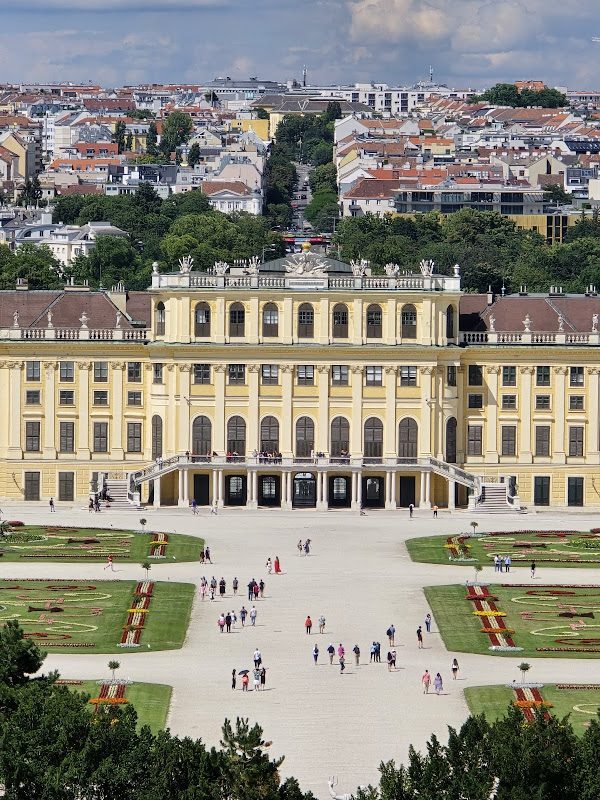
What makes Vienna special is the natural combination of imperial splendor and daily life. You can wander around a baroque palace in the morning, eat Turkish lahmacun at Naschmarkt at noon, and drink an Aperol Spritz by the Danube Canal in the evening. Viennese people jogging in the gardens of Schönbrunn, tourists listening to street musicians in front of Stephansdom, families walking their children in the Prater - everyone is experiencing different Viennas in the same city, at the same time.
Let's also say this: Vienna has a special place for travelers from Türkiye. Traces of the sieges of 1529 and 1683 are still present in the fabric of the city. The rumor that the origin of coffee culture is the coffee beans left by Ottoman soldiers is one of the favorite stories of the Viennese. It is very likely that you will find Turkish-speaking clerks in Naschmarkt and come across Turkish restaurants. Historically, we were "on the opposite side", but today Vienna is a very familiar and welcoming city to Turkish travelers.
When to Go
Vienna has a continental climate; Summers can be hot, winters can be cold and snowy. It is a city that experiences four seasons clearly.
| Period | Weather (daytime) | Density | Otel Fiyatı | Notes |
|---|---|---|---|---|
| January-February | -2 / 4° | Low-Medium | Medium | It's prom season! Cold but culturally the most intense period |
| March | 3 / 10° | Low | Low | Spring is opening, the gardens are not yet in bloom |
| April | 7 / 16° | Medium | Medium | Ideal start; Schönbrunn gardens are in bloom |
| May | 11 / 21° | Medium-High | Medium-High | The most beautiful month; long days, warm weather |
| June | 15 / 25° | High | High | Donauinselffest; outdoor activities begin |
| July | 17 / 28° | High | High | It may be hot; Donauinsel beaches are open |
| August | 17 / 27° | Medium-High | Medium | Locals are on holiday; the city is relatively quiet |
| September | 13 / 22° | Medium-High | Medium-High | Second best period; Heuriger season begins |
| October | 7 / 15° | Medium | Medium | Autumn colors; Viennale film festival |
| November | 3 / 8° | Low-Medium | Low-Medium | Christmas markets open in mid-November |
| December | 0 / 4° | High | High | Christmas markets, Punsch, winter magic |
Our general recommendation is April-June and September. But Vienna has two special seasons: December is magical for the Christmas markets, January-February is unique for the ball season. Both are cold, but the sight of the snow-covered baroque buildings makes you forget the cold. During the summer months, Donauinsel and canal bars add a completely different energy to the city.
How to get there
Vienna's only major airport, Vienna International Airport (VIE), is 18 km southeast of the city center.
Flights from Türkiye:
| Exit | Duration | Airline |
|---|---|---|
| Istanbul (IST) - VIE | 2 hours 30 min | THY, Austrian Airlines (4-5 flights per day) |
| Istanbul (SAW) - VIE | 2 hours 40 min | Pegasus (1-2 times a day) |
| Ankara (ESB) - VIE | 2 hours 50 min | THY (4-5 flights per week) |
| Izmir (ADB) - VIE | 2 hours 45 min | THY, Pegasus (3-4 flights per week) |
The 2.5-hour flight time from Istanbul makes Vienna perfect for a long weekend getaway. Fly Thursday evening, return Sunday evening — 3 full days in Vienna.
From airport to city:
- CAT (City Airport Train): 16 min, Wien Mitte station, 14.90 EUR one way. The fastest option.
- S-Bahn S7: 25 min, Wien Mitte, 4.40 EUR (ÖBB). Cheap and fast enough.
- Airport bus: 20-25 min, Morzinplatz/Schwedenplatz or Westbahnhof, 9.50 EUR.
- Taxi/Uber: 20-30 min, 36-40 EUR fixed fee.
Our recommendation is the S-Bahn S7 — one-third the price of the CAT, only 10 minutes longer.
Train option: With ÖBB Railjet Munich 4 hours, Budapest 2 hours 30 min, Prague 4 hours, Salzburg 2 hours 20 min. You are at the center of the Central European train network. Combined plans with Interrail or Eurail make perfect sense.
Urban Transportation
Vienna's public transport is one of the best in Europe. Clean, punctual and cheap.
U-Bahn (Metro): 5 lines (U1-U6, U5 still under construction) comprehensively cover the city. It works from 05:00 to 00:30, 24 hours a day on Friday and Saturday nights. The average time between two stations in the central region is 2-3 minutes.
Tram (Straßenbahn): 28 lines, total 176 km. One of the symbols of Vienna; Lines 1 and 2, which go around the Ringstraße, are like a city tour. Nostalgic red trams are also still running.
Bus: It closes the points that the metro and tram cannot reach. Night buses (N lines) operate between 00:30 and 05:00 on weekdays.
Ticket system: One way ticket 2.40 EUR, 24 hours 8 EUR, 48 hours 14.10 EUR, 72 hours 17.10 EUR. Weekly pass (Monday-Sunday) 17.10 EUR. If you are going to stay for 3 days or more, get a weekly card, it will pay for itself. Tickets are valid on metro, tram and bus.
Vienna City Card: There are 24/48/72 hour versions; Includes public transportation + museum and restaurant discounts. 33 EUR for 72 hours. If you are going to visit a lot of museums, consider it, but a weekly pass is cheaper just for transportation.
Bicycle (WienMobil Rad): Bicycle sharing system with 1,500 stations. The first 30 minutes are free, thereafter 1 EUR/30 min. Vienna is a flat city, the bicycle path infrastructure is excellent. It's great to cycle around the ring.
Taxi/Uber: Uber and Bolt are operating. Short distances within the city cost 8-15 EUR. It is easy to find a taxi at night, it is not necessary as the U-Bahn operates 24 hours a day from Friday to Saturday.
Accommodation Regions
Vienna is a compact city; If you choose the right area, you can reach everywhere on foot or with a single metro transfer.
- Innere Stadt (1. Bezirk): Stephansdom, Hofburg, Opera, Graben — everything is within walking distance. It is the most expensive area, but it is unrivaled in terms of location. Ideal for couples and short term visits. The night is quiet.
- Leopoldstadt (2. Bezirk): Near the Prater and Donaukanal. Young, hipster, multicultural. The area around Karmelitermarkt is pleasant. Prices are 30-40% lower than in the center. Alternative for couples and solo travelers.
- Neubau (7th Bezirk): Neighborhood of MuseumsQuartier. Boutique hotels, designer shops, brunch cafes. Mariahilfer Straße is close to shopping. It can be called the "Kreuzberg" of Vienna. For young couples and groups of friends.
- Wieden / Margareten (4th-5th Bezirk): Around Naschmarkt. The pulse of local life beats here. Freihausviertel boutiques, cozy cafes. Prices are reasonable, 5-10 minutes from the center by metro. Suitable for families and long stays.
- Josefstadt (8. Bezirk): Calm, elegant, green. Residential district surrounded by palaces and gardens. Near Theater in der Josefstadt. For those looking for a calm and cultural atmosphere.
What we do not recommend: Your favorite (10. Bezirk) It is far from the center and has little to offer in terms of tourism; Simmering (11th Bezirk) is mostly industrial and not very lively at night.
Budget Plan
Vienna is a middle-upper budget city by Western European standards. Cheaper than Paris and London, more expensive than Prague and Budapest.
| Budget Style | Accommodation | Food | Activity/Transportation | Total (2 people/3 days) |
|---|---|---|---|---|
| Economic (hostel/2* hotel, Würstel + 1 restaurant) | 250 EUR | 150 EUR | 70 EUR | ~500 EUR |
| Moderate (3-4* hotel Neubau/Leopoldstadt, mixed) | 500 EUR | 280 EUR | 120 EUR | ~900 EUR |
| Comfort (4-5* boutique hotel, gastronomy) | 1,000 EUR | 450 EUR | 180 EUR | ~1.650 EUR |
| Luxury (Sacher, Imperial, fine dining) | 2,500 EUR+ | 1,000 EUR+ | 300 EUR | ~3,800 EUR+ |
Practical items: Melange (coffee) 5-6 EUR, Sachertorte slice 7-8 EUR, Wiener Schnitzel 15-22 EUR, Tafelspitz 25-35 EUR, opera standing ticket 15 EUR, museum entrances average 12-21 EUR, metro daily 8 EUR, Spritzer (wine and soda) 4-5 EUR, Käsekrainer sausage 5-6 EUR.
Practical Tips
Water: Vienna's mains water is spring water from the Alps — one of the cleanest tap waters in the world. You don't need to buy bottled water, tap water is available free of charge in the restaurant "Leitungswasser bitte".
Sundays: Shops are closed on Sundays in Austria. Supermarkets, clothing stores, shopping malls are all closed. Only some tourist shops, museums, restaurants and cafes are open. You have to plan for this — finish your shopping on Saturday.
Tipping: Tipping is not mandatory in Austria, but it is expected behavior. 5-10% of the bill is standard in restaurants. All you have to do is roll it by saying "Stimmt so" (leave the top left). It is customary to leave 50 cents - 1 EUR in coffee shops.
Weather surprise: The weather in Vienna can change suddenly. Carry a raincoat or folding umbrella in your bag, even in summer. In winter it can drop to -10°C, so dress in layers.
Wien-Karte vs single ticket: If you are staying for 3 days, buy a 72-hour transportation pass (17.10 EUR). If you also want a museum discount, consider the Vienna City Card (33 EUR), but do the math — it's not always advantageous.
Museum days: Most museums are closed on Mondays. Thursday evenings are generally open with extended hours and noticeably less crowded. Make your museum plan accordingly.
Health: Emergency 144 (ambulance), 133 (police), 122 (fire department), general emergency 112. AKH (Allgemeines Krankenhaus) is one of the largest hospitals in Europe and also serves tourists. Pharmacies (Apotheke) are located by the green cross; There is a night guard system.
What is not included in the Vienna Card: Schönbrunn Palace, Belvedere and Staatsoper tickets are not included in the Vienna City Card, there is only a discount. Buy these separately.
Travel Guide with Children
Vienna is one of the most comfortable cities in Europe for families with children. This city, which consistently ranks first in the world in livability rankings, is family-friendly with children's programs in museums, large parks and safe streets.
Recommendations by Age Group
0-3 years: Prater park is wide and flat, ideal for baby strollers. Baby care rooms are standard in shopping malls and museums. The U-Bahn (underground) is fully lift-operated and accessible. The Schönbrunn Palace gardens are great for running around.
4-7 years: Schönbrunn Zoo (the oldest zoo in the world, 1752) is the star of this age group. ZOOM Kindermuseum keeps children busy with interactive workshops. The Riesenrad (giant Ferris wheel) in the Prater is classic.
8-12 years: Haus der Musik (House of Music) offers interactive sound experiments and virtual orchestra management. The Naturhistorisches Museum is impressive with its dinosaur and mineral collection. The Schönbrunn maze is also fun.
Ages 13+: The modern art galleries of the MuseumsQuartier, the multicultural food stalls of the Naschmarkt, and cycling and swimming in the Donauinsel attract young people.
Top 5 Kid-Friendly Activities
Schönbrunn Palace + Zoo — Palace tour (children's version available), giant garden, labyrinth and the world's oldest zoo all in one. Take a full day.
Prater + Riesenrad — Legendary Wiener Riesenrad ferris wheel, amusement park, green areas. Kids have fun at all ages. Eating hot dogs is a ritual in Würstelstand.
ZOOM Kindermuseum — Children's museum in MuseumsQuartier. Art workshops, animation studio, experience rooms. There are different programs according to age groups. Advance reservation is required.
Haus der Musik — Music interactive museum. Conducting the virtual Vienna Philharmonic, experimenting with sound, exploring music history — kids fall in love with music here.
Donauinsel — Artificial island on the Danube River. Cycling, swimming, picnics and summer festivals. It's free and a family favorite.
Practical Information
Baby stroller: Vienna is a flat city, the sidewalks are wide and smooth. U-Bahn is fully elevator-operated, trams have low floors. Museums and cafes are accessible. It is one of the most comfortable cities for strollers in Europe.
Children's menu: Kinderteller (children's plate) is standard in Austrian restaurants — Wiener Schnitzel small portion, Apfelstrudel, Kaiserschmarrn (puff pastry dessert) are children's favorites.
Child ticket discounts: U-Bahn, bus and tram free for under 6s, half price for 6-14. Children under 19 are free in state museums. Vienna Card family version is economical.
Toilet: Available in museums, shopping malls and cafes. There are paid toilets (0.50 EUR) on the streets but they are clean.
Warnings
- Vienna is generally very safe, but be careful on the U-Bahn in the evening.
- Shops are closed on Sundays — plan shopping on weekdays. Restaurants and cafes are open.
- During the winter months (November-February) it is cold and dark, but the Christmas markets are great for families with children.
- Buy museum and concert tickets in advance — Schönbrunn can be especially crowded.
Local Label and Culture Notes
Viennese people seem distant at first glance — but this is not rudeness, it is the Austrian cultural code. A handshake is standard when meeting; hugging and cheek kissing belong to close friends. "Grüß Gott" (God's greeting) is the standard Austrian greeting; "Hallo" is also accepted, but "Grüß Gott" takes you one step forward.
Coffeehouse etiquette: A Viennese coffeehouse is not a place where you can drink a quick espresso and leave. Sit down, open your newspaper (international newspapers are available in many coffeehouses), stay for hours. The waiter will never ask you "Would you like something more?" does not put pressure. This is a right, a cultural agreement. A glass of water always comes with the coffee — this is included in the service and is expected to be refilled.
Clothing: Viennese people dress elegantly but understated. The dress code for the opera and the ball is strict — a suit or at least a jacket and tie is expected for men, and a long dress for women. In daily life, smart casual is enough. You don't need to wear a tuxedo while eating schnitzel, but the combination of shorts and slippers is also frowned upon.
Punctuality: Austrians are punctual. Being late for an appointment, tour, or opera performance is perceived as serious disrespect. Arrive 5 minutes early to the meeting.
Culture of silence: Keep noise levels low on public transport, restaurants and especially in museums. Vienna, not Istanbul — speaking loudly attracts attention and is frowned upon.
Heuriger culture: It is a local tradition to drink new harvest wine in the vineyard houses (Heuriger) around Vienna. Grinzing, Neustift am Walde and Stammersdorf are the most well-known Heuriger districts. If a pine branch or green wreath hangs on the door, it means it is open. A cold dinner plate (Brettljause) with a carafe of white wine — an authentic Viennese evening.
German German vs Austrian German: Austrians speak German but it is different from German German. Instead of "Tschüss" they say "Father" or "Pfiat di". Instead of "Brötchen" it is called "Semmel", instead of "Kartoffel" it is called "Erdapfel". You don't need to know these differences, but "don't they speak the same language?" The question makes Austrians smile.
FAQ
How many days to visit Vienna? Three days is the ideal minimum. In this time, you can fit the main museums, two palaces, coffee houses and an opera performance. If you give it five days, you can add Heuriger evening, Donauinsel day and daily Wachau valley tour. Perfect if a week falls during prom season or Christmas markets.
Is English sufficient? Absolutely yes. The rate of knowing English is very high in Vienna; You won't have any problems with hotels, museums, restaurants and public transportation. Still, basic German expressions like "Grüß Gott," "Danke" and "Bitte" raise smiles.
Vienna or Prague? Different cities, different experiences. Vienna is more magnificent, more expensive, more "imperial". Prague is more compact, cheaper, more fairytale-like. If you want to see both, train from Vienna to Prague is 4 hours — with combination.
How long does it take to Schönbrunn? Palace tour (Imperial Tour) 45 minutes, Grand Tour 1 hour. Add at least another 1.5 hours for the gardens, Gloriette and maze. If you are going to visit the zoo (the oldest zoo in the world, 1752), spare half a day. 3-4 hours in total is ideal.
How to buy opera tickets? Seating tickets go on sale 2 months in advance on wiener-staatsoper.at; popular works are selling out quickly. Standing tickets (Stehplatz) are only sold at the box office on the day of the performance, 80 minutes before the start, and cost 15-16 EUR. You may need to queue 2-2.5 hours in advance for front row standing tickets.
Are there Turkish food options in Vienna? Plenty. There are several Turkish stalls in Naschmarkt. Brunnenmarkt (16. Bezirk) is the longest street market in Vienna and is predominantly Turkish/Balkan. Turkish restaurants are concentrated in the Ottakring and Favoriten areas. Döner, lahmacun and pita are available everywhere.
When do the Christmas markets open? It generally opens in mid-November (around November 14-15) and closes on December 24-26. Rathausplatz is the biggest, Spittelberg is the most romantic, Schönbrunn is the most spectacular. Less crowded on weekday evenings. If you return the Glühwein cup, you will get the deposit of 2-4 EUR back, forget the payment if you want to keep it as a souvenir.
Where to go on a day trip from Vienna? Wachau Valley (train + ferry, vineyards and medieval villages), Bratislava (train 1 hour, easy to visit during the day), Salzburg (train 2.5 hours, Mozart's birthplace), Hallstatt (train 3.5 hours, fairytale lake village — but very crowded). The easiest and shortest distance is Bratislava.
What is prom season and how do I attend? More than 450 balls are held in Vienna from November to the end of February. Opernball is the most prestigious, but tickets can require thousands of euros and an invitation. More accessible balls: Kaffeesiederball, Blumenball, Jägerball. Tickets are purchased from the official websites of the balls, prices vary between 80-300 EUR. The dress code is strict: black tie suit or tailcoat for men, long evening dress for women.